
While protests have cooled in the capital, they've gained momentum in the countryside, with severe clashes reported in Azna and Lordegan.
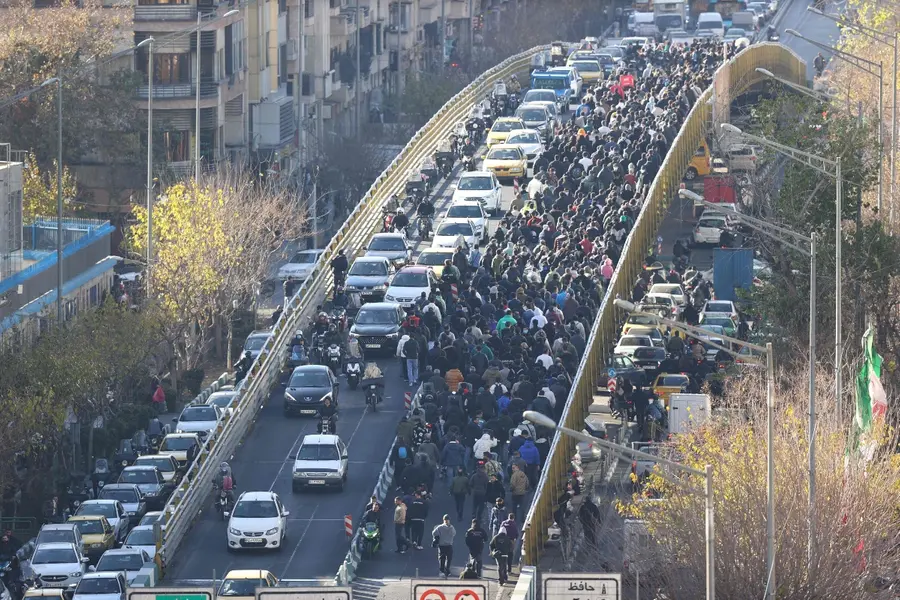
Dubai: Economic unrest in Iran intensified Thursday as demonstrations over the nation's failing finances migrated to rural provinces, resulting in at least seven fatalities among both protesters and security personnel, according to government and activist reports.
The reported deaths, occurring primarily in regions populated by the Lur ethnic minority, suggest a shift toward a more aggressive government crackdown as the movement expands outside the capital. While the momentum of the protests has decelerated in Tehran, it has gained significant traction in the countryside. These fatalities, one reported on Wednesday and five on Thursday, took place in three separate cities.
The current wave of dissent represents the most significant unrest in the Islamic Republic since the 2022 uprising sparked by the death of 22-year-old Mahsa Amini. However, observers note the current protests have not yet reached the same nationwide scale or intensity as the demonstrations against the mandatory hijab following Amini's death in custody.
The most severe clashes were reported in Azna, located in Lorestan province, roughly 300 kilometres (185 miles) southwest of Tehran. Unverified online footage from the city depicted burning street barricades and the sound of gunfire as crowds shouted, “Shameless! Shameless!” The semiofficial Fars news agency confirmed three deaths in Azna, though state-controlled media largely refrained from acknowledging the scale of the violence. Journalists in the region continue to face significant reporting constraints, reminiscent of the arrests that occurred during the 2022 unrest.
In the city of Lordegan, approximately 470 kilometres (290 miles) south of the capital, video evidence showed large gatherings and audible gunfire. The Abdorrahman Boroumand Centre for Human Rights in Iran reported two protesters were killed in the city and shared imagery of security forces in body armour armed with shotguns. Lordegan has a history of volatility, having seen major protests in 2019 following an HIV outbreak linked to a local clinic.
Separately, a 21-year-old volunteer with the Basij paramilitary force was killed Wednesday night in Kouhdasht. While the state-run IRNA news agency confirmed the death without details, the Student News Network blamed protesters for the fatality.
Saeed Pourali, a deputy governor in Lorestan province, stated the Guard member “was martyred ... at the hands of rioters during protests in this city in defence of public order,” adding that 13 other officers were injured.
Addressing the root of the anger, Pourali noted, “The protests that have occurred are due to economic pressures, inflation and currency fluctuations, and are an expression of livelihood concerns." He added, "The voices of citizens must be heard carefully and tactfully, but people must not allow their demands to be strained by profit-seeking individuals.”
Local prosecutor Kazem Nazari reported that 20 individuals were detained in Kouhdasht before order was restored.
The political leadership under reformist President Masoud Pezeshkian has signalled an openness to dialogue, but the president has admitted limited leverage as the national currency continues its freefall. The Iranian rial has hit a record low, with the exchange rate reaching approximately 1.4 million rials to the U.S. dollar.
In a concurrent security sweep, state television reported the arrest of seven individuals, including five labelled as monarchists and two allegedly linked to European organisations. Authorities also claimed to have intercepted 100 smuggled handguns.
The government had declared Wednesday a public holiday due to cold weather, a move widely interpreted as an attempt to disperse potential crowds in Tehran ahead of a long weekend that includes Saturday's celebration of Imam Ali’s birthday.
The current unrest follows a turbulent year for the theocracy, which is still navigating the aftermath of a 12-day war with Israel in June 2025. During that conflict, the U.S. also conducted strikes on Iranian nuclear facilities. Tehran has since maintained that it has halted all uranium enrichment in an effort to resume negotiations and lift sanctions, though U.S. President Donald Trump and Israeli Prime Minister Benjamin Netanyahu have issued stern warnings against any revival of the atomic program.
With inputs from AP
Published: 02 Jan 2026, 06:17 am IST
Related Topics
Disclaimer: Kindly avoid objectionable, derogatory, unlawful and lewd comments, while responding to reports. Such comments are punishable under cyber laws. Please keep away from personal attacks. The opinions expressed here are the personal opinions of readers and not that of Mathrubhumi.
