
Unverified online posts allege Ayatollah Alireza Arafi was killed in a fresh airstrike, but Iran has issued no confirmation.
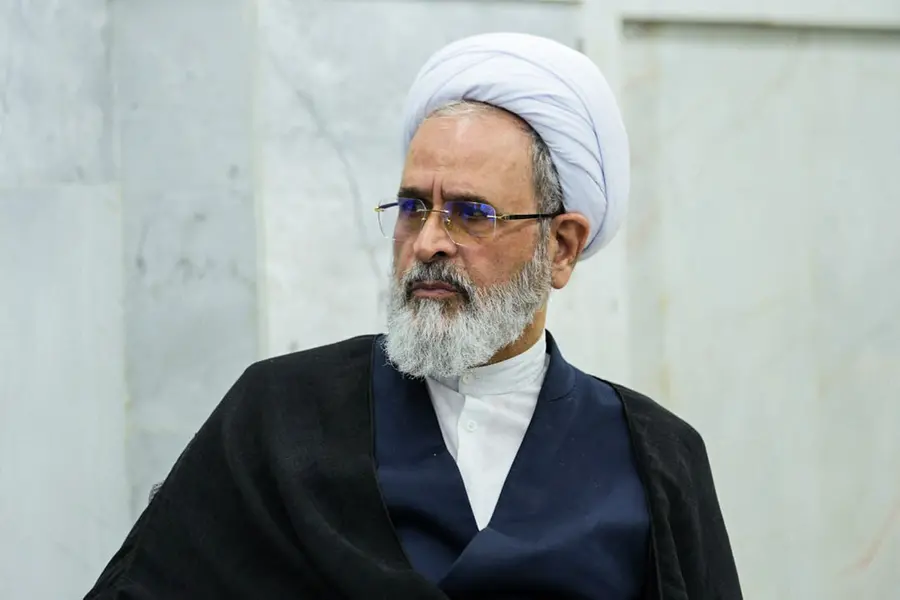
Iran is facing a deepening leadership crisis amid unconfirmed reports that newly appointed interim supreme leader Ayatollah Alireza Arafi has been killed in an airstrike, only hours after stepping into the role. The claims, circulating widely on Reddit and other social platforms, have not been verified by Iranian state outlets, international media organisations or foreign governments.
The appointment of Arafi came in the immediate aftermath of the reported death of Ayatollah Ali Khamenei, who had led the Islamic Republic since 1989 and was said to have been killed in a joint US-Israeli strike on Tehran. His sudden death triggered a constitutionally mandated transition mechanism designed for moments of extreme national upheaval.
Despite the online speculation, there is no credible confirmation that Arafi has been targeted or killed, and officials have not acknowledged any such incident.
Interim leadership triggered by constitutional emergency
Under Article 111 of Iran’s constitution, authority temporarily transfers to a three-member leadership council when the supreme leader dies or becomes incapacitated. According to state-linked reports, Arafi – a senior cleric and influential member of the Guardian Council – was appointed as the clerical representative on this interim body.
He joins Masoud Pezeshkian, who serves as President, and Gholamhossein Mohseni‑Ejei, the head of the judiciary. Together, they assume the full constitutional powers of the supreme leader until the Assembly of Experts convenes to select a permanent successor.
The leadership council is responsible for ensuring continuity of governance, internal security and political stability at a moment when tensions between Iran and Israel have escalated rapidly across the region.
Who is Ayatollah Alireza Arafi?
Arafi is regarded as a trusted figure within Iran’s religious hierarchy and has long served in key constitutional bodies. His elevation to the interim council was seen as an attempt to project stability after the shock of Khamenei’s reported assassination.
He previously held senior posts within Iran’s seminaries and is known for his close ties to the clerical establishment. His presence on the council was expected to help steer the Islamic Republic through a sensitive transition while the Assembly of Experts begins the process of identifying a new long-term leader.
What would happen if the reports were true?
If Arafi’s alleged death were confirmed, Iran’s leadership transition would almost certainly be thrown into deeper turmoil. The interim council’s composition – defined explicitly in the constitution – would be incomplete, creating legal and political uncertainty.
The Assembly of Experts would likely face immediate pressure to appoint a replacement cleric and potentially accelerate deliberations on selecting a permanent supreme leader. Such a development could intensify internal power struggles at a moment when Iran’s political system is already under exceptional strain.
For now, the claims remain unverified, and officials have issued no indication that the interim structure has been disrupted.
The reported deaths of both Khamenei and, allegedly, Arafi come as the Iran–Israel confrontation intensifies, with strikes, counter-strikes and mounting casualties across West Asia. The instability has amplified global concern over the direction of Iran’s leadership and the potential for further escalation.
Published: 02 Mar 2026, 02:46 pm IST
Disclaimer: Kindly avoid objectionable, derogatory, unlawful and lewd comments, while responding to reports. Such comments are punishable under cyber laws. Please keep away from personal attacks. The opinions expressed here are the personal opinions of readers and not that of Mathrubhumi.
