
Shipping companies and Recruitment and Placement Service Licensees (RPSLs) have been advised to exercise caution when deploying crews and maintain regular communication with sailors and their relatives
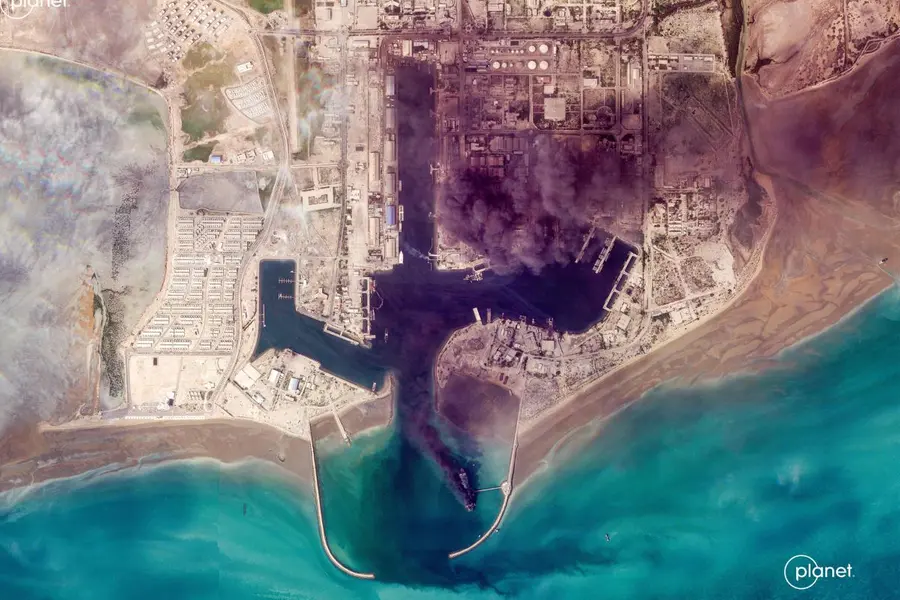
New Delhi: At least 37 Indian-flagged vessels, carrying 1,109 seafarers, are currently stranded in the Persian Gulf, the Gulf of Oman, and surrounding waters due to the closure of the Strait of Hormuz amid ongoing military operations involving the United States, Israel, and Iran.
Some of the ships were transporting crude oil and LNG to Indian ports, while others were en route to bring petroleum products from Gulf nations. An official familiar with the situation told PTI that the Directorate General of Shipping is in regular contact with shipping companies and closely monitoring developments.
At least three Indian seafarers aboard foreign-flagged vessels have been killed and one injured in the ongoing West Asia conflict. In response, the Shipping Ministry has established a dedicated quick response team to coordinate with authorities, provide timely assistance to affected seafarers, and support their families.
ALSO READ | ‘We will set fire to any ships’: Iran declares total blockade of Strait of Hormuz
Shipping companies and Recruitment and Placement Service Licensees (RPSLs) have been advised to exercise caution when deploying crews and maintain regular communication with sailors and their relatives. Helpline numbers have also been activated for families of Indian seafarers.
The Directorate General of Shipping issued an advisory urging maritime operators to assess voyage-specific risks following the route disruptions and closure of the Strait of Hormuz by Iran. Authorities are closely monitoring missile and drone activity, electronic interference, and other maritime security threats in the region.
What is the Strait of Hormuz?
The Strait of Hormuz lies between Iran and Oman, linking the Persian Gulf to the Gulf of Oman and the Arabian Sea. At its narrowest, it is just 33 kilometres wide, with shipping lanes barely three kilometres wide in each direction.
Despite its small size, around 20% of the world’s daily oil and gas supply passes through the strait — roughly 20–21 million barrels of crude, condensate and fuels. It is also a vital route for liquefied natural gas (LNG), particularly from Qatar, making it one of the most strategically important trade arteries globally.
Why it matters to global energy markets
Most oil exports from OPEC producers, including Saudi Arabia, Iraq, Kuwait, the UAE and Iran, move through the Strait of Hormuz, primarily to Asia. Qatar routes almost all its LNG exports through these waters.
Even the threat of disruption is enough to push oil prices higher. Brent crude has surged sharply amid fears of escalation, with analysts warning that a prolonged closure could send prices beyond $100 per barrel, potentially reaching $120–$150 in extreme scenarios.
ALSO READ | Trump makes big claims, says Iran ‘wants to talk’ but it’s ‘too late’
Tankers have already begun anchoring outside the Gulf, waiting for clarity, effectively slowing flows and causing freight rates to spike.
India’s vulnerability
India imports around 55% of its crude from the Middle East, amounting to roughly 2.7 million barrels per day. While the country has storage capacity that could last up to 74 days, effective inventories may cover only 20–25 days under current conditions, leaving India particularly exposed to disruptions.
Potential impact on India
Higher fuel prices: Rising Brent crude directly increases petrol and diesel costs.
Inflationary pressures: Fuel price hikes ripple across transport, food, and manufacturing sectors.
Widening trade deficit: More expensive imports strain foreign exchange reserves.
Pressure on government finances: Subsidies may rise if retail fuel prices are cushioned.
Currency volatility: Higher import bills typically weaken the rupee.
On Tuesday, Shipping Minister Sarbananda Sonowal chaired a review meeting to assess the prevailing security environment in the Persian Gulf and its implications for Indian maritime assets and personnel. Coordination is being maintained with the Indian Navy, the Ministry of External Affairs, the Information Fusion Centre–Indian Ocean Region (IFC-IOR), the Maritime Rescue Coordination Centre (MRCC), and Indian missions abroad.
Meanwhile, American and Israeli airstrikes continued to target Iranian sites following the death of Iran’s Supreme Leader Ayatollah Ali Khamenei on Saturday. Iran and its allies have retaliated against Israel, neighbouring Gulf states, and infrastructure critical to global oil and gas production.
Published: 03 Mar 2026, 08:59 pm IST
Related Topics
Disclaimer: Kindly avoid objectionable, derogatory, unlawful and lewd comments, while responding to reports. Such comments are punishable under cyber laws. Please keep away from personal attacks. The opinions expressed here are the personal opinions of readers and not that of Mathrubhumi.
