
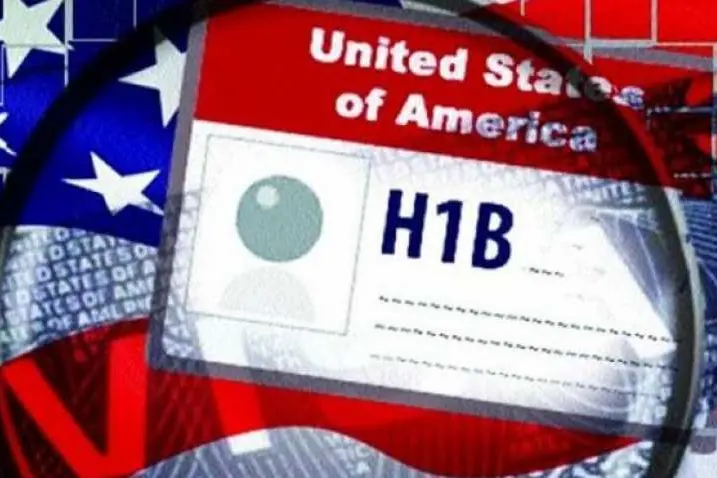
Washington: An online spat among Donald Trump’s supporters has exposed internal divisions within his political movement. The rift, centred on immigration and the tech industry's reliance on H-1B visas, highlights the contrasting views within Trump’s coalition as he prepares to return to the White House.
The debate has split the MAGA base, known for its hardline immigration stance, and Silicon Valley elites like Elon Musk and Vivek Ramaswamy, who advocate for bringing more highly skilled foreign workers into the United States.
H-1B visas spark discord
The debate erupted on X, owned by Musk, after Laura Loomer, a far-right provocateur, criticised Trump's selection of Sriram Krishnan as an adviser on artificial intelligence. Krishnan supports expanding skilled immigration, a stance Loomer claimed undermines Trump’s “America First” agenda.
The exchange escalated as venture capitalist David Sacks, Trump’s appointee as “White House A.I. and Crypto Czar,” joined Musk and Ramaswamy in defending the tech industry’s dependence on H-1B visas. Musk, who previously entered the US on an H-1B visa, reiterated that a “permanent shortage of excellent engineering talent” is a limiting factor in Silicon Valley’s success.
MAGA concerns over cultural values
MAGA loyalists expressed concerns over the growing influence of tech figures in Trump’s movement. Vivek Ramaswamy argued that American culture, which he said celebrates mediocrity over academic excellence, hampers the country’s ability to produce top engineers. His comments further inflamed tensions within the coalition.
Stephen Miller, incoming White House deputy chief of staff, reminded critics of Trump’s historical stance on immigration. Trump previously called H-1B visas “unfair” to US workers and implemented restrictions during his presidency, which were later lifted by Joe Biden.
Tech ties and contradictions in Trump’s policies
Trump’s positions on immigration have often reflected the divides within his coalition. While he pledged to implement mass deportations and restrict immigration, his businesses, including Mar-a-Lago, have utilised foreign labour through H-1B visas. Additionally, Trump recently suggested granting green cards to foreign students graduating from US colleges, a notable departure from his earlier rhetoric.
Broader implications for Trump’s coalition
The feud has raised questions about Trump’s ability to manage the diverse factions within his movement. MAGA figures have warned against allowing Silicon Valley elites to shape immigration policy, with Loomer accusing tech executives of prioritising profits over national interests. Loomer also faced censorship on X, which she attributed to her criticisms of H-1B visas, sparking debates over free speech.
As Trump remains silent on the growing discord, critics point to the chaos of his first term as a warning. Whether his coalition can reconcile these differences remains uncertain, with fears that these divisions could undermine his agenda in a potential second term.
Wider implications for India
H-1B visas are vital for Indian IT professionals and engineers seeking opportunities in the US, especially in Silicon Valley. With Trump’s fluctuating views — from criticising the program in 2016 to proposing green cards for foreign graduates in 2024 — the future of H-1B holders remains uncertain. Any policy shifts could impact thousands of Indian families dependent on these jobs for stability.
India’s tech industry heavily relies on H-1B visas for talent mobility and cross-border projects. A crackdown on the program could disrupt these collaborations, affecting the industry’s growth and global standing. Conversely, a more open visa policy would strengthen India-US ties in technology and innovation.
During Donald Trump’s first term, his administration took a firm stance against the H-1B visa programme, arguing that it displaced American workers. This led to stricter eligibility requirements, higher visa denial rates, and a surge in Requests for Evidence (RFEs), causing delays for applicants. Under Trump, the average H-1B denial rate rose to 18%, significantly higher than the 3.2% under President Biden.
With Trump’s potential return to power, further restrictions on the H-1B programme are expected, including higher wage requirements for visa holders and possible reductions in the number of visas issued annually. Policies introduced previously, like a rule requiring higher minimum wages for H-1B holders in certain cities, could also be revived.
A major concern for H-4 visa holders, spouses of H-1B workers, was the attempt to restrict their work rights, which may resurface in Trump’s second term. The future of the Optional Practical Training (OPT) programme, vital for international students, particularly from India, could be at risk, with possible efforts to limit its scope.
Trump has also proposed granting automatic green cards to US college graduates, potentially benefiting international students. However, accompanying wage hikes could price foreign workers out of the job market, complicating the situation for skilled immigrants.
Published: 28 Dec 2024, 07:15 am IST
Related Topics
Disclaimer: Kindly avoid objectionable, derogatory, unlawful and lewd comments, while responding to reports. Such comments are punishable under cyber laws. Please keep away from personal attacks. The opinions expressed here are the personal opinions of readers and not that of Mathrubhumi.
