
Ali Larijani was killed after Israeli intelligence traced him to his daughter’s home. Public tip-offs, recent appearances and shifting hideouts played key roles.
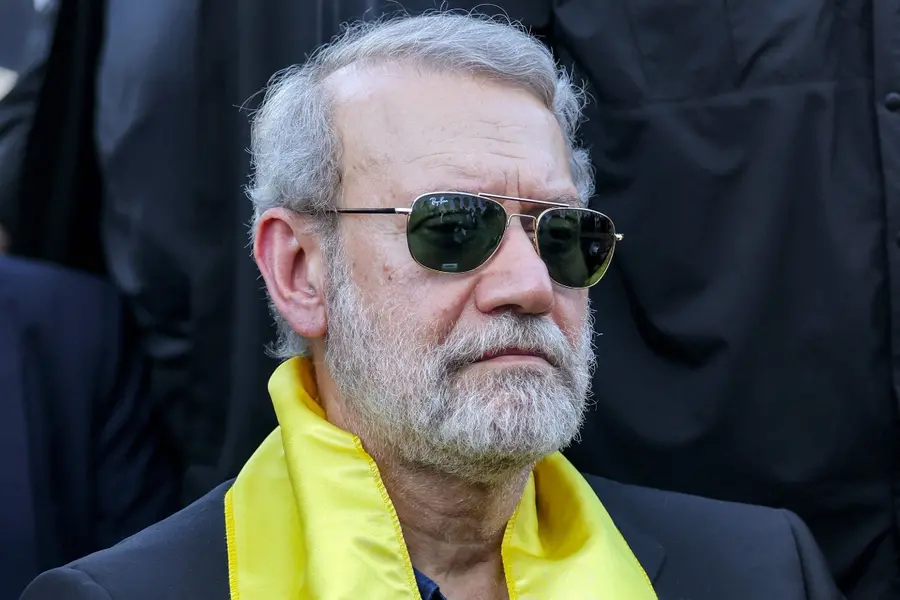
Iran’s security structure has suffered one of its most destabilising blows in years after the killing of senior official Ali Larijani, 67, a figure long regarded as central to the country’s internal defence planning. His death, the most high-profile after the killing of former supreme leader Ali Khamenei, has triggered a wave of official threats, public mourning, and renewed fears of escalation in a region already on the brink.
Larijani was killed in an Israeli strike after weeks of evasive movement. Despite operating under heightened security, the veteran strategist was ultimately tracked to his daughter’s residence, where a missile hit the property, killing him, his son, a deputy, and several bodyguards.
A back-channel strategist whose caution failed him
In government circles, Larijani was widely viewed as a behind-the-scenes architect of Iran’s security doctrine. Analysts described him as a right-hand adviser to the late supreme leader, with significant influence over defence planning.
Local media had previously praised him as one of Iran’s “prominent and prudent” officials, noting his extensive involvement in shaping internal security. After his death, authorities referred to him as a martyr who had played a vital role in safeguarding the state.
Reports suggest Larijani went to considerable lengths to avoid being killed following the death of the previous supreme leader. He shifted locations regularly, used secret safehouses and took measures to complicate attempts to trace him. According to accounts published abroad, he was considered a top-priority target after the late leader’s killing. Israeli assessments viewed him as “number one target” following the first assassination.
How he was finally found
Despite his precautions, Larijani’s last movements appear to have exposed him. According to multiple accounts, he was located during a visit to his daughter’s home in Pardis, east of Tehran. A strike on the property ended his life.
Initial reports in Iranian media said the attack took place while Larijani was inside the home. His son and several members of his security detail also died in the blast.
Foreign reports, citing Israeli officials, claimed that intelligence agencies received “valuable intelligence” from Tehran residents, allegedly helping pinpoint his whereabouts. According to those claims, Larijani’s decision to attend public events, including Quds Day rallies, had made him more recognisable, increasing opportunities for people to identify him.
The official quoted by Iran International linked this exposure to what he described as the “arrogant behaviour” of the late official.
Khamenei vows retaliation as leadership absorbs the shock
Larijani’s funeral drew large crowds in Tehran, held alongside services for Gholamreza Soleimani, head of the Basij paramilitary, who was killed in another strike, as well as dozens of sailors killed earlier this month when a frigate was torpedoed off Sri Lanka.
In a written declaration, the new supreme leader Mojtaba Khamenei issued a stark warning after the funeral. “Every drop of spilled blood comes at a price, and the criminal murderers of these martyrs will soon have to pay it,” he wrote. In a separate message, he added that the perpetrators “will have to pay for it”.
Mojtaba Khamenei has not appeared in public since assuming leadership, prompting jabs from critics abroad, including comments from US president Donald Trump questioning whether he was alive.
Authorities said Larijani would be laid to rest at a shrine in Qom that is widely frequented by pilgrims.
Iran promises a ‘decisive and regrettable’ response
Senior military leaders vowed harsh retaliation. The country’s army chief, Amir Hatami, described the killing as a red line and stated that any response would be “decisive and regrettable”.
Officials acknowledged that Larijani’s assassination had come at a moment of exceptional vulnerability, as the country faced US- and Israeli-linked attacks amid a widening regional conflict.
Published: 19 Mar 2026, 07:57 am IST
Related Topics
Disclaimer: Kindly avoid objectionable, derogatory, unlawful and lewd comments, while responding to reports. Such comments are punishable under cyber laws. Please keep away from personal attacks. The opinions expressed here are the personal opinions of readers and not that of Mathrubhumi.
