
The dispute comes as the Trump administration tightens visa scrutiny nationwide
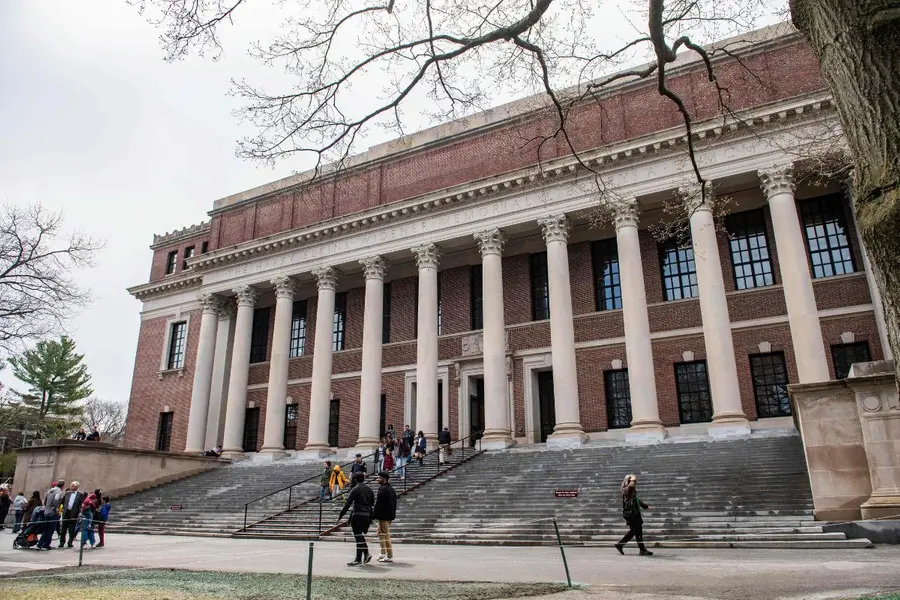
Washington: Winning admission to Harvard University was a long-cherished dream for Yonas Nuguse, a 21-year-old student from Ethiopia who faced tremendous challenges, including war in the Tigray region, internet and phone blackouts, and the COVID-19 pandemic -- all of which delayed his high school completion.
Yet, as the fall term approaches, it remains uncertain whether Nuguse and other international students will be able to attend the Ivy League institution amid the ongoing feud between Harvard and the Trump administration.
On Thursday, Harvard filed an amended lawsuit challenging President Donald Trump’s recent directive barring foreign students from entering the US to study at the university. Harvard called the move illegal retaliation for its rejection of White House demands, accusing the president of circumventing a previous court order. Last month, a federal judge blocked the Department of Homeland Security from revoking Harvard’s certification to host international students.
International students make up about a quarter of Harvard’s enrolment, with the university increasingly attracting top talent worldwide. However, the legal battle with the Trump administration has left many hopeful students in limbo, uncertain if they will be able to join the Cambridge, Massachusetts campus this autumn. Some are already considering other options.
For Nuguse, the war in Ethiopia’s Tigray region led to widespread school closures. Once classes resumed, he took a gap year to study independently and save money for the TOEFL English proficiency exam in the capital, Addis Ababa.
“The war affected me a great deal and when I found out the news that I was accepted to Harvard, I was ecstatic. I knew it was a proud moment for my family, teachers, mentors and friends, who were instrumental in my achievement,” Nuguse said.
Despite this joy, uncertainty looms large. On Wednesday, Trump signed the directive aiming to block US entry for Harvard’s international students, potentially preventing thousands from arriving for the summer and fall terms.
Harvard’s court filing called the administration’s justification--a federal law allowing the president to block a “class of aliens” deemed harmful to the nation--“legally baseless.” The university argued that targeting only those coming to study at Harvard does not constitute a legitimate “class of aliens.”
“The President’s actions thus are not undertaken to protect the ‘interests of the United States,’ but instead to pursue a government vendetta against Harvard,” the filing stated.
Amid the legal battle, Harvard is preparing contingency plans to support its students and visiting scholars, said Harvard President Alan Garber. “Each of us is part of a truly global university community,” Garber said. “We know that the benefits of bringing talented people together from around the world are unique and irreplaceable.”
The dispute comes as the Trump administration tightens visa scrutiny nationwide. Thousands of students were abruptly stripped of their US permissions this spring before the government reversed course. Recently, Secretary of State Marco Rubio announced plans to “aggressively revoke” visas for students from China.
Mike Henniger, CEO of Illume Student Advisory Services, said international student interest in the US has plummeted amid the political turmoil. “It is one blow after another,” he said. “At this point, international student interest in the US has basically dropped to nil.”
Since May 22, when the Department of Homeland Security first moved to block Harvard’s foreign enrolment, the future of around 7,000 international students has been uncertain.
Jing, a 23-year-old master’s student currently interning in China, described the situation as exhausting. “It is tiring, we all feel numb now. Trump just makes big news headlines once every few days since he got back to the White House,” Jing said, speaking under his family name to avoid retaliation concerns. He said he is watching developments closely, hoping the move is a negotiating tactic that will not be enforced.
Craig Riggs, editor of ICEF Monitor and an international education expert, warned families not to overreact but urged them to stay informed. “The rules under which students would make this huge decision to devote years of their lives and quite a bit of money to studying at Harvard have been shown to change quite quickly,” he said.
Nuguse, an aspiring economist, was the only student accepted this year from Kalamino Special High School, a school for gifted but underprivileged students across Tigray. He also received offers from Columbia University and Amherst College but chose Harvard, a lifelong ambition.
Having been granted a visa, Nuguse worries that if forced to consider other universities, it might be too late to change plans. He recently received an email from Harvard encouraging him to complete his registration, referencing the favourable judge’s order in the legal dispute.
“I hope the situation is temporary and I can enroll on time to go on and realise my dream far from reality in Ethiopia,” he said.
Published: 06 Jun 2025, 08:26 am IST
Related Topics
Disclaimer: Kindly avoid objectionable, derogatory, unlawful and lewd comments, while responding to reports. Such comments are punishable under cyber laws. Please keep away from personal attacks. The opinions expressed here are the personal opinions of readers and not that of Mathrubhumi.
