
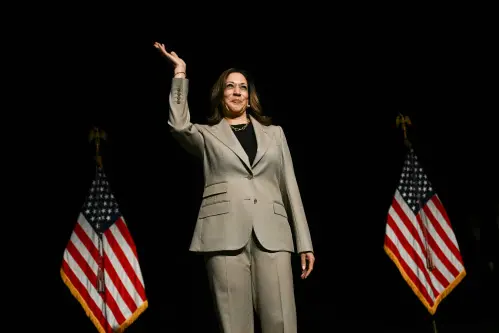
Washington: Vice President Kamala Harris is focusing on the high costs of food and housing as her campaign gears up for an economic policy speech on Friday in North Carolina. Harris plans to advocate for a federal ban on price gouging for groceries and propose measures to reduce other living costs, addressing a major voter concern.
Despite a significant drop in year-over-year inflation, food prices remain 21% higher than three years ago. Housing costs also contribute heavily to inflation, prompting Harris to propose the construction of 3 million new housing units, legislation to curb rent increases, and $25,000 in down-payment assistance for first-time homebuyers.
Harris aims to build on President Joe Biden’s legislative and economic achievements, framing her proposals as a continuation of their administration's work. Her housing plan includes creating a tax credit for builders of starter homes and doubling the $20 billion “innovation fund” for housing construction. The down-payment assistance is intended to significantly expand upon a Biden initiative.
On Thursday, Biden and Harris highlighted their success in reducing prescription drug prices at a Maryland event. They announced that the Inflation Reduction Act will lower prices for 10 of Medicare’s most expensive drugs, a measure for which Harris cast the pivotal Senate vote.
Biden reassured that Harris will not distance herself from his economic record, despite some skepticism among voters. Current polling shows that 45% trust former President Donald Trump over Harris to handle the economy, while 38% prefer Harris.
Trump, speaking in New Jersey, criticized Harris’s proposed measures as “communist price controls” and argued they would exacerbate shortages and inflation. Harris’s housing plan includes cracking down on rent-setting tools and removing tax incentives for investment firms that purchase large quantities of housing.
Consumer confidence surveys reveal ongoing frustration with high prices, especially among lower-income Americans. Despite inflation cooling, overall prices remain about 21% higher than before the pandemic, with meat prices rising significantly during this period.
The Biden administration attributes rising meat prices partly to corporate consolidation in the processing industry, while some economists suggest companies may have exploited pandemic disruptions to drive prices higher. Critics argue that Harris’s proposed ban on price gouging may not address the broader inflationary pressures impacting various sectors.
Julie Anna Potts, head of the Meat Institute, contends that a federal ban on price gouging will not resolve the underlying causes of inflation affecting a wide range of goods and services. (Agencies)
Published: 16 Aug 2024, 07:52 am IST
Disclaimer: Kindly avoid objectionable, derogatory, unlawful and lewd comments, while responding to reports. Such comments are punishable under cyber laws. Please keep away from personal attacks. The opinions expressed here are the personal opinions of readers and not that of Mathrubhumi.
