
Gulf nations face a strategic dilemma as Iran targets US bases, challenging their neutrality and regional security plans.
Dubai: In late 2025 and early 2026, Gulf nations maintained a cautious stance amid escalating tensions between the United States and Iran, explicitly refusing the use of their airspace or territories for military strikes against Tehran.
This position was coupled with proactive diplomatic efforts, including direct and indirect communication with Washington and Tehran, aimed at preventing the situation from spiralling into a broader regional conflict.
The Gulf’s approach reflected a delicate balancing act: preserving long-standing security partnerships with the U S while avoiding direct involvement in an armed confrontation with Iran.
Historical context: Gulf responses to past strikes
On June 23, 2025, during the so-called “12-Day War,” Iran launched missiles at Al Udeid Air Base in Qatar. In response, several Gulf states temporarily closed their airspace to civilian flights. Official statements condemned the Iranian strikes, reaffirmed support for Qatar, and urged restraint to prevent a regional escalation. This early episode highlighted the potential consequences for Gulf states hosting U S military installations, even as they sought to remain neutral.
In January 2026, ahead of the latest escalation, Gulf countries, including Saudi Arabia, the UAE, Qatar, Kuwait, and Oman, reportedly informed Washington that their territories and airspace could not be used for attacks on Iran. This included refusal of refuelling or logistical support for potential operations. Simultaneously, Oman and Qatar facilitated mediation channels between Washington and Tehran, emphasising that regional stability and security took precedence over participation in military action.
Also read| Is Israel trying to partition Iran? Larijani claims amid escalating Middle East conflict
US-Israel strikes on Iran and Iranian retaliation
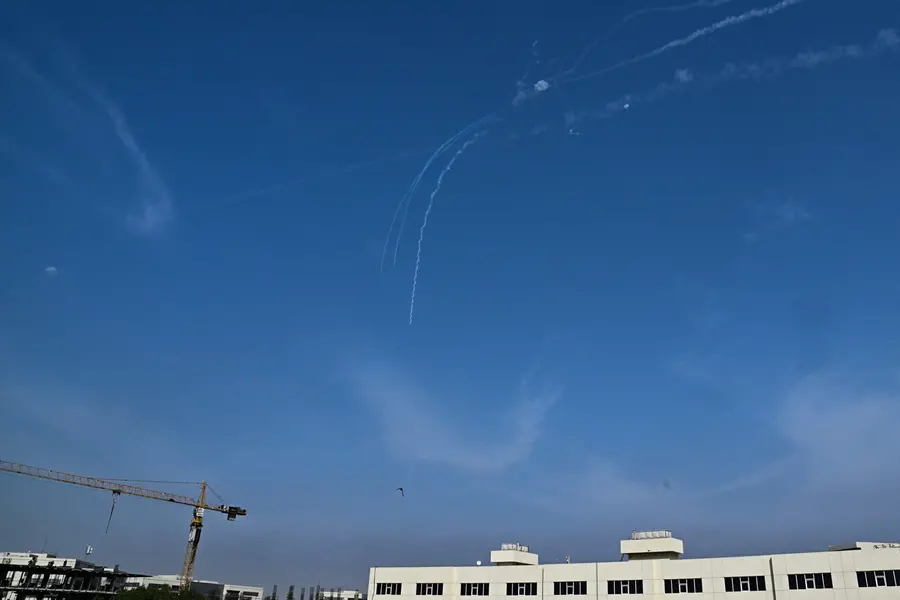
Despite these diplomatic efforts, the U S and Israel launched a coordinated strike targeting key sites inside Iran. In retaliation, Iranian missiles struck U S-associated military bases across the Gulf. The attacks caused damage to both military and civilian areas, including residential zones and public infrastructure, underscoring the vulnerability of host nations despite their non-involvement.
US Military presence in the Gulf
Iranian strikes targeted strategic U S installations in the Gulf, including:
- Al Udeid Air Base, Qatar – the largest U S military base in the Middle East, spanning 24 hectares and hosting thousands of troops. Some personnel were evacuated following the US-Israel strikes on Iran.
- Al Dhafra Air Base, UAE – a key hub for U S Air Force operations, jointly operated with the UAE.
- Jebel Ali Port, Dubai – not officially a military base, but periodically hosts U S vessels.
- Prince Sultan Air Base, Saudi Arabia – hosts 2,321 U S troops with deployed Patriot and THAAD missile systems.
- U S Fifth Fleet Headquarters, Bahrain – oversees operations across the Gulf, Red Sea, Arabian Sea, and parts of the Indian Ocean.
- U S Bases in Kuwait – including Camp Arifjan, Ali Al Salem Air Base (“The Rock”), and Camp Buehring, key staging grounds for operations in Iraq and Syria.
Gulf states’ strategic dilemma
Observers have noted the paradox of Gulf nations being subjected to Iranian strikes despite refusing participation in attacks on Tehran. Bahraini researcher Jaafar Salman suggests that Tehran may calculate Gulf tolerance for missile strikes on US bases, provided civilian areas remain largely untouched. However, he warns that a prolonged campaign or expansion to domestic targets could alter the strategic calculus and force Gulf nations into a more assertive response.
Also Read| Did Baba Vanga foresee Iran–US war? Prophecy resurfaces amid conflict
Future implications
These developments raise key strategic questions for Gulf states: Will repeated strikes prompt a reassessment of hosting U S military operations? Will countries such as Saudi Arabia, Qatar, and the UAE recalibrate defence strategies, including deterrence and regional balancing?
US military presence remains critical for Gulf security, and while single incidents may heighten tensions, they reinforce rather than diminish the perceived necessity of these bases as a deterrent against Iran.
Published: 01 Mar 2026, 12:19 pm IST
Related Topics
Disclaimer: Kindly avoid objectionable, derogatory, unlawful and lewd comments, while responding to reports. Such comments are punishable under cyber laws. Please keep away from personal attacks. The opinions expressed here are the personal opinions of readers and not that of Mathrubhumi.
