
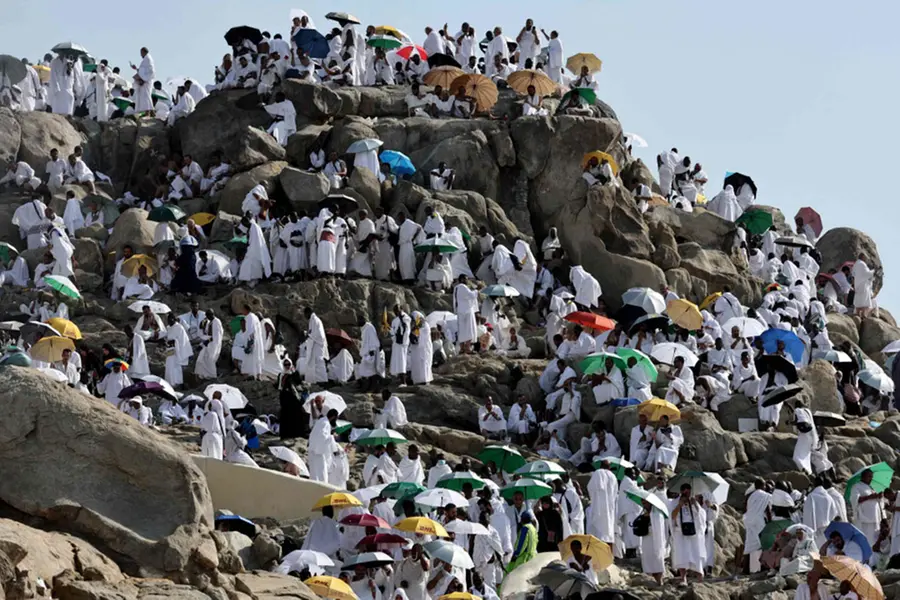
Mina, Saudi Arabia: In Mina, on Sunday, millions of pilgrims performed the symbolic stoning of the devil, marking the final days of the Hajj pilgrimage and the beginning of Eid al-Adha celebrations for Muslims globally.
The stoning is one of the concluding rites of Hajj, a central pillar of Islam. It follows the gathering of over 1.8 million pilgrims at Mount Arafat, a sacred hill near Mecca, where they engaged in the annual five-day pilgrimage rituals. After leaving Mount Arafat on Saturday evening, the pilgrims spent the night at Muzdalifa, collecting pebbles for the stoning ritual in Mina. This act commemorates Ibrahim's test of faith when God commanded him to sacrifice his son Ismail. Ibrahim's compliance was halted by divine intervention, sparing his son. In Christian and Jewish traditions, this story involves Abraham and his son Isaac.
In the following three days in Mina, pilgrims cast seven pebbles each at three pillars, symbolising the rejection of evil and sin. They also visit Mecca to perform "tawaf," or circumambulation of the Kaaba, by walking around it counterclockwise seven times. This ritual will be repeated as the Farewell Tawaf at the pilgrimage's conclusion.
The Hajj rites coincide with the four-day festival of Eid al-Adha, or the "Feast of Sacrifice." During this time, Muslims who can afford it commemorate Ibrahim's test of faith by slaughtering livestock and distributing the meat to the poor.
After completing the Hajj, men traditionally shave their heads and remove the simple white garments worn during the pilgrimage, while women trim a lock of hair, symbolising renewal and rebirth.
Many pilgrims proceed from Mecca to Medina, approximately 340 kilometres away, to pray at the Prophet Muhammad's tomb in the Prophet's Mosque. This mosque is one of Islam's three holiest sites, along with the Grand Mosque in Mecca and Al-Aqsa Mosque in Jerusalem.
The 2024 Hajj unfolded against the backdrop of significant regional conflicts, including the Israel-Hamas war and ongoing violence in Sudan, affecting the participation of pilgrims from these regions and their ability to celebrate Eid al-Adha as usual. AFP
Published: 16 Jun 2024, 11:04 am IST
Related Topics
Disclaimer: Kindly avoid objectionable, derogatory, unlawful and lewd comments, while responding to reports. Such comments are punishable under cyber laws. Please keep away from personal attacks. The opinions expressed here are the personal opinions of readers and not that of Mathrubhumi.
