
As of Monday, March 2, Bahrain, Iran, Iraq, Israel, Jordan, Kuwait, Qatar, Saudi Arabia, Syria and the United Arab Emirates had announced restrictions affecting their skies
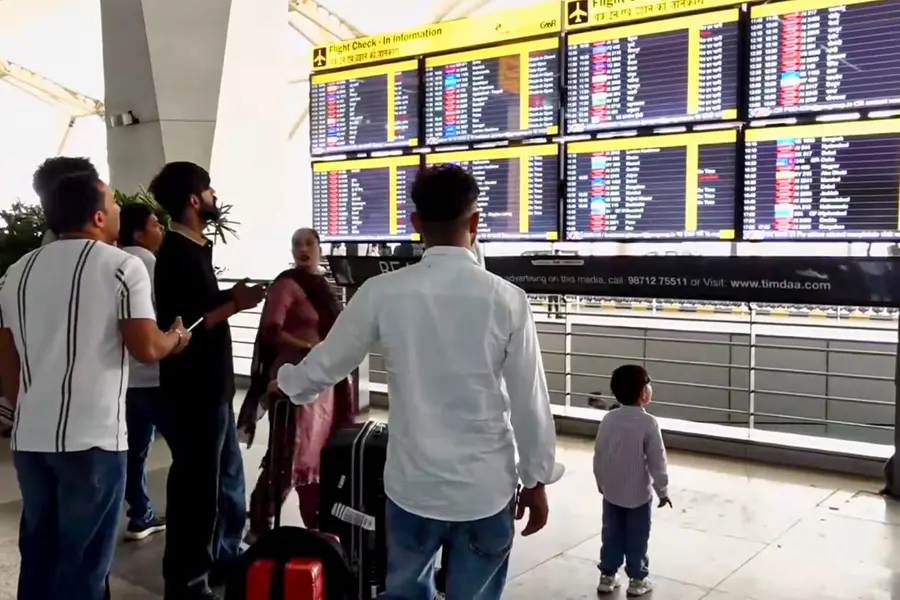
An estimated 300,000 passengers have been left stranded across the Gulf region as airspace closures and airport shutdowns continue on the third day (March 2) following joint US-Israeli strikes on Iran and subsequent retaliatory attacks, according to media reports.
Commercial aviation across the Middle East has been effectively paralysed with operations suspended at several of the region’s busiest hubs. The disruption has rapidly escalated into a global travel crisis, given the Gulf’s central role as a transit corridor linking Europe, Asia, Africa and Australasia.
According to flight-tracking service Flightradar24, more than 3,400 flights were cancelled on Sunday alone across seven major airports in the region. These included Dubai International Airport, Hamad International Airport, Zayed International Airport, Sharjah International Airport, Kuwait International Airport, Bahrain International Airport and Dubai World Central - Al Maktoum International.
Airspace across much of the Gulf remains either fully or partially closed. As of Monday, March 2, Bahrain, Iran, Iraq, Israel, Jordan, Kuwait, Qatar, Saudi Arabia, Syria and the United Arab Emirates had announced restrictions affecting their skies, triggering widespread cancellations, diversions and delays.
ALSO READ | Stranded in Dubai amid Gulf conflict, will PV Sindhu miss All England Open in Birmingham?
The closure of critical transit hubs in Dubai, Abu Dhabi and Doha has had a significant knock-on effect worldwide. Middle Eastern carriers play a pivotal role in long-haul connectivity, and when these hubs shut down, the disruption cascades across continents.
Scenes of confusion and frustration have unfolded inside airport terminals. Social media platforms are flooded with images and videos of stranded passengers sleeping on floors, queuing for hours to rebook flights, or attempting to secure hotel accommodation and assistance. Travellers at Doha, Dubai and Abu Dhabi have reported overcrowded terminals and limited information from airlines.
Visuals from the airport
The UK is understood to be preparing or dispatching teams to assist with evacuations, as governments across the world monitor the situation and assess contingency plans for their citizens caught in the disruption.
With airspace closures still in force and hostilities ongoing, aviation authorities warn that thousands more passengers could remain in limbo in the coming days, raising concerns over prolonged global travel disruption if the conflict continues.
Published: 02 Mar 2026, 03:26 pm IST
Disclaimer: Kindly avoid objectionable, derogatory, unlawful and lewd comments, while responding to reports. Such comments are punishable under cyber laws. Please keep away from personal attacks. The opinions expressed here are the personal opinions of readers and not that of Mathrubhumi.
