
Guinea-Bissau`s military has seized power, deposing President Embaló after disputed elections
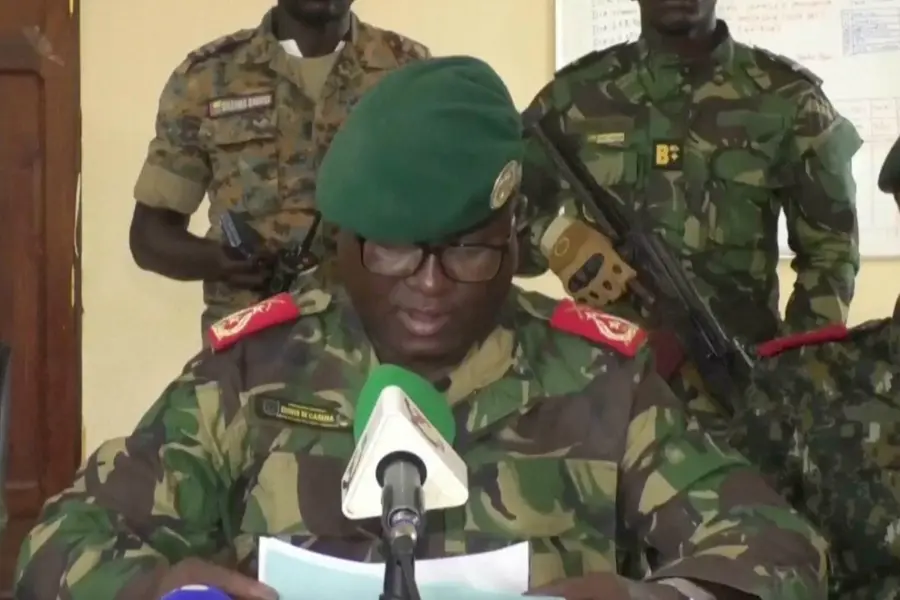
Guinea-Bissau: Soldiers in Guinea-Bissau appeared on state television on Wednesday, announcing that they had seized power in the country. The move came after reports of gunfire near the presidential palace, just three days after national elections. The president told French media that he had been deposed and arrested.
“The High Military Command for the reestablishment of national and public order decides to immediately depose the president of the republic, to suspend, until new orders, all of the institutions of the republic of Guinea-Bissau," said spokesperson Dinis N’Tchama in a statement.
He added that the military acted in response to the “discovery of an ongoing plan” aimed at destabilising the country through attempts to “manipulate electoral results." N’Tchama alleged that “the scheme was set up by some national politicians with the participation of a well-known drug lord, and domestic and foreign nationals,” though he did not provide further details.
The soldiers also announced the suspension of the electoral process and the activities of media outlets, in addition to closing all borders.
What was the situation on the ground?
Gunfire was reported near the presidential palace at midday on Wednesday. According to reports, it was observed that roads leading to the palace blocked, with checkpoints manned by heavily armed and masked soldiers.
An official from the presidential palace said that a group of armed men had attempted to attack the building, leading to an exchange of gunfire with palace guards. Another official from the Interior Ministry said that gunshots were also heard near the National Electoral Commission. Both spoke on condition of anonymity because they were not authorised to speak publicly.
A key member of an international election observer group confirmed that the election commission chief had been arrested and the commission office was sealed off by the military. “The president has been speaking to people saying he’s being held by the military," the observer staffer said, also on condition of anonymity.
What did President Embaló say?
French news outlet Jeune Afrique reported that President Umaro Sissoco Embaló told France 24 he had been arrested in what he described as a coup led by the army chief of staff. He clarified that he had not been subjected to violence. “I have been deposed,” Embaló said.
Embaló has faced a legitimacy crisis, with opposition leaders claiming that his tenure had expired and that they did not recognise him as president.
Guinea-Bissau’s constitution sets the presidential term at five years. Embaló first came to power in February 2020. The opposition argued that his term should have ended on 27 February 2025, but the Supreme Court ruled it should continue until 4 September 2025. The presidential election had been delayed until this month.
What is Guinea-Bissau’s political context?
Guinea-Bissau has experienced four coups and multiple attempted coups since independence. The country is also a recognised hub for drug trafficking between Latin America and Europe. The latest unrest follows presidential and legislative elections held on Sunday, in which both incumbent Embaló and opposition candidate Fernando Dias da Costa claimed victory on Tuesday, despite official provisional results not being expected until Thursday.
AP inputs
Published: 26 Nov 2025, 11:52 pm IST
Disclaimer: Kindly avoid objectionable, derogatory, unlawful and lewd comments, while responding to reports. Such comments are punishable under cyber laws. Please keep away from personal attacks. The opinions expressed here are the personal opinions of readers and not that of Mathrubhumi.
