
Thousands of young Nepalese have taken to the streets after the government blocked 26 social media platforms, including Facebook, Instagram and X.
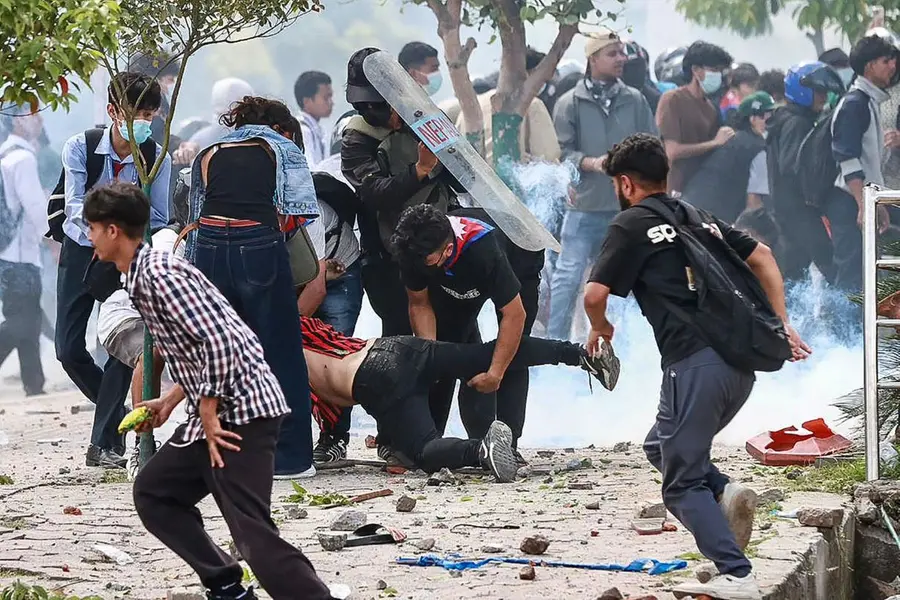
Kathmandu (Nepal): Nepal is facing its most intense street protests in years after a government move to block several major social media platforms triggered outrage, leaving at least 19 people dead and more than 100 injured.
The unrest, led largely by young citizens, escalated into a broader anti-corruption movement, prompting curfews, a cabinet meeting, and even army deployment in the capital. Here’s a breakdown of what led to the crisis.
Why did Nepal shut down social media platforms?
The government ordered internet service providers to restrict access to 26 popular social networking platforms - including Facebook, Instagram, YouTube, Messenger, X (formerly Twitter), Reddit, WeChat, Discord, and Snapchat - after the companies failed to comply with a new local registration mandate.
The Ministry of Communication and Information Technology had given platforms seven days, starting August 28, to register operations in Nepal, designate a resident grievance officer, and appoint a local compliance contact. None of the major companies, including Meta (Facebook, Instagram, WhatsApp), Alphabet (YouTube), X, Reddit and LinkedIn, filed applications by the deadline.
Some platforms, like TikTok, Viber, Witk, Nimbuzz and Popo Live, had already registered and remain accessible. Applications from Telegram and Global Diary are under review, according to officials.
Prithvi Subba Gurung, Nepal’s communication and IT minister, defended the decision, saying companies were given sufficient time to comply. The Supreme Court had earlier upheld the government’s right to require registration, citing the need to regulate revenue streams and combat misinformation, though it stopped short of calling for bans, instead urging legal frameworks to enforce compliance.
The government insists that access to blocked platforms will be restored once they meet the registration requirements.
How did the public react to the ban?
The ban came into effect on September 5, instantly cutting millions of Nepalese off from widely used services. Facebook alone commands around 87 per cent of the social media market in Nepal, with roughly 13.5 million users. Instagram counts an estimated 3.6 million.
The block sparked anger, particularly among younger citizens, many of whom rely on social media for business, news, and civic engagement. Using the term ‘Gen Z’ to identify their collective, students and young workers began calling for demonstrations.
What started as protests against the shutdown rapidly grew into a larger anti-corruption and anti-authoritarian movement. Thousands took to the streets of Kathmandu and beyond, confronting riot police who responded with rubber bullets and tear gas.
Curfews were imposed in key areas including Baneshwor, Singhadurbar, Narayanhiti and other sensitive zones. The army was deployed in New Baneshwor after violence escalated.
A young protest leader urged restraint after clashes intensified, saying: “We have already won today.” The leader claimed “vested groups have entered the crowd to provoke it” and asked demonstrators to pull back.
Voices from the protests
“We were triggered by the social media ban, but that is not the only reason we are gathered here,” said Yujan Rajbhandari, a 24-year-old student, speaking to AFP. “We are protesting against corruption that has been institutionalised in Nepal.”
Ikshama Tumrok, a 20-year-old student, said she was protesting against the government’s “authoritarian attitude”. “We want to see change. Others have endured this, but it has to end with our generation,” she said.
Another protester, in a video circulating online, asked: “When the leaders’ sons and daughters have a bright future, where is ours?”
What is the government’s response to the unrest?
Prime Minister KP Sharma Oli called an emergency cabinet meeting as protests spread nationwide. In a statement released Sunday, the government maintained it respects free speech, saying it remains committed to “creating an environment for their protection and unfettered use.”
Officials argue the registration drive is meant to regulate digital platforms, track revenue flows, and reduce online crime — not to suppress expression. Critics, including the Committee to Protect Journalists and the Federation of Nepali Journalists, say the move restricts press freedom, democratic access to information and digital rights, comparing it to censorship practices in China.
(With inputs from agencies)
Published: 08 Sept 2025, 06:32 pm IST
Related Topics
Disclaimer: Kindly avoid objectionable, derogatory, unlawful and lewd comments, while responding to reports. Such comments are punishable under cyber laws. Please keep away from personal attacks. The opinions expressed here are the personal opinions of readers and not that of Mathrubhumi.
