
Deadly fighting erupts on the Thailand-Cambodia border, claiming 11 lives and injuring dozens.
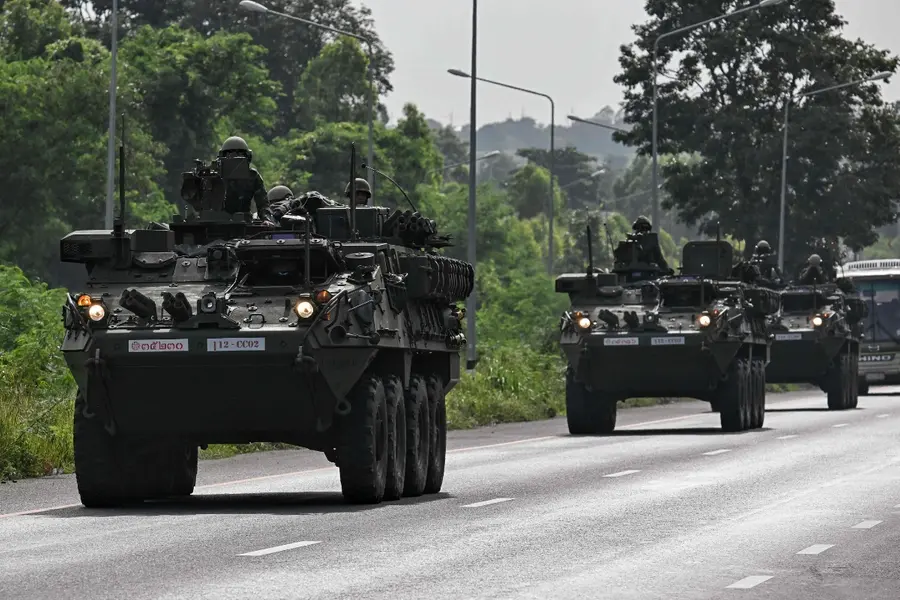
Bangkok: Armed conflict has erupted once again along the Thailand-Cambodia border, leading to the deaths of at least 11 people and dozens more injured, in what is being described as the worst flare-up in over a decade. The fighting, which broke out on Thursday, included gunfire exchanges, rocket launches, and Thai airstrikes, dramatically escalating tensions that had been steadily mounting for months.
Thai officials confirmed that nine Thai civilians were killed and 14 others injured across three provinces. In response, the Thai military launched retaliatory air raids. The conflict has raised serious concerns about regional stability and the fragile relationship between the two Southeast Asian neighbours.
Multiple flashpoints along the border
According to Thailand’s Defence Ministry, clashes are still active in at least six locations. The first skirmish erupted near the ancient Ta Muen Thom temple, straddling the Surin province of Thailand and Cambodia’s Oddar Meanchey province. This sacred site has long been a point of contention, located in a disputed zone neither side officially controls.
Dispute reignited by land mine and fatal shooting
Tensions originally resurfaced in May when armed forces from both sides exchanged fire in a small contested area. The confrontation, which each country claimed was provoked by the other, resulted in the death of a Cambodian soldier. Although both nations had vowed to de-escalate, the situation remained volatile, further aggravated by a recent land mine explosion that injured Thai soldiers—an incident that prompted both governments to downgrade diplomatic ties just hours before the latest violence.
In the lead-up to the current conflict, both countries had engaged in increasingly aggressive non-military tactics. Thailand had imposed stricter border controls, allowing crossings only for essential cases like students and medical emergencies. As of Thursday, the Thai government announced a complete border shutdown.
Cambodia responded by banning Thai movies and television, halting the import of Thai fuel, produce, and vegetables, and boycotting certain Thai power and internet links. These measures have inflamed nationalist sentiments on both sides of the border.
Political crisis in Thailand deepens
Thailand’s political leadership has also been dragged into the dispute. Prime Minister Paetongtarn Shinawatra was suspended from office on 1 July following an ethics probe. The investigation was triggered by a leaked phone conversation with a top Cambodian official in which Paetongtarn referred to former Cambodian Prime Minister Hun Sen as “uncle” and appeared to criticise her own country’s military.
The call sparked domestic outrage and mass protests, with critics accusing her of undermining national sovereignty. The backlash intensified when the Bhumjaithai Party, the second-largest faction in her coalition, withdrew its support. Paetongtarn later apologised, claiming her remarks were a negotiation tactic. In her absence, former Defence Minister Phumtham Wechayachai has stepped in as acting prime minister.
A century-old map still fuels modern conflict
The territorial dispute stretches back over a century, rooted in colonial-era cartography. A map drawn by the French in 1907, intended to demarcate the boundary between Thailand and then French-ruled Cambodia, lies at the heart of the conflict. Cambodia uses this map to justify its claims, while Thailand has long contested its accuracy.
The 1,000-year-old Preah Vihear temple remains the most symbolic and contested site. Although the International Court of Justice awarded the temple to Cambodia in 1962, tensions have persisted. Renewed clashes in 2011 left 20 dead and displaced thousands. In 2013, the court reaffirmed Cambodia’s sovereignty over the temple, a ruling Thailand reluctantly accepted.
In the wake of the latest escalation, Cambodia has once again approached the International Court of Justice to mediate. However, Thailand has refused to acknowledge the court’s jurisdiction in this matter, making a diplomatic resolution uncertain.
(With inputs from AP)
Published: 24 Jul 2025, 09:17 pm IST
Related Topics
Disclaimer: Kindly avoid objectionable, derogatory, unlawful and lewd comments, while responding to reports. Such comments are punishable under cyber laws. Please keep away from personal attacks. The opinions expressed here are the personal opinions of readers and not that of Mathrubhumi.
