
Denying an entire generation education jeopardises the country’s future.
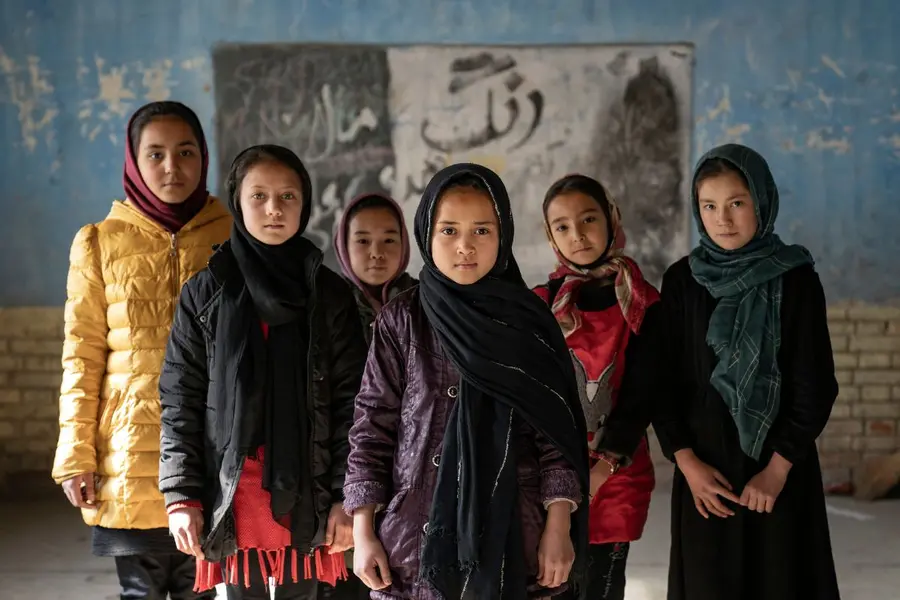
In Afghanistan, the Taliban’s ban on girls’ education has shattered dreams, halted careers, and trapped millions of young women under severe restrictions, reversing decades of progress in learning and freedom.
December 22--that day, I felt I should never have been born a girl,” said Adeela (name changed), who was a fourth-year medical student at Kabul Medical University.
Only a few days remained for her final semester exams. She had spent sleepless days and nights studying. After completing three more years of the course, she could practise medicine in Kabul. That dream was within reach. But everything collapsed with the arrival of the news: the Taliban had banned girls from college education.
“The destruction of my dreams began there. Now even dreaming is frightening,” Adeela said.
The Taliban’s ideology is based on an extremely rigid and restrictive interpretation of religion, aiming to establish a social order under religious law that considers women’s freedom, education, and Western values as “unislamic.”
According to UNESCO, after 2021, at least 1.4 million girls were expelled from schools. Denying an entire generation education jeopardises the country’s future. Adeela remembers that day vividly. Even now, her eyes well up with tears when she speaks.
“When I saw the news about the Taliban’s new education policy, I felt a tightening inside. When I opened the college WhatsApp group, the messages were flooding in,” she said. Many female friends called, crying. The boys tried to offer comforting words. Adeela did not know what to do and was numb. She prayed that nothing she had heard was true. She decided to study all night for her exams.
The next morning, she ran to Kabul University without breakfast. Entering the gate, she reassured herself nothing bad would happen. When the teacher entered the classroom, the first announcement was, “After the exams, girls must go home. They cannot return.” The whole classroom was in tears. Prayers that it was not true proved futile. In that moment, she cursed herself, wondering why she had been born a girl. “That day, all my dreams died,” Adeela said. Both boys and girls cried together. Before leaving, they wrote their names on the classroom walls.
Soil of dried tears
Four years later, thousands of girls like Adeela should now be practising medicine in Kabul. “All the boys in our class are now working in hospitals,” she said, holding back tears. Not only women, but the larger Afghan population, including men, is living under the Taliban’s suffocating rule.
“My driver told me, ‘In 2021, both my son and daughter were in Class 7. Now only my son goes to school. My daughter asks why she cannot go, and I have no answer, madam,’” Adeela recounted.
It is not just education that is restricted. Women’s public presence and freedom of movement are tightly controlled. The niqab covering the entire body is compulsory in many places. Leaving home without a scarf covering the head is punishable, sometimes by imprisonment. Leaving home without a male guardian (‘mahram’) is also punishable. Women are barred from government jobs and workplaces, putting their lives in a silent prison.
During two weeks of travel in Afghanistan, what was observed was a society in which women had been almost entirely erased. On dusty roads, crowded markets, and government institutions, women were invisible. Even parks and gardens bar females.
Afghanistan is now the only country in the world that prohibits girls from accessing secondary education. According to UNESCO, around 2.2 million girls are currently barred from schooling after Class 6. These educational restrictions may increase child marriage rates by 25% and adolescent pregnancies by 45%.
In 2021, following the sudden withdrawal of American forces from Afghanistan, the Taliban regained power. Since then, life for Afghan women and girls has darkened completely. Once advancing in education, employment, and freedom, they are now trapped again under repression. After seizing power, girls were prohibited from higher-level education. They are no longer allowed to continue studying beyond the sixth grade.
Going backwards
Like the UN warns, denying girls education will cause long-term socio-economic consequences. Experts note that losing education affects not just girls, but the entire country.
Many doubt whether Afghan girls receive any education at all. Taliban Foreign Minister Amir Khan Muttaqi, during a recent visit to India, claimed that girls are not completely denied education. “Currently, 2.8 million girls attend schools and madrasas,” he said in a press conference in Delhi. He added that madrasas provide opportunities for studies till graduation.
However, observations show the opposite. Most students are below Class 6. While minor syllabus changes may have occurred, most instruction in madrasas remains religious study.
Taliban claims about girls’ education include licensing around 100 women’s training centres. With high schools and universities closed, girls are now limited to vocational training such as tailoring, embroidery, and crafts. Some centres provide English classes, but these are exceptions.
This is the first article in a special series, taking readers inside Afghanistan’s female spaces and revealing the hidden struggles of women living under Taliban rule. The next article will uncover secret classrooms where girls continue to learn in defiance of restrictions.
Published: 07 Nov 2025, 03:49 pm IST
Related Topics
Disclaimer: Kindly avoid objectionable, derogatory, unlawful and lewd comments, while responding to reports. Such comments are punishable under cyber laws. Please keep away from personal attacks. The opinions expressed here are the personal opinions of readers and not that of Mathrubhumi.
