
North Korea's response to upcoming joint US-South Korea military drills remains to be seen. Pyongyang has previously used these drills to justify weapons tests
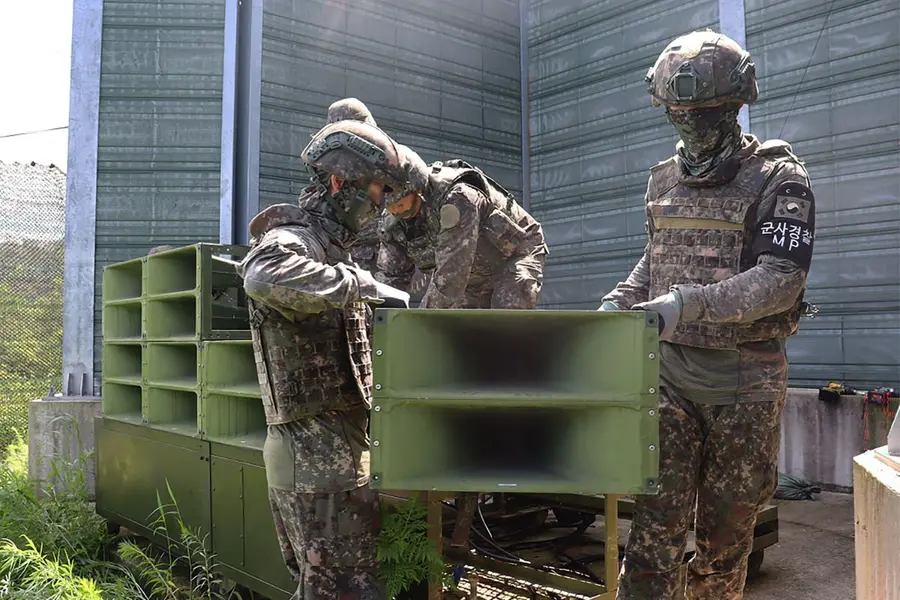
Seoul: North Korea on Saturday began removing some of its loudspeakers from the inter-Korean border, according to South Korea’s military, just days after the South dismantled its own front-line speakers used for anti-North Korean propaganda broadcasts in a bid to ease tensions.
South Korea’s Joint Chiefs of Staff (JCS) said it detected activities by the North to remove some of its loudspeakers but did not disclose the specific sites. It also said it was not immediately clear whether North Korea would take all of them down.
In recent months, South Korean border residents had complained that North Korea blasted irritating noises such as howling animals and pounding gongs through these loudspeakers, in apparent retaliation for the South’s propaganda broadcasts.
The JCS noted that the North stopped its broadcasts in June after President Lee Jae Myung halted the South’s broadcasts, marking his government’s first concrete step toward easing tensions between the war-divided rivals. South Korea began dismantling its speakers from the border on Monday but has not specified how they would be stored or whether they could be quickly redeployed if tensions rise again.
North Korea, extremely sensitive to outside criticism of its authoritarian leadership and the family rule of Kim Jong Un, has not officially confirmed the dismantling of its loudspeakers. The South’s previous conservative administration had resumed daily loudspeaker broadcasts in June last year after a years-long pause, responding to North Korea’s launches of balloons carrying trash into the South.
Those broadcasts featured propaganda messages and K-pop songs, intended to provoke Pyongyang, where Kim has been pushing a campaign to eradicate South Korean pop culture and language to preserve his family’s dynastic control.
The Cold War-style psychological warfare further escalated tensions already heightened by North Korea’s advancing nuclear weapons program, South Korea’s expansion of joint military drills with the United States, and their trilateral security cooperation with Japan.
Lee, who took office in June after winning an early election to replace ousted conservative Yoon Suk Yeol, has sought to improve inter-Korean ties. Pyongyang, however, has so far rebuffed his overtures. In late July, Kim Yo Jong, the powerful sister of the North Korean leader, dismissed his outreach, saying Seoul’s “blind trust” in its alliance with the U.S. makes it no different from the previous conservative administration.
She also issued a separate statement rejecting the Trump administration’s intent to resume diplomacy on denuclearisation, suggesting Pyongyang — now deepening its ties with Russia amid the war in Ukraine — sees little urgency in engaging with Seoul or Washington.
Despite the latest conciliatory gestures, tensions may flare again later this month when South Korea and the U.S. hold their annual large-scale combined military exercises, beginning August 18. North Korea routinely denounces these drills as rehearsals for invasion and often uses them as justification for intensifying military demonstrations and weapons tests aimed at advancing its nuclear programme.
With inputs from AP
Published: 09 Aug 2025, 06:56 pm IST
Related Topics
Disclaimer: Kindly avoid objectionable, derogatory, unlawful and lewd comments, while responding to reports. Such comments are punishable under cyber laws. Please keep away from personal attacks. The opinions expressed here are the personal opinions of readers and not that of Mathrubhumi.
