
German Interior Minister Alexander Dobrindt described the incidents as a "wake-up call" on the growing threat from drones.
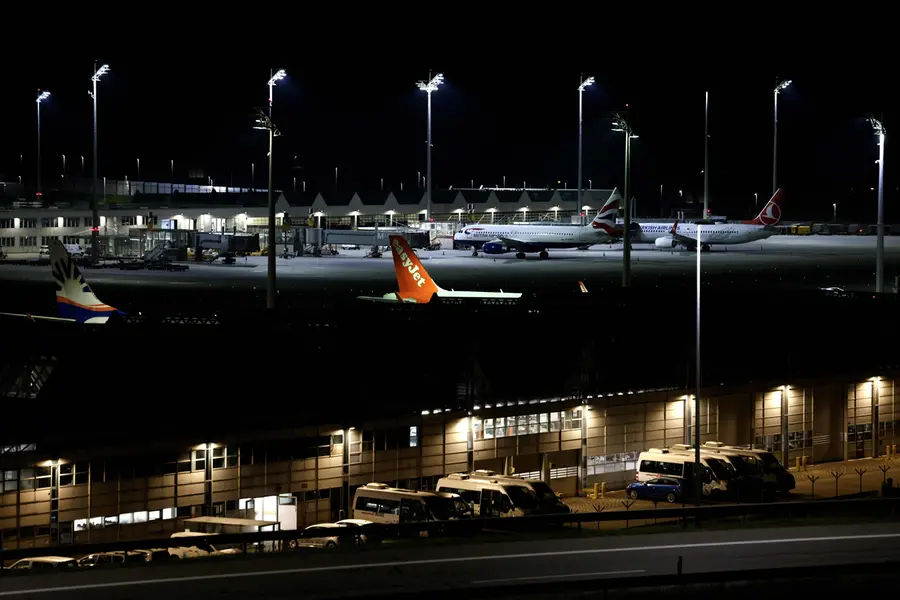
Berlin: For the second night in a row, Munich airport was forced to suspend operations late Friday after drones were sighted near its runways, disrupting dozens of flights and leaving more than 6,500 passengers stranded.
The airport said in a statement that "from 9:30 pm air traffic was restricted and then cancelled due to drone sightings," resulting in 23 incoming flights being diverted and 12 departures cancelled. Another 46 outbound flights were either cancelled or delayed until Saturday.
A police spokesman confirmed that patrols had reported "two simultaneous confirmed drone sightings by police patrols just before 11 pm around the north and south runways." He added that "the drones immediately moved away, before they could be identified."
As on Thursday, when similar sightings grounded more than 30 flights, Munich airport set up camp beds, blankets, and refreshments in its terminals to accommodate stranded passengers. "As on the previous night, the airport, in collaboration with the airlines, promptly provided supplies for passengers in the terminals. Camp beds were set up, along with blankets, drinks, and snacks," the statement said.
Normal service is expected to resume at 5:00 am on Saturday.
Repeated disruptions
Thursday’s disruption began at 8:30 pm when drones were spotted near the nearby towns of Freising and Erding, home to a German military airfield. Drones were then seen around the airport perimeter at 9:05 pm and later over the airport complex, forcing the closure of both runways until midnight.
Police deployed helicopters but could not determine "the type and number of drones". Bild newspaper reported that some drones flew over the Erding military site, although police said they could not confirm that claim.
German Interior Minister Alexander Dobrindt described the incidents as a "wake-up call" on the growing threat from drones. "The race between the threat from drones and the defence against drones is becoming more and more difficult," he told Bild. "More financing and research" were urgently required both nationally and at the EU level, he added.
Bavarian state premier Markus Soeder also urged tougher action: "We must be able to shoot (drones) down immediately instead of waiting," he told Bild, adding that police should also have that authority.
The federal government is expected next week to approve new legislation allowing the German army to shoot down drones if needed.
Wider tensions
The scare comes as Germany marked its Unity Day holiday and Munich hosted the final weekend of Oktoberfest, which attracts hundreds of thousands daily. The beer festival had already been disrupted earlier in the week by a bomb scare.
Across northern and eastern Europe, similar drone incursions have rattled security services. Airports in Denmark, Norway and Poland have all suspended flights recently, while Romania and Estonia directly accused Russia of being behind such incidents.
Ukrainian President Volodymyr Zelenskyy warned European leaders on Thursday that the incursions were evidence Moscow was seeking to "escalate" its aggression beyond Ukraine’s borders.
Denmark’s Prime Minister Mette Frederiksen echoed those concerns last week, saying only one country "poses a threat to Europe's security — and that's Russia."
Moscow has rejected all allegations of involvement. Russian President Vladimir Putin accused European governments of fueling "hysteria" to justify higher military spending. AFP
Published: 04 Oct 2025, 06:16 am IST
Disclaimer: Kindly avoid objectionable, derogatory, unlawful and lewd comments, while responding to reports. Such comments are punishable under cyber laws. Please keep away from personal attacks. The opinions expressed here are the personal opinions of readers and not that of Mathrubhumi.
