
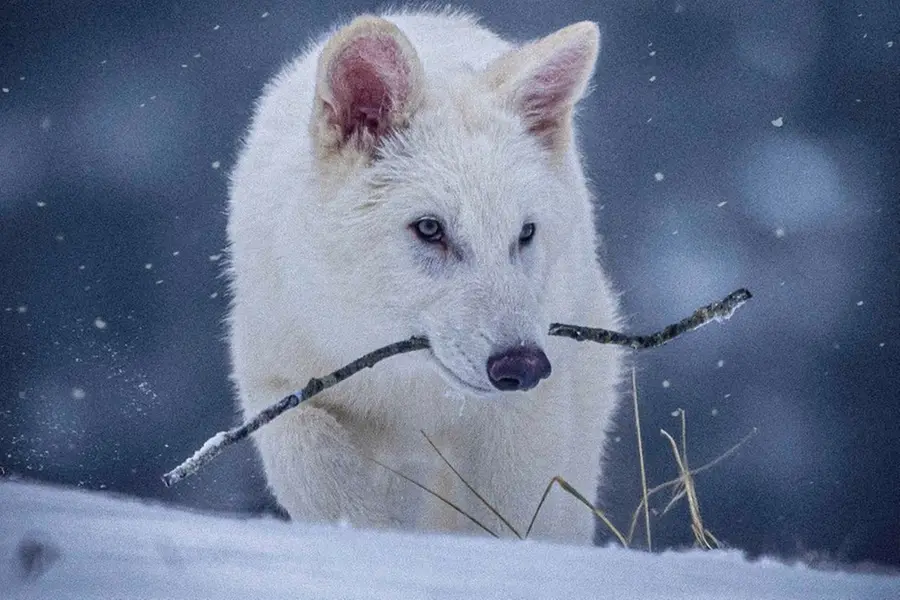
A claim that dire wolves — the extinct Ice Age predators — have been brought back to life has been met with scepticism.
Colossal Biosciences, the company behind the effort, edited grey wolf DNA to mimic dire wolf characteristics and unveiled three pups named Romulus, Remus, and Khaleesi. Their birth was hailed as a breakthrough, but experts cited in reports from both BBC and ABC News disagree.
BBC reports that the animals were created by editing genes of modern grey wolves to introduce traits like white fur and a broader skull. The embryos were implanted into domestic dogs and delivered via caesarean section. Despite this, scientists told the BBC that the animals are genetically modified grey wolves, not true dire wolves. Ancient dire wolf DNA, they note, is too degraded to be directly cloned, making true resurrection of the species biologically implausible.
Why does the claim matter?
The distinction, experts say in the BBC report, is crucial. Dire wolves diverged from grey wolves over six million years ago and belong to a separate genus. According to ABC News, scientists argue that editing a few genes cannot recreate the complex genetic, behavioural and ecological traits formed over millions of years of evolution.
Where is the scientific proof?
ABC News highlights the lack of a peer-reviewed scientific paper outlining Colossal’s methods and findings, making it difficult for others to verify their claims. As both agencies report, concerns remain that calling these engineered animals "de-extincted" may mislead the public about what extinction truly means.
Published: 08 Apr 2025, 06:16 pm IST
Related Topics
Disclaimer: Kindly avoid objectionable, derogatory, unlawful and lewd comments, while responding to reports. Such comments are punishable under cyber laws. Please keep away from personal attacks. The opinions expressed here are the personal opinions of readers and not that of Mathrubhumi.
