
As debt piles up and economic gains remain uncertain, fresh scrutiny is falling on whether CPEC has become a costly burden for Pakistan.
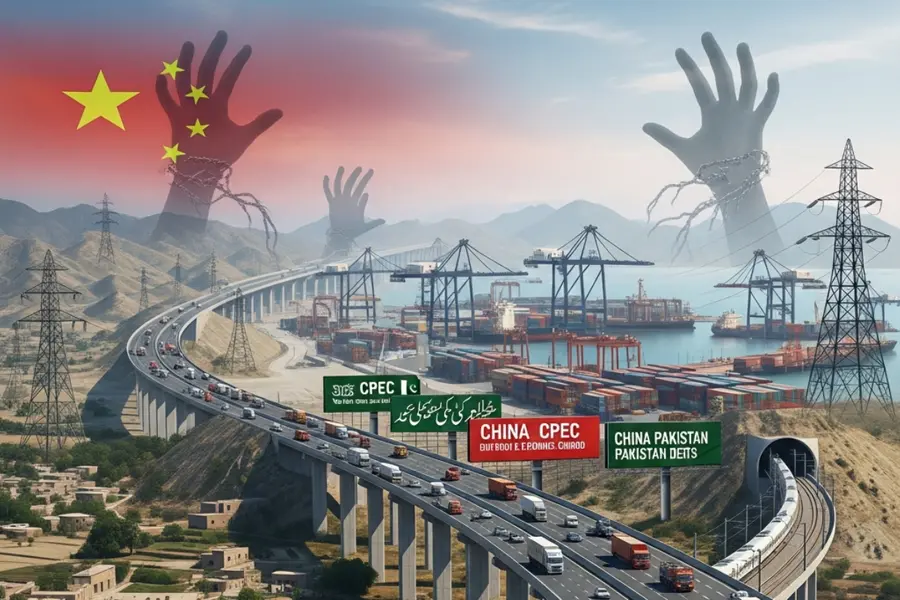
The China-Pakistan Economic Corridor (CPEC), once promoted as a transformational project that would modernise Pakistan's economy through large-scale infrastructure investments, is increasingly facing criticism over its long-term financial consequences. Fresh concerns are being raised over whether the initiative is delivering genuine economic gains or pushing Pakistan deeper into a cycle of debt and dependency on China.
According to an analysis published by Modern Diplomacy, the central concern surrounding CPEC is no longer the infrastructure it has built but the financial obligations attached to those projects. As Pakistan's external debt burden has expanded during the years of CPEC implementation, questions continue to surface about loan conditions, repayment commitments and whether completed projects can generate enough revenue to justify their costs.
The report notes that Chinese-backed investments have added more than 9,500 megawatts of electricity generation capacity to Pakistan's power sector. However, many of these projects are associated with high operating expenses and electricity tariffs that have increased pressure on both consumers and government finances. Concerns over the economic sustainability of these projects have also been highlighted by the International Monetary Fund (IMF), which has repeatedly questioned whether the returns generated will be sufficient to offset their substantial capital costs.
Similar doubts surround the Main Line-1 (ML-1) railway modernisation project, one of the largest planned CPEC ventures. Estimated to cost between USD 6.7 billion and USD 7 billion, the railway upgrade is expected to improve transportation infrastructure across Pakistan. Yet analysts argue that the project lacks a clear path to profitability. Pakistan Railways has historically struggled financially, relying heavily on subsidised fares to remain accessible to low-income passengers. Without major operational reforms and revenue improvements, the project could add significantly to Pakistan's debt burden without generating adequate returns.
Beyond the economic concerns, observers are increasingly focusing on the strategic implications of Pakistan's growing financial reliance on China. As Beijing's investments expand across critical sectors, including ports, power plants and transport networks, Chinese companies have secured a dominant role in project construction, technology supply and, in some cases, operational management.
Analysts warn that this concentration of economic influence could create long-term structural dependence. The deepening financial relationship comes at a time when Pakistan is attempting to maintain balanced ties with major global powers, including the United States and Russia. Critics argue that greater dependence on Chinese capital could limit Islamabad's policy flexibility and complicate its ability to pursue an independent foreign policy when the interests of major powers diverge.
The report hints that while CPEC has succeeded in delivering visible infrastructure assets, the broader question remains whether those projects can generate enough economic value to justify the growing debt obligations they have created. As Pakistan continues to grapple with fiscal pressures, foreign exchange challenges and rising public debt, the debate over whether CPEC represents economic opportunity or a debt trap is likely to intensify.
With IANS inputs
Published: 18 Jun 2026, 09:48 pm IST
Disclaimer: Kindly avoid objectionable, derogatory, unlawful and lewd comments, while responding to reports. Such comments are punishable under cyber laws. Please keep away from personal attacks. The opinions expressed here are the personal opinions of readers and not that of Mathrubhumi.
