
More than 200 people are feared dead after a landslide triggered a catastrophic collapse at the Rubaya coltan mine in eastern Congo, as rescue teams race against time during the rainy season.
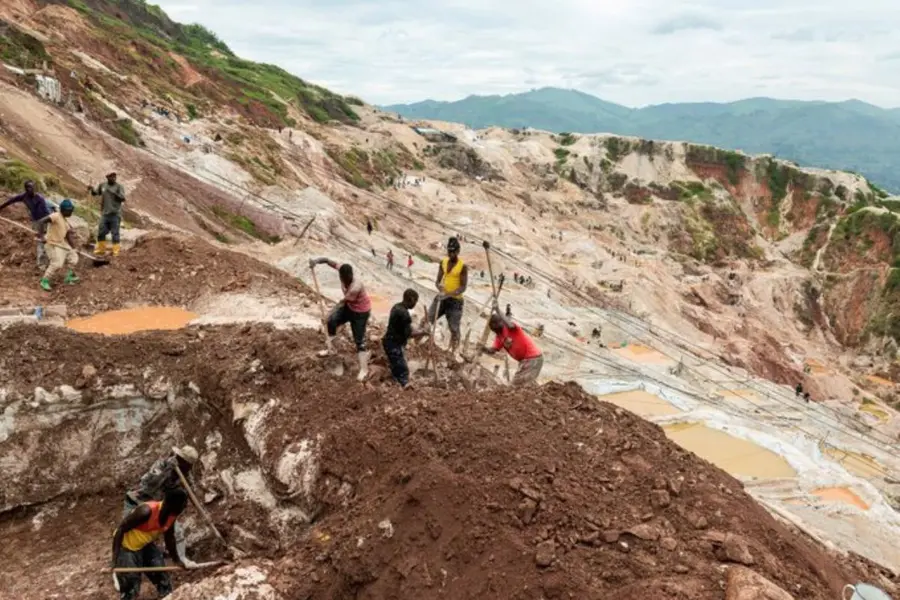
At least 200 people have been reported killed after a devastating collapse at the Rubaya coltan mine in eastern Democratic Republic of the Congo, according to local officials quoted by international news agencies.
The disaster struck on Wednesday at the mine, located about 60 kilometres northwest of Goma, the provincial capital of North Kivu.
Also Read

Lumumba Kambere Muyisa, spokesperson for the rebel-appointed governor of North Kivu, told Reuters that more than 200 people, including miners, children, and market women, were victims of the landslide.
He said around 20 injured survivors were receiving treatment at local health facilities, while the exact number of dead remained unclear due to the scale of the collapse and ongoing rescue efforts.
“We are in the rainy season. The ground is fragile,” Muyisa said, explaining that the earth gave way while miners and civilians were inside the pit. Torrential rainfall is believed to have weakened the soil, causing large sections of the mine to collapse without warning.
Eraston Bahati Musanga, the provincial governor appointed by the M23 rebel group, confirmed that bodies had been recovered but declined to provide a precise death toll, indicating that the number of casualties could rise. An adviser to the governor separately told Reuters that the death toll had surpassed 200, speaking anonymously as he was not authorised to brief the media.
Artisanal miner Franck Bolingo, interviewed by AFP at the site, said many people are still believed to be trapped underground. “It rained, then the landslide happened and swept people away,” he said. “Some were buried alive, and others are still trapped in the shafts.”
Rubaya is one of the world’s most important sources of coltan, accounting for an estimated 15 percent of global production. Coltan is refined into tantalum, a heat-resistant metal essential for manufacturing smartphones, computers, aerospace equipment and gas turbines.
Despite its strategic importance, mining at Rubaya is largely artisanal, with workers digging manually for just a few dollars a day, often without proper safety measures.
The mine has been under M23 control since 2024 after changing hands multiple times between government forces and armed groups. The rebels, who seek to overthrow the Congolese government in Kinshasa, expanded their control over mineral-rich areas in eastern Congo during a rapid offensive last year.
The United Nations has accused M23 of plundering Rubaya’s resources to finance its rebellion, an allegation backed by claims of support from Rwanda, which Kigali has repeatedly denied.
The tragedy underscores the stark contrast between Congo’s vast mineral wealth and the extreme poverty faced by its people. Despite being one of the world’s richest countries in natural resources, more than 70 percent of Congolese live on less than $2.15 a day, making deadly accidents like the Rubaya collapse a recurring risk for survival.
Published: 31 Jan 2026, 07:53 am IST
Related Topics
Disclaimer: Kindly avoid objectionable, derogatory, unlawful and lewd comments, while responding to reports. Such comments are punishable under cyber laws. Please keep away from personal attacks. The opinions expressed here are the personal opinions of readers and not that of Mathrubhumi.