
A powerful 7.4-magnitude earthquake has killed at least 111 people in Colombia, damaged around 1,500 buildings and triggered a major rescue operation.
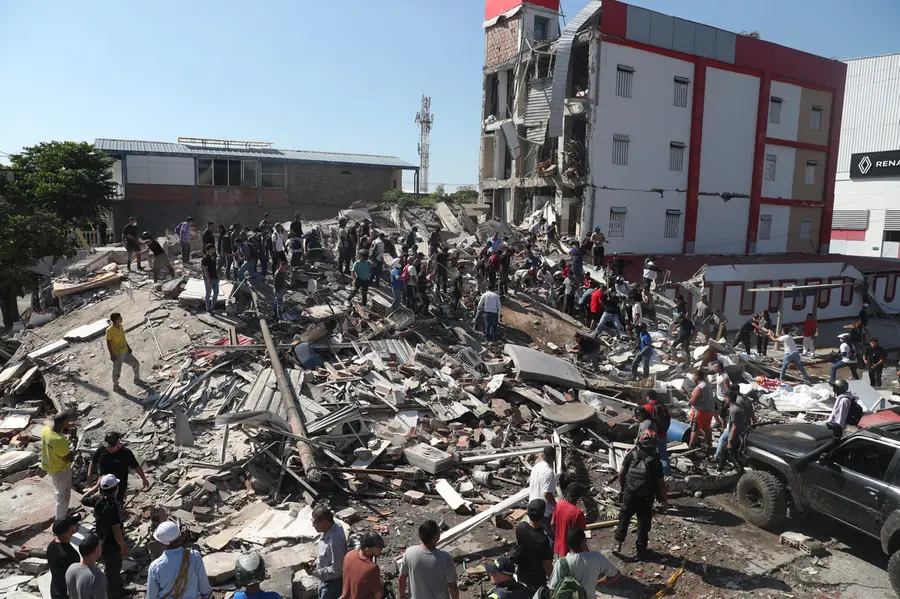
Pereira: Colombia launched a major search-and-rescue operation after a powerful 7.4-magnitude earthquake struck the country's coffee region and Pacific areas, killing at least 132 people and damaging around 1,500 buildings.
At least 132 people have been killed and 570 injured after a powerful magnitude 7.4 earthquake struck western Colombia, collapsing buildings, damaging infrastructure and triggering a large-scale rescue operation across several cities.
Rescuers and volunteers across several Colombian cities worked through rubble with their bare hands, buckets and basic tools on Monday as they searched for people trapped beneath collapsed buildings.
The earthquake struck shortly after 7:30 am local time (1230 GMT), sending residents rushing into the streets and causing widespread destruction across parts of the country.
Authorities warned that the death toll could rise as rescue teams continue searching damaged and collapsed structures.
Human chains formed as survivors were sought
In Cali, volunteers joined firefighters and emergency workers at damaged buildings, using picks, basic equipment and their hands to clear rubble.
Andres Felipe Mejia, who joined one of the makeshift rescue teams, said rescuers asked people trapped beneath the debris to make a sound.
"One of the rescuers asked anyone trapped to whistle, and someone whistled back," Mejia told AFP.
Rescuers subsequently pulled a man and a baby from the rubble, while the man's wife remained trapped inside the building.
Teams formed human chains to move bricks and masonry away from collapsed structures, repeatedly stopping to listen for signs of life.
ALSO READ | Trump rejects Iran’s '$300 billion' compensation demand: 'Interesting idea', but Tehran must pay
Quibdo residents describe scenes of panic
The earthquake caused widespread panic in Quibdo, where residents rushed out of buildings as the ground shook violently.
Law student Wilmer Cuesta told AFP that some people fled their homes without clothes, while others jumped from second-floor windows.
Dentist Julian Pena, who was at home in Quibdo when the earthquake struck, described the shaking as "very, very strong".
"People were praying in the street. It was overwhelming," he said.
Pena said hundreds of people gathered outside and that buildings across the city had developed cracks and gaps, while some had completely collapsed.
Damage reported across Colombia
The earthquake affected several cities in Colombia's coffee region and Pacific areas. Damage was also reported in Manizales, where an AFP journalist saw the city's neo-Gothic cathedral with its tower severely damaged.
Furniture, fabrics, concrete, walls and floors were left tangled inside damaged buildings, while electrical cables were scattered across roads.
The earthquake was also felt in Bogota, where residents rushed into the streets, many still wearing their night clothes.
The quake occurred at a depth of about 110 kilometres and was felt in neighbouring Ecuador and Panama.
Emergency measures activated across affected cities
Colombian President Abelardo de la Espriella declared a state of emergency and promised a coordinated rescue response.
Hospitals in five cities were placed on red alert as authorities prepared for casualties and further emergency cases.
A nighttime curfew was also imposed in Cali, according to local authorities.
At least six airports suspended operations following the earthquake, Colombia's civil aeronautics agency said.
Professional football matches scheduled to take place in the country were postponed following the disaster.
US announces $15.5 million in emergency aid
International support began arriving as the scale of the disaster became clearer.
US Secretary of State Marco Rubio said Washington was closely monitoring the situation and was ready to support Colombia. The United States later announced $15.5 million in emergency relief.
European Commission President Ursula von der Leyen said the European Union had mobilised Copernicus, its satellite-based Earth observation service, to assist rescue and recovery operations.
Israel, Mexico, Ecuador and France also offered assistance to Colombia.
Colombian singer Shakira called for national solidarity following the disaster.
"All my strength and love to my homeland. Let's hold each other tight," she said.
What caused the Colombia earthquake?
Experts at the US Geological Survey said the earthquake was likely linked to movement along a deep fault within the Nazca tectonic plate.
Its depth of around 110 kilometres meant the earthquake was felt across a broad area, including parts of neighbouring countries.
The scale of the damage, however, has been concentrated in several Colombian cities where buildings collapsed or suffered structural damage.
Why the rescue operation is critical
The immediate priority for Colombian authorities is locating people who may still be trapped beneath collapsed buildings.
Rescuers are working alongside local residents and volunteers, with teams relying on basic equipment in some locations. Authorities are continuing to assess damaged buildings while hospitals remain on heightened alert.
The final toll is expected to depend on the outcome of ongoing searches and the assessment of damaged structures.
The wider regional context
The disaster comes less than two months after powerful twin earthquakes struck neighbouring Venezuela, killing more than 6,300 people and leaving tens of thousands homeless.
The latest Colombian earthquake has therefore prompted renewed concerns about earthquake preparedness and emergency-response capacity across the region.
For Colombia, the immediate challenge remains the rescue operation, followed by assessing damaged infrastructure, restoring essential services and supporting people who have lost homes or family members.
Published: 11 Aug 2026, 06:29 am IST
ABOUT THE AUTHOR

Related Topics
Disclaimer: Kindly avoid objectionable, derogatory, unlawful and lewd comments, while responding to reports. Such comments are punishable under cyber laws. Please keep away from personal attacks. The opinions expressed here are the personal opinions of readers and not that of Mathrubhumi.