
SCO summit in Tianjin highlights rising China-India-Russia influence, challenging US global leadership dynamics.
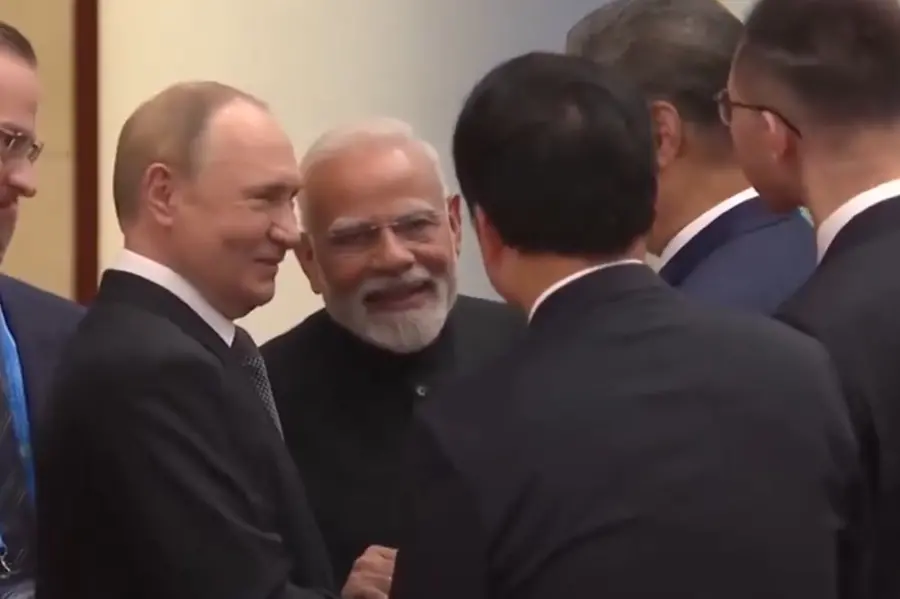
Tianjin: Leaders of Russia, China, India and seven other nations met Monday in northern China for the latest annual summit of the Shanghai Cooperation Organization (SCO), highlighting a potential emerging challenge to America’s global leadership.
The 10-member bloc, gathering in the port city of Tianjin, has expanded in size and influence since its founding 24 years ago, although its objectives and programmes remain unclear to many.
Membership and expansion
The full SCO membership includes Belarus, Iran, Kazakhstan, Kyrgyzstan, Pakistan, Tajikistan and Uzbekistan. Initially perceived as a counterbalance to U.S. influence in Central Asia, the organisation later admitted India and Pakistan in 2017, Iran in 2023 and Belarus in 2024.
While some members are considered clear foes of the West, such as Iran and Belarus, others, including India, China and Russia, maintain a more complex relationship with Washington. U.S. trade tensions with China and India, along with its stance on Russia’s war in Ukraine, add to the uncertainty.
China and Russia’s influence
Since 2001, China has largely dominated the SCO as the regional economic powerhouse, with Russia seeking to retain influence over former Central Asian Soviet republics. Despite declining economic power under Western sanctions, Russia and China have leveraged the alliance for regional military cooperation, including joint drills and firing competitions.
Belarus, Iran, Pakistan and India joined later, seemingly to share in the SCO’s growing influence. However, the value of their membership is debated. “For China’s leadership, there is a lot of emphasis on maintaining existing relations in the international arena even though the SCO has not been effective in dealing with the major challenges of today,” said University of Chicago political scientist Dali Yang.
Seeking practical cooperation
“The SCO seems to want to move from being a dialogue platform to a full-fledged mechanism of practical cooperation that brings tangible results to the citizens of the member states,” said University of Miami China expert June Teufel Dreyer. “Yet the questions remain, to what end and how?
For China’s President Xi Jinping, “presiding over the gathering in Tianjin should net him some favourable publicity and possibly further his image as leader of a new global world order,” Dreyer added.
India’s evolving role
Since the Russia-Ukraine war began, India has become a major buyer of Russian oil, straining relations with Washington. Prime Minister Modi noted “steady progress” in improving relations with China and emphasised “respect for each other’s interests and sensitiveness.”
India’s membership also challenges Russian and Chinese dominance of the SCO. Despite trade ties, India is unlikely to support Russia’s war in Ukraine or China’s claims over Taiwan and the South China Sea. New Delhi’s bid for a permanent UN Security Council seat has seen only cautious backing from China and Russia.
Earlier this year, India refused to sign a joint statement at an SCO defence ministers meeting, citing a pro-Pakistan stance and omission of the deadly April 22 mass shooting in Indian-controlled Kashmir.
Economic and diplomatic highlights
The official Xinhua News Agency called the Tianjin gathering the “largest-ever SCO summit in history,” aiming to chart “the blueprint for the bloc’s next decade of development.” Leaders from about a dozen other countries attended as dialogue partners or guests, including Egypt, Nepal and Southeast Asian nations.
Citing growing trade and rail freight between China and other members, Beijing appears keen to underline the SCO’s economic benefits. Documents signed during the summit included a statement marking the 80th anniversary of the end of World War II, which China will observe with a military parade in central Beijing on Sept. 3. North Korea’s Kim Jong Un will also attend.
Published: 01 Sept 2025, 09:23 pm IST
Related Topics
Disclaimer: Kindly avoid objectionable, derogatory, unlawful and lewd comments, while responding to reports. Such comments are punishable under cyber laws. Please keep away from personal attacks. The opinions expressed here are the personal opinions of readers and not that of Mathrubhumi.
