
China has resumed large-scale land reclamation in the South China Sea after nearly a decade, transforming Antelope Reef in the disputed Paracel Islands into a vast artificial island that could eventually become a major military outpost.
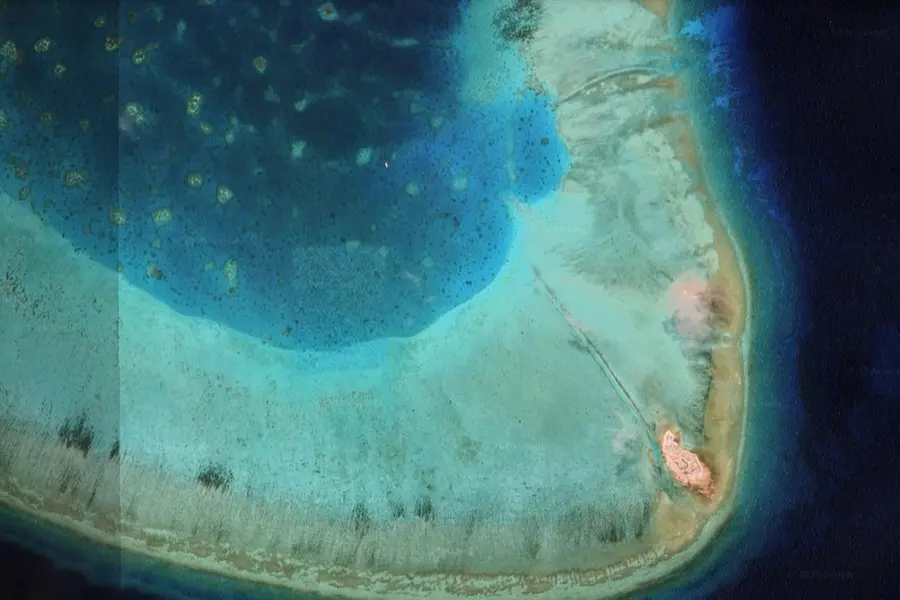
After a nearly decade-long pause, China has reignited its island-building campaign in the South China Sea, transforming the once-desolate Antelope Reef in the Paracel Islands into what analysts say could become its largest and most strategically significant military outpost in the contentious waters. Satellite imagery and on-the-ground reporting reveal that Beijing has completed the first phase of construction on the reef, creating an artificial island spanning roughly 1,490 acres -- a size that rivals or even surpasses Mischief Reef in the Spratlys, previously China’s largest feature in the region.
The development at Antelope Reef marks a major escalation in China’s efforts to consolidate control over the northern South China Sea, creating a new military node that extends the reach of its naval and air assets closer to Vietnam’s shores and provides additional capacity and redundancy for its forces operating in the area.
The reef’s location -- approximately 162 nautical miles from Sanya Port on China’s Hainan province and 216 nautical miles from Da Nang, Vietnam -- positions it as a critical link in Beijing’s expanding chain of outposts across the disputed waters.
The scale of China's construction: Satellite imagery dating back to November 2025 shows Chinese dredging vessels shaping a crescent-shaped landmass on Antelope Reef, part of the Paracel Islands, where China, Taiwan and Vietnam have overlapping territorial claims.
By April 2026, the contours of the island had taken form, with visible structures including jetties, a helipad and unpaved roadways. The island was nearly double the area of Central Park in New York and appeared to be still undergoing development.
Using recent commercial satellite imagery from Vantor, the Asia Maritime Transparency Initiative (AMTI) at the Center for Strategic and International Studies measured the estimated area of reclaimed land at Antelope Reef at roughly 1,490 acres.
That figure is striking when compared with the scale of China’s features elsewhere in the Paracels. The area’s current largest feature is Woody Island, which hosts an air and naval base along with Sansha 'city' administering all of the South China Sea, but measures only around 890 acres.
Mischief Reef, the largest Chinese outpost in the South China Sea, measures 1,504 acres of total land area -- a minimal difference from Antelope’s current size. Antelope Reef could now accommodate a 9,000-foot runway of the type China has already constructed at Woody Island, Mischief Reef, Subi Reef and Fiery Cross Reef.
The northwestern side of the new landmass at Antelope, which extends over 11,000 feet, has been fashioned with a noticeably straight outer edge perfect for an airstrip.
While several features in the Crescent Island group have harbors, the lagoon at Antelope Reef would dwarf those. This could allow more Coast Guard, along with large numbers of maritime militia, to maintain a presence at the reef, as has been common in recent years at Mischief Reef.
Military Infrastructure on Antelope Reef Experts suggest that due to its size and the ongoing construction activities, Antelope Reef is likely to evolve into one of China’s most significant military installations in the area.
Typically, such islands are equipped with airstrips, radar systems, electronic warfare capabilities and missile storage facilities.
These bases serve to bolster the operational reach of China’s Navy and Air Force, allowing them to extend their influence further from the mainland.
Additionally, China’s Coast Guard and maritime militia, which comprise thousands of civilian fishing vessels that assert Beijing’s presence in the region, also utilize these facilities. Antelope’s size would also enable it to accommodate the robust infrastructure seen at Woody Island and China’s 'big three' outposts — Mischief, Subi and Fiery Cross — in the Spratlys, including diesel power plants, underground storage facilities, coastal defense emplacements, surface-to-air and anti-ship missile facilities, as well as numerous surveillance and electronic warfare installations.
Preliminary construction has begun on select portions of the reef. Over 50 small, grey-roofed structures and a helipad have been built near the entrance to the lagoon.
Foundations for a larger structure measuring 100 by 60 yards have appeared in the southern corner of the lagoon where several jetties have taken shape.
At least some of these early structures are likely temporary facilities that will later be replaced with more permanent infrastructure, as was seen during the construction of China’s Spratly outposts.
Construction of buildings had started in the southeast corner of the island, including a helicopter pad, in the July 19 images taken by Vantor, a commercial provider of satellite images. China has yet to acknowledge construction of a new military base, while state media have said that Antelope would serve civilian needs such as weather forecasting and scientific research.
What are the strategic implications of this? On its surface, an additional major outpost in the Paracels would provide Beijing with incremental, rather than monumental, gains to its capabilities in the South China Sea.
Assuming Antelope is developed into a military facility on par with China’s other large outposts, it will extend the reach of Chinese sensing capabilities closer to Vietnam’s shores and provide additional capacity and redundancy for its naval and air assets in the northern South China Sea.
Antelope’s proximity to Hainan could also allow Beijing to expand its efforts to establish a civilian presence in the Paracels.
While this may not significantly change the strategic picture in the South China Sea, Beijing is certainly signaling its ability to continually expand its occupied features -- a message perhaps intended most directly for Hanoi, whose own reclamation and landfill activities in the Spratlys remain ongoing.
Analysts monitoring China’s island construction were taken aback by this new development, as Beijing had already established numerous outposts in contested waters and had largely ceased major construction of artificial islands.
'The strategic reasoning behind this is not entirely clear,' remarked Harrison Prétat, deputy director and fellow at the Asia Maritime Transparency Initiative, part of the Center for Strategic and International Studies.
'The prevailing thought was that they had no pressing need for further expansion,' he added.
Prétat suggested that the recent construction might be a reaction to Vietnam’s reclamation efforts over the past two years, during which Hanoi has established military facilities on the islets it controls in the Spratlys.
More significantly, he noted that compared to previous administrations, President Trump seems less preoccupied with countering China’s military advancements in the South China Sea.
'This raises a broader question: Did they believe they could proceed without consequences?' Prétat stated. Vietnam, Philippines, US sound alarm. Vietnam asserts its claim over the entire Paracel archipelago, which has been under Chinese control since 1974 when Beijing seized it. Hanoi has denounced China’s construction efforts at Antelope as 'completely illegal and invalid.'
In contrast, Beijing maintains that the Paracels constitute China’s 'inherent territory.'
When questioned about the developments at Antelope last month, Lin Jian, a spokesperson for China’s foreign ministry, stated that the construction aimed solely at 'enhancing living and working conditions on the islands and fostering local economic growth.'
The Philippines, which has its own disputes with China in the Spratlys, has also expressed concern over the development. Beijing already has four airstrips -- at Fiery Cross Reef, Subi Reef, Mischief Reef and Woody Island -- and will likely add a fifth at Antelope Reef.
The United States has condemned China’s island-building activities as destabilising and inconsistent with international law. US officials have warned that the militarisation of Antelope Reef could further complicate efforts to maintain freedom of navigation and overflight in the South China Sea.
Why did China end a decade-long pause? From 2013 to 2017, China constructed or enhanced more than 20 military outposts in the South China Sea capable of accommodating troops.
This included three substantial military bases in the Spratly Islands, located over 900 miles from the Chinese mainland yet within 300 miles of the Philippines, along with one in the Paracels.
This extensive island-building initiative, notable for its unprecedented speed and scale, drew international criticism and strained China’s relationships with its Southeast Asian neighbours and the United States.
The resumption of major construction at Antelope Reef after almost ten years signals Beijing’s renewed confidence in its ability to expand its footprint in the South China Sea without facing significant pushback.
Analysts say the move reflects China’s long-term strategy of creating a network of fortified outposts that can support sustained military operations, surveillance and logistics across the region.
Ultimately, Beijing’s plans for Antelope Reef are uncertain. Satellite imagery can estimate the likely area of reclaimed land, but what will be vital to look out for is how China will develop the island once dredging is complete.
Still, the projected scale alone suggests that Antelope could become one of the most important outposts China has built in the South China Sea.
If construction proceeds at the pace seen in satellite imagery, Antelope Reef is set to become China’s largest feature in the Paracels and potentially in the entire South China Sea, equaling or even surpassing the size of Mischief Reef in the Spratlys.
The development at Antelope Reef could provide Beijing with an additional runway, enhanced missile capabilities and further surveillance facilities, effectively serving as a supplementary military presence in the area.
Additionally, due to its proximity to the Chinese mainland, this project presents an opportunity for China to expand civilian infrastructure, reinforcing its claim that the region is an integral part of its territory.
Published: 20 Aug 2026, 08:12 pm IST
ABOUT THE AUTHOR

Disclaimer: Kindly avoid objectionable, derogatory, unlawful and lewd comments, while responding to reports. Such comments are punishable under cyber laws. Please keep away from personal attacks. The opinions expressed here are the personal opinions of readers and not that of Mathrubhumi.