
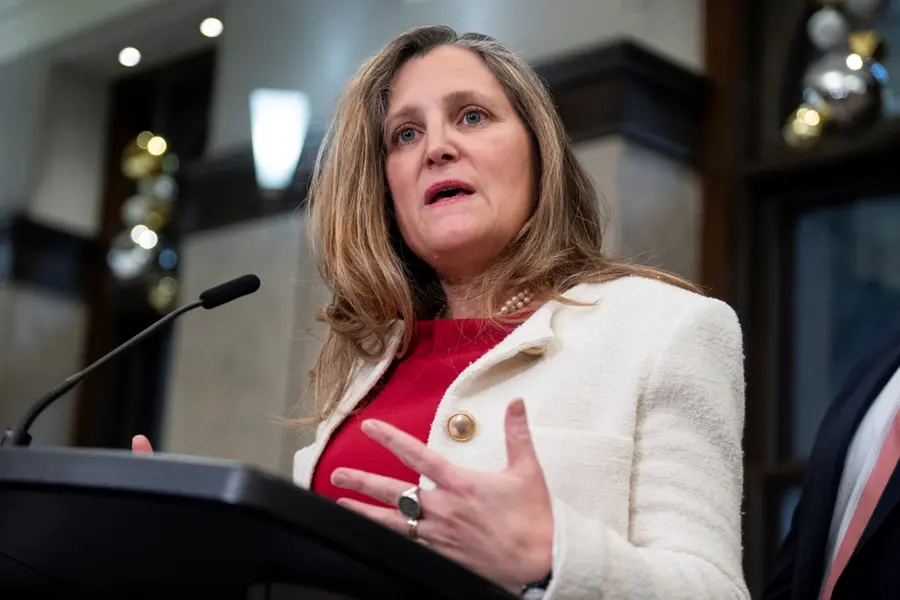
Ottawa: Canadian Finance Minister and Deputy Prime Minister Chrystia Freeland, one of Prime Minister Justin Trudeau’s most loyal and influential Cabinet members, announced her resignation on Monday. Freeland’s departure comes as Trudeau faces declining popularity and internal party challenges.
Freeland revealed that Trudeau had asked her on Friday to step down as finance minister and offered her another role in the Cabinet. However, she declined, stating that the “honest and viable path” was to leave the Cabinet entirely.
Disagreement over fiscal policy
Freeland’s resignation stems from a disagreement with Trudeau over recent economic measures, including a two-month sales tax holiday and CA$250 (US$175) direct payments to Canadians. Freeland argued that these policies were ill-timed, particularly as Canada faces threats of significant tariffs from US President-elect Donald Trump.
In her resignation letter, Freeland said, “Our country is facing a grave challenge. That means keeping our fiscal powder dry today, so we have the reserves we may need for a coming tariff war.”
She described the measures as “costly political gimmicks” that Canada could not afford.
Freeland’s departure underscores deeper concerns about Canada’s economic strategy and its preparedness for potential trade conflicts with the US
Trudeau faces mounting political challenges
Prime Minister Trudeau has pledged to lead the Liberal Party in the next election, which must be held by October. However, some party members are uncertain about his leadership and whether he should run for a fourth term—a feat no Canadian prime minister has achieved in over a century.
Freeland’s resignation highlights growing tensions within the Liberal Party.
In her letter, she wrote, “Canadians know when we are working for them, and they equally know when we are focused on ourselves.”
She warned that how the government addresses current challenges will define the nation for generations.
The resignation also coincides with Trudeau’s reported efforts to recruit Mark Carney, the former governor of the Bank of England and Bank of Canada, to join his government. Carney, a highly regarded economist, has long been seen as a potential future leader of the Liberal Party. However, it remains unclear if Carney will accept a Cabinet role.
Trudeau’s declining popularity
Since his initial election victory in 2015, Trudeau has faced growing frustration from Canadians over rising living costs and issues such as immigration. While he brought fresh energy to the Liberal Party and reasserted Canada’s progressive identity, his government now faces significant criticism in the post-pandemic era.
(Agency inputs)
Published: 16 Dec 2024, 08:22 pm IST
Related Topics
Disclaimer: Kindly avoid objectionable, derogatory, unlawful and lewd comments, while responding to reports. Such comments are punishable under cyber laws. Please keep away from personal attacks. The opinions expressed here are the personal opinions of readers and not that of Mathrubhumi.
