
Despite losing his seat, Poilievre is still eligible to remain the leader of the Conservative Party.
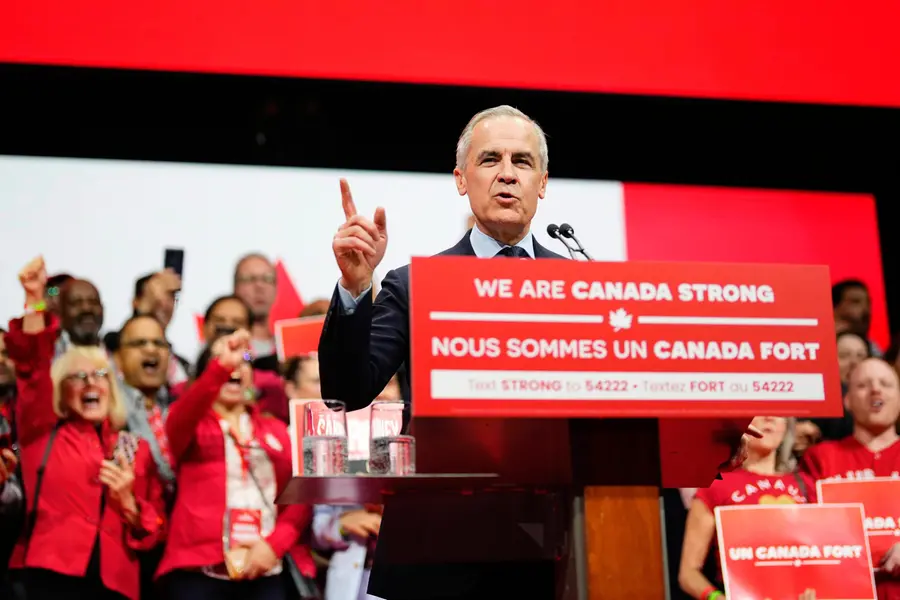
Toronto: Mark Carney’s Liberal Party has emerged victorious in the Canada election results 2025, in a stunning political comeback powered by public outrage over US President Donald Trump’s annexation threats and trade war. The Canadian Broadcasting Corporation projected that the Liberals secured more seats in Parliament than the Conservative Party, though it remains uncertain whether the party will achieve an outright majority.
Carney’s rival, Conservative leader Pierre Poilievre, lost not just the election but also his own Ottawa seat in Parliament — a striking reversal for a politician once seen as the frontrunner to take power after a decade of Liberal rule.
Why did Poilievre and the Conservatives lose?
Pierre Poilievre, known for his Trump-like rhetoric and “Canada First” slogan, faced a sharp fall in support following Trump’s aggressive stance against Canada. Trump’s suggestion that Canada should become the 51st state and his decision to launch a trade war significantly impacted voter sentiment.
The backlash was swift. As historian Robert Bothwell put it, “The Liberals ought to pay him,” referring to Trump. “Trump talking is not good for the Conservatives.”
Toronto voter Reid Warren echoed similar concerns, saying, “Poilievre sounds like mini-Trump to me. Canadians coming together from, you know, all the shade being thrown from the States is great, but it's definitely created some turmoil, that's for sure.”
Even on election day, Trump stirred controversy by repeating his annexation suggestion on social media and falsely claiming that the US subsidises Canada. The hostile rhetoric pushed many Canadians to vote early, resulting in a record 7.3 million advance ballots.
What did Mark Carney say in his victory speech?
In a defiant address to supporters, Carney acknowledged the impact of Trump's actions on the election. “We are over the shock of the American betrayal, but we should never forget the lessons,” he said. “These are not idle threats. President Trump is trying to break us so America can own us. That will never ... ever happen.”
Carney, a former central banker, emphasised unity and vowed to protect Canadian interests. “Our world has fundamentally changed,” he declared.
What’s next for the Liberals?
When ballot counting was paused early Tuesday, the Liberals were leading or elected in 168 of the 343 seats — four short of a majority. Elections Canada stated that uncounted special ballots could sway results in about a dozen districts. Final outcomes will be confirmed later on Tuesday.
If the Liberals fall short of the 172-seat majority mark, they may need to form alliances with smaller parties. The New Democratic Party, which supported the Liberals in the past, performed poorly this time, and its leader Jagmeet Singh announced his resignation after eight years. The Bloc Quebecois, a separatist party, looked set to finish third.
“This is a dramatic comeback, but if the Liberals cannot win a majority of seats, political uncertainty in a new minority Parliament could complicate things for them,” said Professor Daniel Béland of McGill University.
What happened to Poilievre?
Poilievre conceded before the results of his own seat were confirmed. “We are cognisant of the fact that we didn't get over the finish line yet,” he told supporters. “Change is hard to come by. It takes time. It takes work. And that's why we have to learn the lessons of tonight — so that we can have an even better result the next time Canadians decide the future of the country.”
Despite losing his seat, Poilievre is still eligible to remain the leader of the Conservative Party.
What lies ahead for Canada?
The Liberals now face significant domestic and foreign challenges. The US remains Canada’s largest trading partner, with over 75 per cent of Canadian exports heading south. Trump’s tariffs and threats to relocate auto manufacturing could severely hurt the economy.
Carney pledged that revenue from counter-tariffs will support Canadian workers impacted by the trade war. His other promises include middle-class tax cuts, sustaining dental care, regulating immigration levels, and increasing funding for the Canadian Broadcasting Corporation.
Foreign policy played a central role in this election, reminiscent of the 1988 campaign dominated by US-Canada trade debates. As Carney leads Canada into an uncertain geopolitical climate, all eyes remain on whether he can secure a stable majority and deliver on his ambitious promises.
With AP inputs
Published: 29 Apr 2025, 06:35 pm IST
Related Topics
Disclaimer: Kindly avoid objectionable, derogatory, unlawful and lewd comments, while responding to reports. Such comments are punishable under cyber laws. Please keep away from personal attacks. The opinions expressed here are the personal opinions of readers and not that of Mathrubhumi.
