
President Trump’s multi-trillion dollar tax cut package faces significant opposition from Republicans, investors, and even Elon Musk due to concerns about increasing the national debt.
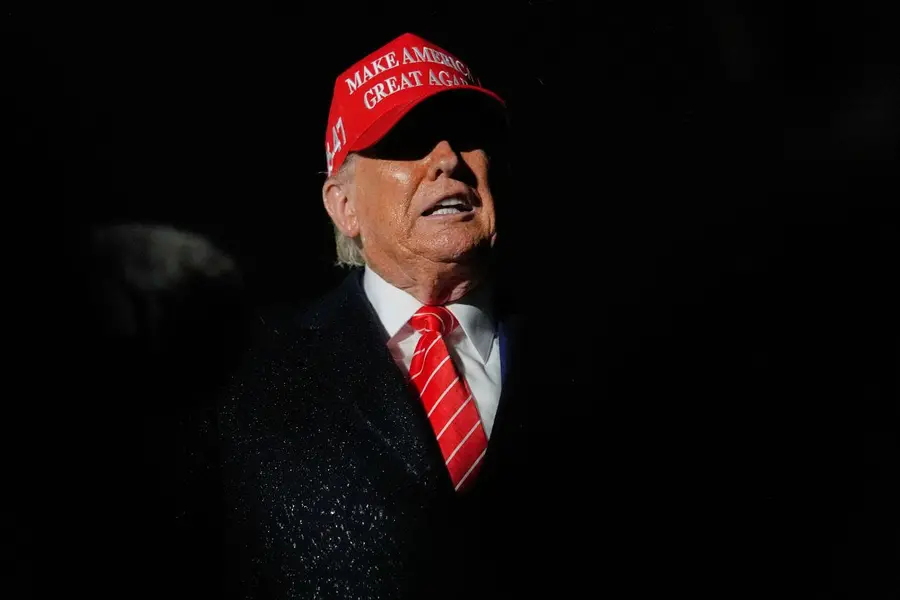
Washington: President Donald Trump is under mounting pressure to convince Republican senators, financial markets, voters, and even Elon Musk that his new multitrillion-dollar tax break package will not plunge the U.S. government deeper into debt.
Despite campaign promises to trim deficits, financial markets have reacted with scepticism. Critics say the president has yet to deliver meaningful spending cuts to offset the tax reductions.
Think tanks and economists raise concerns
"All of this rhetoric about cutting trillions of dollars of spending has come to nothing — and the tax bill codifies that," said Michael Strain, director of economic policy studies at the right-leaning American Enterprise Institute.
He warned that growing deficits combined with perceived incompetence from Congress and the administration increases financial risks.
White House defends policy amidst criticism
The White House has lashed out at its critics. Press Secretary Karoline Leavitt dismissed deficit concerns at a Thursday briefing, calling them "blatantly wrong." She criticised the Congressional Budget Office (CBO) and other institutions for using what she termed "shoddy assumptions."
Trump, however, acknowledged the lack of spending cuts, citing political realities: "We have to get a lot of votes. We can't be cutting."
Economic growth as the administration's bet
The administration is banking on economic growth to offset the deficit. However, few outside Trump's circle share this optimism.
Tech billionaire Elon Musk, formerly head of the Department of Government Efficiency, criticised the plan.
"I was disappointed to see the massive spending bill, frankly, which increases the budget deficit," he told CBS News.
Debt projected to rise dramatically
The Committee for a Responsible Federal Budget, a fiscal watchdog, estimates the bill would add more than USD 5 trillion to the national debt over the next decade if all provisions are extended.
To minimise the headline cost, many provisions are set to expire, a tactic previously used in Trump's 2017 tax legislation, setting up a potential fiscal cliff when they sunset in 2028.
Since 2017, the debt situation has worsened. National debt now exceeds USD 36.1 trillion, and investors are demanding higher yields. The 10-year Treasury note now carries a 4.5 percent interest rate, compared to around 2.5 percent in 2017.
White House forecasts disputed by experts
The White House Council of Economic Advisers projects annual growth of 3.2 percent over the next four years, significantly higher than the CBO's 1.9 percent forecast. Council Chair Stephen Miran insists the tax cuts will increase investment and labour supply, thus boosting growth without inflation.
Budget Director Russell Vought rejected the notion that the tax bill would worsen the deficit: "The idea that the bill is in any way harmful to debt and deficits is fundamentally untrue."
Economists cast doubt on growth assumptions
Many economists are unconvinced. Brendan Duke of the Center on Budget and Policy Priorities said the bill creates future policy headaches, especially with key programmes and tax cuts set to expire in 2028.
Kent Smetters of the Penn Wharton Budget Model called the administration's projections "a work of fiction" and warned of reduced labour force participation due to changes in eligibility for benefits.
Jason Furman, a former Obama administration adviser, said, "These are mostly not growth- and competitiveness-oriented tax cuts," warning that rising interest rates will likely hurt, rather than help, long-term growth.
Republican senators signal opposition
As the bill moves to the Senate, some Republicans are voicing concerns. Senators Ron Johnson and Rand Paul have called for spending cuts before supporting the legislation. "I think we have enough to stop the process until the president gets serious about the spending reduction," Johnson said on CNN.
Tariffs as a revenue source?
The administration is also relying on revenue from tariffs. Trump claims these could help reduce the national debt. Treasury Secretary Scott Bessent echoed this, saying budget deficits could be more than halved.
However, court rulings have questioned the legality of Trump's sweeping tariffs, which were declared under an "economic emergency."
Deficits require much larger fixes
Research by economists Douglas Elmendorf, Glenn Hubbard, and Zachary Liscow indicates that economic growth alone will not fix the deficit. Ernie Tedeschi of Yale University said the government needs USD 10 trillion in deficit reduction over the next decade just to stabilise the debt.
"Growth doesn't even get us close to where we need to be," said Tedeschi. He noted that most of the tax cuts merely preserve existing breaks, offering little in terms of fresh economic stimulus.
"It's treading water," he concluded.
(AP inputs)
Published: 01 Jun 2025, 07:27 pm IST
Related Topics
Disclaimer: Kindly avoid objectionable, derogatory, unlawful and lewd comments, while responding to reports. Such comments are punishable under cyber laws. Please keep away from personal attacks. The opinions expressed here are the personal opinions of readers and not that of Mathrubhumi.
