
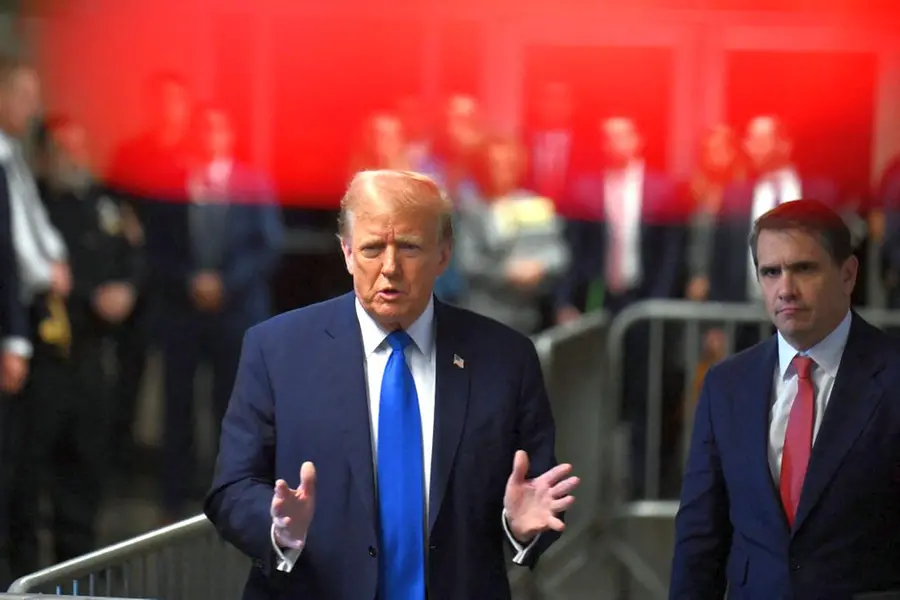
United States President-elect Donald Trump has announced plans to rename the Gulf of Mexico to the "Gulf of America," framing the proposal as part of his hardline stance on immigration. Speaking ahead of his inauguration on January 20, Trump described the name change as "appropriate", citing the need for Mexico to address the flow of migrants into the United States.
"We are going to be changing the name of the Gulf of Mexico to Gulf of America, which has a beautiful ring," Trump said during a press briefing shared by ABC News. "That covers a lot of territory. The Gulf of America, what a beautiful name. And it's appropriate, appropriate," he emphasized.
The announcement comes just a day after Trump suggested Canada should merge with the US and become its 51st state. Both proposals have sparked widespread debate and criticism domestically and internationally.
What is the Gulf of Mexico?
The Gulf of Mexico is a 218,000-square-mile oceanic basin connected to the Caribbean Sea and the Atlantic Ocean through the Florida Straits and the Yucatán Channel. It borders the eastern coast of Mexico, the southeastern coast of the United States, and the western end of Cuba.
The name "Gulf of Mexico" has been in use for at least 400 years, originating from European explorers and mapmakers. The body of water has been called by various names over time, but "Gulf of Mexico" remains the most widely recognized.
Significant oil and natural gas reserves are found beneath the Gulf of Mexico. The region is also major source of seafood for the United States and Mexico.
How can the Gulf be renamed?
Renaming a geographical feature recognized by the federal government involves input from the U.S. Board on Geographic Names (BGN). This federal interagency organization maintains uniformity in geographic names across federal documents.
The board's Foreign Names Committee oversees decisions involving international geographical features and would be responsible for reviewing Trump’s proposal. While the BGN does not create names, it can approve or reject proposals based on established policies.
Even if the US officially adopts a new name, it does not obligate other nations to recognize it, as seen in past naming disputes like the Persian Gulf vs. Arabian Gulf debate in 2020.
Precedents for renaming geographic features
Trump’s proposal follows rare instances of high-profile name changes for geographical landmarks:
In 2015, President Barack Obama approved renaming Mount McKinley, the country’s highest peak, to Mount Denali, its traditional Native name. Trump, at the time, vowed to reverse the decision.
In 2021, the Interior Department ordered the removal of the derogatory term "squaw" from place names, replacing it with alternatives approved by the BGN.
Trump's suggestion to rename the Gulf of Mexico is unlikely to gain international acceptance, especially given the shared borders with Mexico and Cuba. Critics argue that such a move is unlikely to address the immigration concerns he has cited as justification.
As of now, the proposal remains a symbolic gesture, with formal mechanisms and significant political will required to make it a reality.
Published: 08 Jan 2025, 12:02 pm IST
Related Topics
Disclaimer: Kindly avoid objectionable, derogatory, unlawful and lewd comments, while responding to reports. Such comments are punishable under cyber laws. Please keep away from personal attacks. The opinions expressed here are the personal opinions of readers and not that of Mathrubhumi.
