
One of the world's most famous medieval artworks has arrived safely in London. The Bayeux Tapestry has left France for the first time in around 900 years and will go on display at the British Museum this September
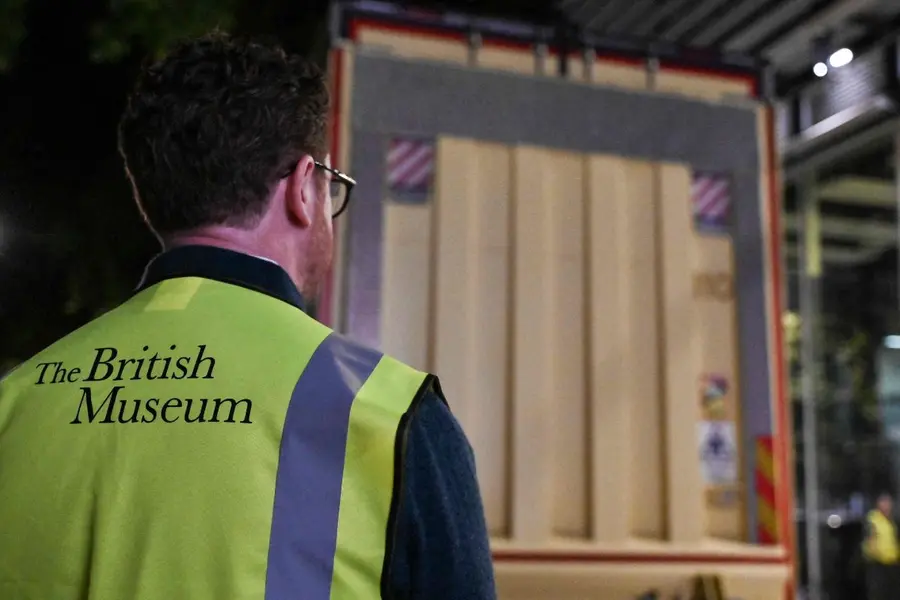
London: The Bayeux Tapestry has arrived safely at the British Museum after leaving France for the first time in around 900 years, following a tightly coordinated overnight operation to transport one of the world's most valuable medieval artefacts across the English Channel.
The 70-metre-long embroidered masterpiece reached the museum early on Friday after an 11-hour journey from Bayeux in Normandy under strict security measures. The tapestry was transported in a climate-controlled case placed inside a shock-absorbing cradle before being driven through the Channel Tunnel under police escort.
The artwork, which chronicles the events leading up to the Norman conquest of England in 1066, will go on public display at the British Museum from September 10, 2026, until July 2027.
"It feels extraordinary that after so much work and planning and care and thought that it's actually happening," British Museum Director Nicholas Cullinan said as the tapestry arrived.
"It's the first time in 900 years that such an important piece of British — French too — history is going to be on these shores. It's incredibly exciting," he added.
After the container was carefully unloaded at the museum, staff and British and French diplomats watching the operation broke into applause.
The tapestry will now spend several days acclimatising before being carefully unpacked and prepared for exhibition.
Interest in the display has already been overwhelming, with around 100,000 tickets sold on the first day they went on sale.
"It was like trying to get tickets to Glastonbury," Cullinan said. "I don't take for granted that people care that much about a 1,000-year-old embroidery. I think that's an amazing thing."
Believed to have been commissioned by Bishop Odo of Bayeux, the half-brother of William the Conqueror, the tapestry depicts the events culminating in the Battle of Hastings in 1066, when William defeated the Anglo-Saxon forces of King Harold II to become the first Norman king of England.
Although historians believe the embroidery was probably created in England, it has spent most of the past nine centuries in Bayeux, apart from two brief stays at the Louvre Museum in Paris.
Its loan to Britain was announced during French President Emmanuel Macron's state visit to the UK in 2025 and coincides with renovation work at the museum in Bayeux that normally houses the artefact. In return, the British Museum will lend treasures from the Sutton Hoo Anglo-Saxon burial site and other artefacts to museums in Normandy.
Retired British diplomat Peter Ricketts, who helped negotiate the agreement, described the loan as "an extraordinary mark of friendship and confidence in the UK to entrust this object to us for a year."
He added: "Macron, when he offered us the tapestry, I think he understood that it would have far more impact in the UK than it does in France, because it's more fundamental to our national story. Everybody (in Britain) knows 1066."
Despite concerns from some French cultural figures that moving the tapestry posed risks to the fragile embroidery, museum officials said extensive testing and trial runs were carried out before the transfer.
"Such care has gone into it. I can't think of a level of care for any other museum loan," Cullinan said.
"The tapestry arouses great interest and passion," he added. "Which is a wonderful thing."
Published: 10 Jul 2026, 12:00 pm IST
Disclaimer: Kindly avoid objectionable, derogatory, unlawful and lewd comments, while responding to reports. Such comments are punishable under cyber laws. Please keep away from personal attacks. The opinions expressed here are the personal opinions of readers and not that of Mathrubhumi.
