
This operates in public spaces, presenting the targeting of un-Islamic values as a religious duty
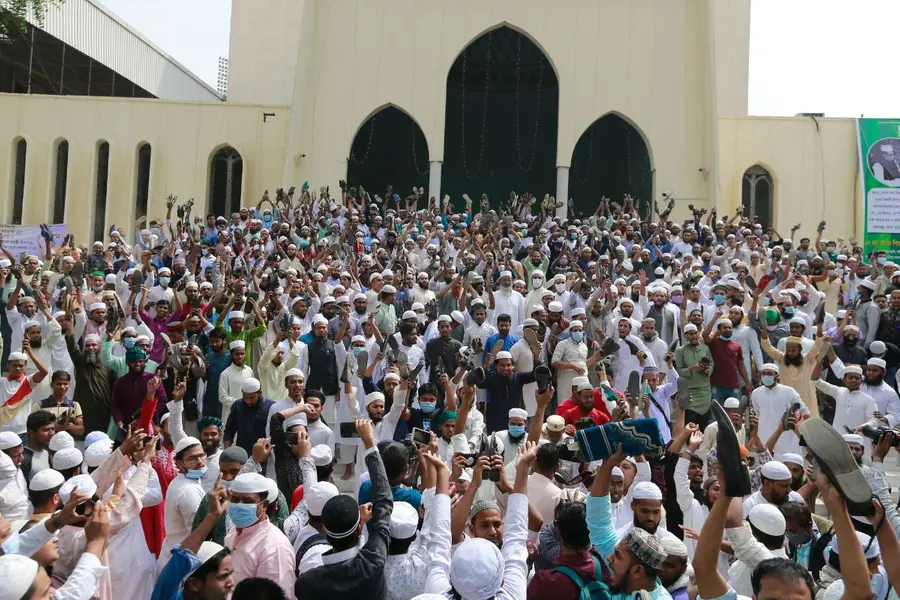
Canberra: The resurgence of Tawhidi Janata, a loosely defined Islamist mobilisation in Bangladesh, has emerged not through organised militancy but in the form of morally driven coercive populism. This mobilisation thrives where institutions are weak, law enforcement falters, and questions surrounding political legitimacy persist, a new report has indicated.
The report, published in the Australia-based The Interpreter, outlines how this resurgence, while not organised in a traditional militant sense, has exploited a political vacuum created by institutional failure. Tawhidi Janata operates in public spaces, presenting the targeting of "un-Islamic" values as a religious duty, which enables it to evade immediate repression while reshaping the public sphere.
For nearly 16 years, Bangladesh’s Sheikh Hasina-led Awami League government successfully combined elections, a strong security apparatus, and state-endorsed secular "Bengali nationalism" while suppressing, co-opting, or fragmenting Islamist parties and religious networks. Public religiosity was tolerated, but political Islam outside the state’s control was tightly managed. Although this limited overt confrontation, it did not eliminate religious politics; instead, it pushed it into informal, depoliticised spaces.
ALSO READ | Bangladesh halts visa on arrival from January 15 as election security tightens
However, with the collapse of the system in August 2024 following Hasina’s ousting, Bangladesh saw the emergence of a political and moral vacuum. The report suggests that this void has paved the way for Tawhidi Janata to rise, invoking religious duty to influence public life.
Tawhidi Janata is not a formal organisation but rather a broad label under which various groups operate. It intervenes in public spaces, enforces moral codes, disrupts cultural activities, and targets events seen as un-Islamic, particularly those involving women. Its power lies in its ambiguity—operating through crowds, symbolism, and moral pressure rather than through formal structures or institutionalised presence.
ALSO READ | Money or death: How ISI-Jamaat is targeting minorities in Bangladesh
The report also highlights incidents of direct violence attributed to alleged supporters of Tawhidi Janata. In September 2025, a mob clashed with police in Rajbari, attacking a shrine, exhuming and burning a body, resulting in one death and several injuries. In Dhaka, a crowd occupied a police station to demand the release of a man arrested for harassing a woman over her "inappropriate" clothing, livestreaming the event as it unfolded.
ALSO READ | Bangladesh polls: Why China, Pakistan are backing Jamaat despite BNP’s surge
These episodes reflect a shift from covert to overt moral activism. The focus now is on visibility—occupying streets, intimidating institutions, and testing the limits of state authority. The report suggests that economic stress and declining trust in politics are particularly amplifying these actions, particularly among the youth.
The resurgence of Tawhidi Janata is seen as a warning for Bangladesh’s political future. The report asserts that the challenge now extends beyond electoral and constitutional issues; the critical question is whether authority will be reclaimed through law and democratic legitimacy, or surrendered to those claiming moral supremacy via the crowd.
-IANS
Published: 17 Jan 2026, 10:07 pm IST
Related Topics
Disclaimer: Kindly avoid objectionable, derogatory, unlawful and lewd comments, while responding to reports. Such comments are punishable under cyber laws. Please keep away from personal attacks. The opinions expressed here are the personal opinions of readers and not that of Mathrubhumi.
