
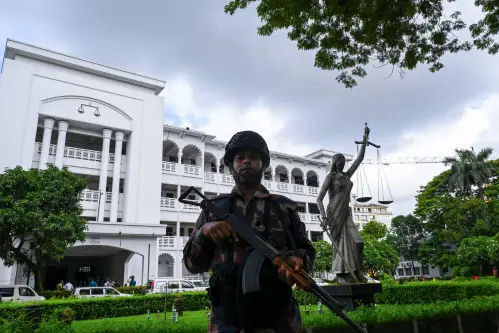
Dhaka: Bangladesh's Supreme Court has made a significant decision to scale back a contentious quota system for government job applicants, marking a partial victory for student protesters amid widespread unrest and violent clashes with police that have resulted in numerous fatalities.
The protests, driven by frustrations over job shortages, specifically targeted the quota system that reserved 30% of government jobs for relatives of veterans from Bangladesh’s 1971 war of independence. Although the government had previously suspended the quota in 2018 following mass demonstrations, its reinstatement by the High Court in June sparked renewed protests.

In response to an appeal, the Supreme Court ruled to reduce the veterans' quota to 5%, with 93% of government jobs now allocated based on merit. The remaining 2% will be reserved for members of ethnic minorities, transgender individuals, and people with disabilities.
The demonstrations have posed the most serious challenge to Prime Minister Sheikh Hasina's government since her re-election to a fourth consecutive term in January, which was marred by opposition boycotts. The unrest has prompted university closures, internet shutdowns, and government-enforced curfews.
Despite the court's decision, it remains uncertain whether protesting students are satisfied, given the lack of communication channels due to the internet blackout. Law Minister Anisul Haq has expressed support for the court's ruling, describing it as well-considered.
Violence erupted during clashes between students and police, resulting in casualties. Reports indicate that over 100 people have been killed, although official figures have not been disclosed. Security forces have used rubber bullets, tear gas, and smoke grenades to disperse protesters, and incidents of arson and vandalism have been reported.
Amidst sporadic clashes in Dhaka, the capital, soldiers have been deployed across cities, and a stay-at-home order has been implemented with limited relaxation for essential activities. Public holidays have been declared to manage the crisis, restricting non-emergency services.
Protesters argue that the quota system is discriminatory and favours supporters of Hasina's Awami League, which led the independence movement. They advocate for a merit-based system instead. Hasina has defended the quota, citing veterans' contributions during the war regardless of political affiliation.
Efforts to resolve the crisis include discussions between government representatives and protest leaders, addressing demands such as quota reform and university dormitory reopenings. The main opposition, Bangladesh Nationalist Party (BNP), has supported the protests but denied responsibility for violence, accusing the ruling party of exploiting the situation for political gain.
The political landscape remains tense with mutual accusations of fueling chaos and violence between the Awami League and BNP, reminiscent of previous election-related conflicts. As Bangladesh navigates these challenges, the quest for justice, equality, and effective governance remains pivotal amid calls for transparency and accountability. AP
Published: 21 Jul 2024, 05:26 pm IST
Disclaimer: Kindly avoid objectionable, derogatory, unlawful and lewd comments, while responding to reports. Such comments are punishable under cyber laws. Please keep away from personal attacks. The opinions expressed here are the personal opinions of readers and not that of Mathrubhumi.