
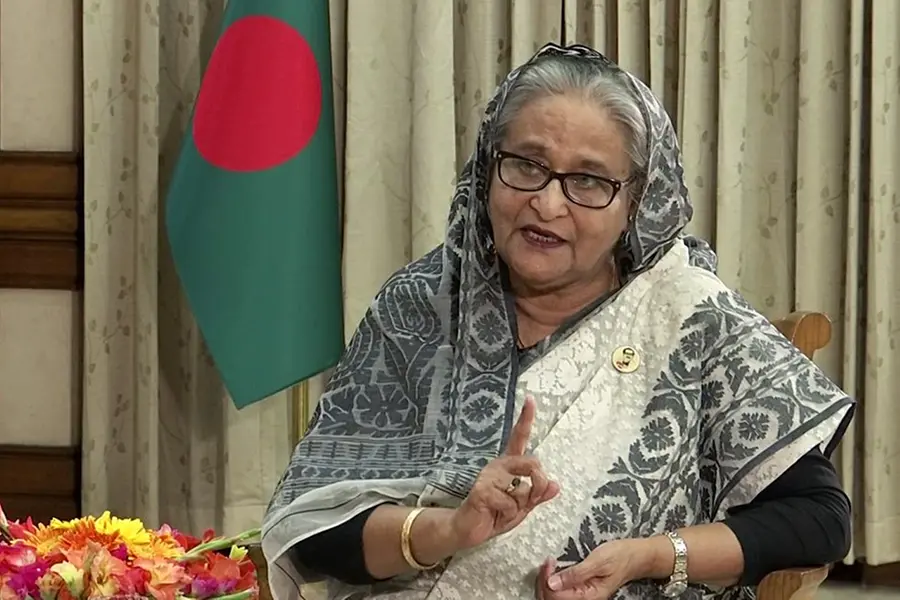
Dhaka: Protests in Bangladesh that began as student-led demonstrations against government hiring rules in July culminated Monday with Prime Minister Sheikh Hasina fleeing and the military announcing it would form an interim government. Over a month of deadly protests resulted in the deaths of at least 300 people, ending the autocratic rule of 76-year-old Prime Minister Sheikh Hasina.
Here’s how the protests toppled the government in the South Asian nation of about 170 million people:
- Initial protests: University students built barricades blocking roads and railway lines to demand reforms of a quota system for sought-after public sector jobs. They argued that the scheme was used to stack the civil service with loyalists of Hasina's ruling Awami League.
- Government response: Hasina, who won a fifth term as prime minister in January after a vote without genuine opposition, dismissed the students, saying they were "wasting their time".
- Escalation: The first recorded deaths occurred when six people were killed in clashes following violent confrontations between protesters and pro-government supporters in Dhaka.
- Nationwide closure: Hasina's government ordered the nationwide closure of schools and universities in response to the escalating protests.
- Rejection of olive branch: Students rejected Hasina's appeal for calm and her vow to punish those responsible for murders during the protests. Protesters continued to chant "down with the dictator" and torched the headquarters of state broadcaster Bangladesh Television and dozens of other government buildings.
- Internet blackout: The government imposed an internet blackout in an attempt to control the unrest.
- Violence intensifies: At least 32 people were killed and hundreds were wounded in continued clashes, despite a round-the-clock curfew and the deployment of soldiers.
- Supreme Court ruling: Bangladesh's Supreme Court, seen by critics as a rubber stamp for Hasina's government, ruled that the decision to reintroduce job quotas was illegal. However, the verdict fell short of protesters' demands to entirely abolish reserved jobs for children of "freedom fighters" from Bangladesh's 1971 independence war against Pakistan.
- Prime Minister flees: Hasina fled Dhaka by helicopter as thousands of protesters stormed her palace. Millions celebrated on the streets, with some dancing on the roofs of armored cars and tanks. Her departure came a day after the deadliest day of protests, which saw at least 94 people killed nationwide, many in battles with her supporters.
- Military intervention: Bangladesh's army chief, General Waker-Uz-Zaman, announced in a broadcast to the nation on state television that Hasina had resigned and the military would form an interim government.
AFP
Published: 05 Aug 2024, 05:44 pm IST
Related Topics
Disclaimer: Kindly avoid objectionable, derogatory, unlawful and lewd comments, while responding to reports. Such comments are punishable under cyber laws. Please keep away from personal attacks. The opinions expressed here are the personal opinions of readers and not that of Mathrubhumi.
