
However, the move has also raised concerns due to known health risks linked to these substances
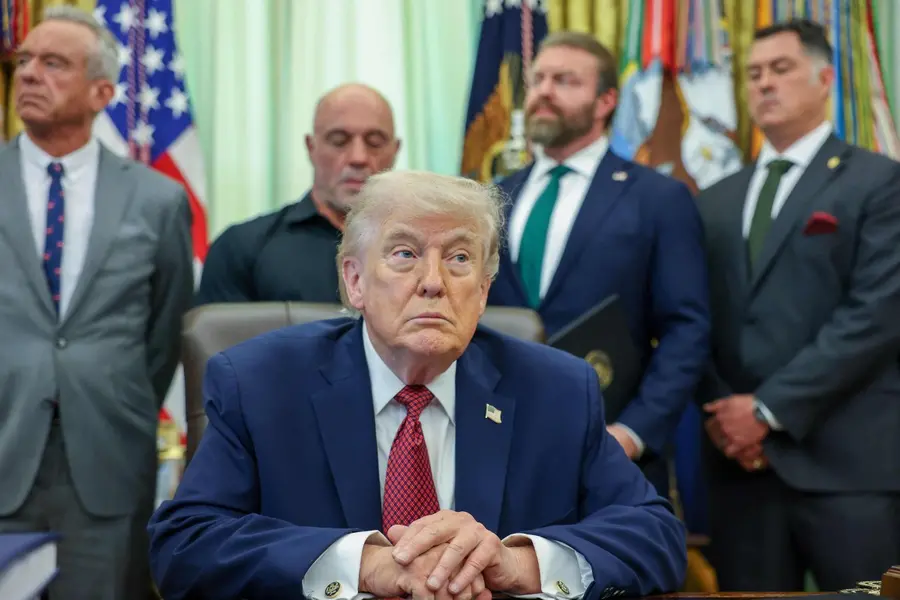
Washington: Donald Trump on Saturday directed his administration to accelerate the review process for certain psychedelic drugs, including ibogaine, a substance that has gained attention among combat veterans and some conservative lawmakers despite concerns about its safety.
Push to expand medical research
Ibogaine and other psychedelics are currently classified under the most restrictive category of illegal drugs by the federal government. However, the administration is now moving to relax certain restrictions to encourage research into their potential medical use, particularly for conditions such as severe depression.
Speaking while signing an executive order, Trump said the move could help people suffering from serious health issues regain control of their lives. He added that the directive would significantly speed up access to treatments if they prove effective.
Growing interest among veterans and advocates
Supporters, including veteran groups and psychedelic researchers, have long argued that ibogaine may offer benefits for difficult conditions such as post-traumatic stress disorder and opioid addiction. The substance is derived from a shrub found in West Africa.
The announcement follows earlier commitments from Robert F Kennedy Jr. and other officials to improve access to psychedelics for medical purposes, an issue that has drawn support from across political lines.
Key figures back initiative
Present at the Oval Office during the announcement were senior health officials, podcaster Joe Rogan and former Navy SEAL Marcus Luttrell, whose memoir inspired the film Lone Survivor.
Rogan said he had shared information about ibogaine with Trump, who responded positively about pursuing regulatory approval. Luttrell told the President that the treatment had a life-changing impact on him.
Fast-track approvals and trials
The Food and Drug Administration is expected to introduce national priority vouchers next week for three psychedelic drugs. According to commissioner Marty Makary, these vouchers could reduce approval timelines from several months to just weeks if the drugs align with national priorities. This marks the first time such accelerated review has been extended to psychedelics.
The agency is also preparing to enable the first human clinical trials of ibogaine in the United States.
Cultural origins and use abroad
Ibogaine has traditional roots in the Bwiti religion in countries such as Gabon, where it has been used in spiritual ceremonies.
In recent years, American veterans have reported benefits after travelling to clinics in Mexico where the drug is administered.
Safety concerns remain
Despite the renewed interest, ibogaine has raised serious safety concerns. It has been associated with potentially fatal heart complications. The National Institutes of Health had previously funded studies on the drug in the 1990s but halted them due to its cardiovascular risks.
Frederick Barrett from Johns Hopkins noted that studying ibogaine in the United States has been challenging due to its known risks. He added that the executive order could allow more objective scientific research to determine whether it offers real advantages over other therapies.
Legal status and ongoing research
At present, no psychedelic drug has been approved for use in the United States. However, several substances, including psilocybin, MDMA and LSD, are being tested in clinical trials for mental health conditions. These drugs remain illegal and are classified alongside substances such as heroin.
Two states, Oregon and Colorado, have already legalised psychedelic therapy involving psilocybin.
State-level support and funding
Support from veterans’ organisations and figures such as former Texas governor Rick Perry contributed to legislation allocating 50 million dollars for ibogaine research in Texas. Perry, who co-founded Americans for Ibogaine, has also advocated for easing federal restrictions on the drug.
Trump’s order directs the Department of Health and Human Services to allocate at least 50 million dollars to states that are developing programmes focused on psychedelic treatments for serious mental illness. The plan is intended as a federal-state partnership offering funding, technical support and data sharing.
Risks and limited evidence
Ibogaine is known to cause irregular heart rhythms and has been linked to more than 30 deaths, according to the Multidisciplinary Association for Psychedelic Studies.
Ismail Lourido Ali said the new directive could encourage more states to invest in research by reducing the stigma associated with Schedule I drugs.
Clinics and real-world use
Operators of ibogaine clinics say the policy change will not lead to immediate practical changes. Tom Feegel, whose organisation runs a clinic in Cancun, said the treatment would still not be covered by insurance and would remain unapproved for now.
He noted that the order shifts ibogaine from being seen as a fringe treatment to one that is formally acknowledged at the federal level. His clinic reportedly treated 2,000 people last year, charging between 15,000 and 20,000 dollars per patient, while also offering free treatment to around 100 veterans.
Clinics typically monitor heart activity closely and keep emergency equipment ready due to the known risks.
Early research findings
One recent study by researchers at Stanford University examined veterans who received ibogaine treatment in Mexico. The small study, involving 30 participants, found improvements in symptoms linked to traumatic brain injury, including PTSD, depression and anxiety.
However, the study did not include a placebo group, which is an important element in rigorous clinical research. Participants were given a combination of ibogaine and magnesium, aimed at reducing heart-related risks.
Agency inputs
Published: 18 Apr 2026, 10:44 pm IST
Related Topics
Disclaimer: Kindly avoid objectionable, derogatory, unlawful and lewd comments, while responding to reports. Such comments are punishable under cyber laws. Please keep away from personal attacks. The opinions expressed here are the personal opinions of readers and not that of Mathrubhumi.
