
Dollar pares weekly losses on Fed nomination buzz and shutdown optimism, but remains under pressure from Cuba tariffs and Iran tensions.
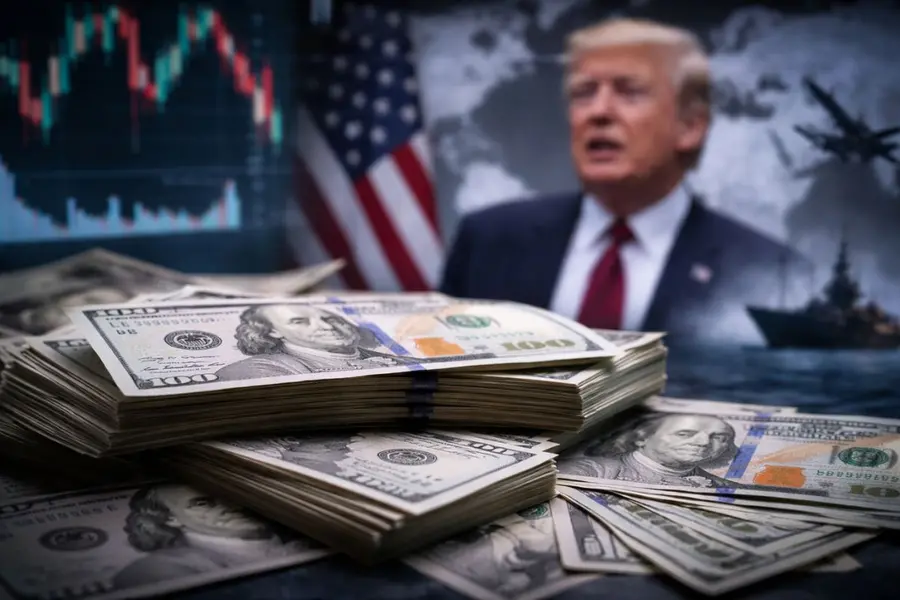
The Dollar rose on Friday, paring part of its weekly slide, after President Donald Trump said he would soon announce his nominee to head the Federal Reserve and as optimism grew that Washington would avert a government shutdown.
Despite the rebound, the greenback remained poised for a second straight weekly decline, weighed down by escalating geopolitical tensions involving Cuba, Iran, Venezuela, Greenland, and Europe.
Also Read

Trump said he intends to name his pick to replace Fed Chair Jerome Powell on Friday, following reports that former Fed Governor Kevin Warsh visited the White House and impressed the president during a meeting on Thursday.
Powell’s term ends in May. The prospect of a nominee viewed as independent helped stabilise the currency after a volatile week.
“The appointment of Warsh, if it’s true, will be seen as someone who can, in a way, remain independent, and not someone seen as likely to be subservient to Trump’s wishes,” said Khoon Goh, head of Asia research at ANZ in Singapore.
He added that some of Friday’s moves likely reflected investors' lightening positions ahead of the weekend and locking in gains from Dollar shorts.
The Dollar index (DXY) rose 0.4% to 96.60, trimming its weekly decline to 0.9%. In another reading, the index was up 0.2% at 96.35, cutting the weekly slide to 1.1%. The Dollar strengthened 0.7% against the Swiss franc to 0.7699. The Euro fell 0.4% to $1.1916, and was also quoted 0.2% lower at $1.194.
The Yen weakened 0.42% to 153.77 per Dollar, and was also seen at 153.39. Sterling slipped 0.32% to $1.3759 and was also down 0.1% to $1.3791.
Geopolitics continued to weigh on sentiment. The White House said Trump signed an executive order imposing tariffs on countries that provide oil to Cuba, adding to strains linked to Iran, Venezuela, Greenland, and Europe.
Reports that Trump is considering strikes against Iran triggered a surge in oil prices earlier and pressured the Dollar. Multiple sources said options include targeted strikes on security forces and leaders, while Trump described ships in the region as an “armada” sailing to Iran.
On the domestic front, the Dollar found some support after Trump endorsed a bipartisan Senate spending deal that would avert a partial government shutdown. Treasury Secretary Scott Bessent reiterated that Washington maintains a strong-Dollar policy, helping the currency recover from a four-year low hit earlier in the week.
The greenback had ended last week with its biggest fall since last April, driven partly by concerns over policy toward Greenland. Additional support came after the Federal Reserve held interest rates steady, with Powell citing a solid economy and diminished risks to both inflation and employment.
In Japan, the Dollar’s retreat has offered some relief to the yen, which has traded in the 152–154 per Dollar range for most of the week amid talk of rate checks by US and Japanese authorities, often seen as a precursor to intervention. Data showed Tokyo core consumer prices rose 2% in January, slowing from the previous month but matching the central bank’s target.
Commodity-linked currencies weakened. The Australian Dollar fell 0.7% to $0.6996, and was also seen 0.2% lower at $0.7033. The New Zealand Dollar slipped 0.5% to $0.6045, and was also quoted 0.2% lower at $0.6066. Cryptocurrencies declined, with bitcoin down 3.3% to $81,619.01 in one snapshot and 0.1% lower at $84,309.27 in another, while ether fell 3.4% to $2,719.87 and was also seen 0.3% lower at $2,808.19.
Published: 30 Jan 2026, 08:38 am IST
Related Topics
Disclaimer: Kindly avoid objectionable, derogatory, unlawful and lewd comments, while responding to reports. Such comments are punishable under cyber laws. Please keep away from personal attacks. The opinions expressed here are the personal opinions of readers and not that of Mathrubhumi.