
In the Union Budget 2025, the finance minister delivered one of the biggest personal tax reforms in recent years by raising the non-taxable income threshold to ₹12 lakh, benefiting millions of middle-class households.
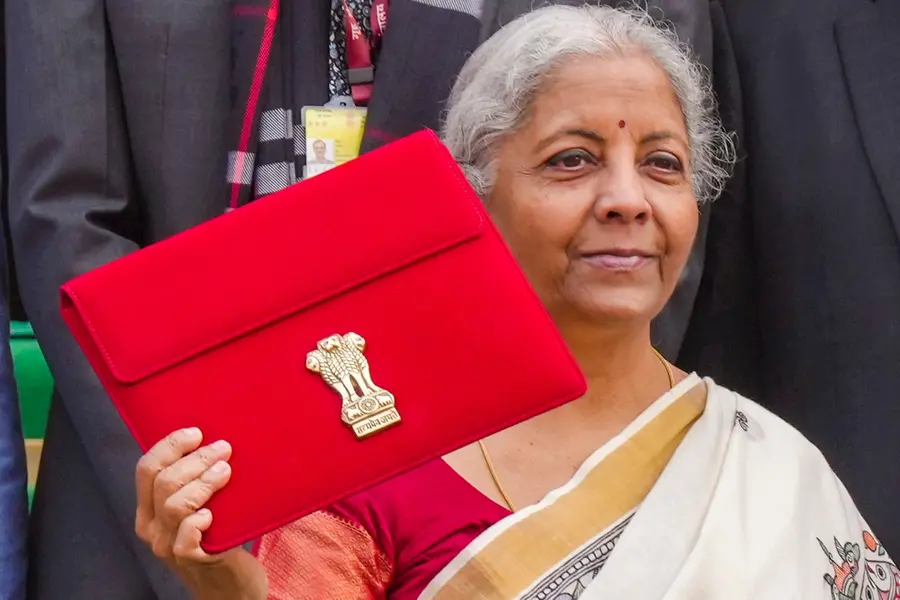
New Delhi: Finance Minister Nirmala Sitharaman is set to present her ninth consecutive Union Budget on Sunday, February 1, with expectations running high among the middle class and salaried taxpayers for further income tax relief.
After delivering a major tax break in the Union Budget 2025, which made income up to ₹12 lakh tax-free under the new tax regime, and up to ₹12.75 lakh for salaried taxpayers after standard deduction, taxpayers are now hoping for incremental relief rather than sweeping changes in Budget 2026.
Also read | Union budget explained in simple words: Key terms like fiscal deficit, economic survey you must know
Income tax has long remained one of the most closely watched aspects of the Union Budget, particularly for salaried employees who look to it as a tool to ease household financial pressure.
Also read | Budget day curse? Why markets have ended in red 15 times in the last 25 years
What Salaried Taxpayers Expect
One of the key expectations this year is an increase in the standard deduction, which currently stands at ₹75,000 under the new tax regime. Experts and taxpayer groups are pitching for a hike to ₹1 lakh, which would effectively make income up to ₹13 lakh tax-free for salaried individuals.
There are also expectations of rationalisation of TDS (Tax Deducted at Source) norms, with many taxpayers seeking smoother credit, faster refunds and reduced cash flow strain.
Also read | Union Budget 2026: Education sector seeks execution-led funding to boost employability
Current Income Tax Slabs
Under the old tax regime, income is taxed as follows:
- Up to ₹2.5 lakh: Nil
- ₹2.5 lakh to ₹5 lakh: 5%
- ₹5 lakh to ₹10 lakh: 20%
- Above ₹10 lakh: 30%
Under the new tax regime:
- Up to ₹3 lakh: Nil
- ₹3 lakh to ₹6 lakh: 5%
- ₹6 lakh to ₹9 lakh: 10%
- ₹9 lakh to ₹12 lakh: 15%
- ₹12 lakh to ₹15 lakh: 20%
- Above ₹15 lakh: 30%
While the new tax regime offers lower slab rates and simplicity, the old regime continues to appeal to taxpayers due to the wide range of deductions it allows. Currently, only limited deductions — such as NPS contributions — are available under the new regime.
What changed in Budget 2025
In the Union Budget 2025, the finance minister delivered one of the biggest personal tax reforms in recent years by raising the non-taxable income threshold to ₹12 lakh, benefiting millions of middle-class households. The announcement of the Income-tax Act, 2025, set to come into force from April 1, 2026, marked another major shift aimed at simplifying tax laws.
Budget 2026: Stability over big changes?
Experts believe the government is unlikely to revise income tax slabs in Budget 2026, given the upcoming rollout of the new Income-tax Act. Instead, the focus may remain on fine-tuning deductions, easing TDS and TCS mechanisms, and providing clarity to help taxpayers transition smoothly into the new framework.
The Budget comes at a crucial juncture, as individuals and businesses prepare for one of the most significant tax overhauls in decades. With predictability and stability being key concerns, households are looking for measures that reduce compliance burden and prevent funds from getting locked due to procedural delays.
Also read | Received an income tax email? It could be a ‘Blackmoon malware’ trap for Indian users
TDS, TCS and refund delays a key concern
For many taxpayers, especially those with income from interest, dividends or foreign remittances, tax collected at source (TCS) continues to strain cash flows. While salaried employees can set off TCS against salary TDS, others often face long waits for refunds, worsened by pending disputes and administrative backlogs.
Growing shift to new tax regime
India’s personal tax system has gradually moved towards simplification. The new tax regime has become the default option, capital gains rules have been streamlined, and compliance requirements reduced. These changes have driven higher participation, with ITR filings rising from 8.13 crore in FY24 to 8.68 crore in FY25, a 6.7% increase. Nearly 72% of taxpayers opted for the new regime in FY24, reflecting growing acceptance.
Published: 31 Jan 2026, 10:03 am IST
Related Topics
Disclaimer: Kindly avoid objectionable, derogatory, unlawful and lewd comments, while responding to reports. Such comments are punishable under cyber laws. Please keep away from personal attacks. The opinions expressed here are the personal opinions of readers and not that of Mathrubhumi.
