
The issue originated from a technical fault at the National Air Traffic Services (NATS) control centre in Swanwick, Hampshire, and left air traffic controllers with incomplete radar information, forcing immediate safety restrictions and flight reductions.
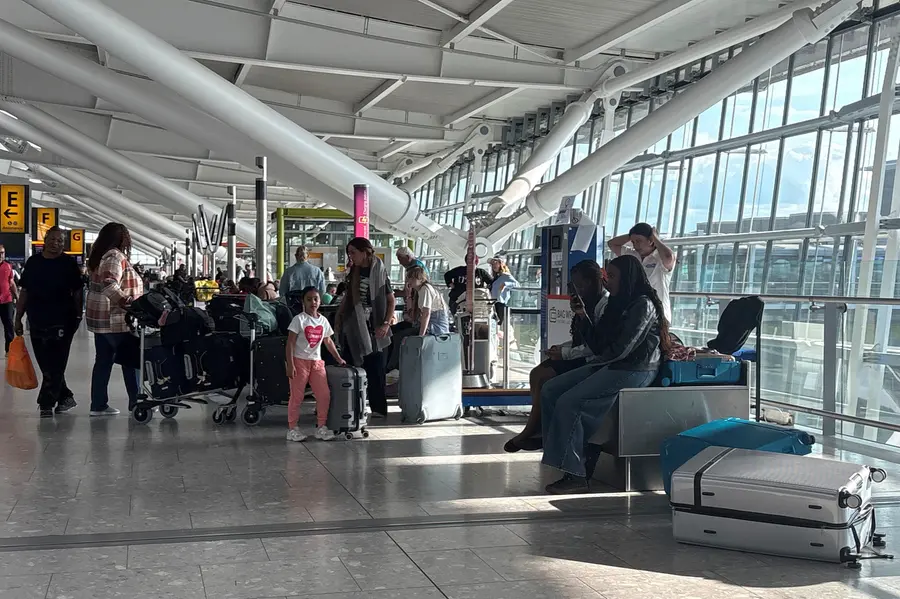
A widespread air traffic control failure in the United Kingdom caused hundreds of flight delays and cancellations on Wednesday, July 30, disrupting operations at major airports across the country and drawing sharp criticism from airlines.
The issue originated from a technical fault at the National Air Traffic Services (NATS) control centre in Swanwick, Hampshire, and left air traffic controllers with incomplete radar information, forcing immediate safety restrictions and flight reductions. While the problem was resolved within 20 minutes using a back-up system, the ripple effects continued well into Thursday, with several flights still cancelled or delayed.
Authorities have ruled out the possibility of a cyberattack. The UK’s National Cyber Security Centre confirmed that there was no evidence of hacking, and Transport Secretary Heidi Alexander described the disruption as an “isolated event.”
“This was a genuine software error and the back-up systems worked as they should,” a source told The Times, adding that the alternate program used by NATS prevented the issue from recurring.
The airports affected included Heathrow, Gatwick, Stansted, Manchester, Luton, and Newcastle, among others. British Airways had to temporarily reduce its flights at Heathrow to 32 per hour, down from the usual 45, until normal operations resumed around 7:15 pm on Wednesday.
By Thursday morning, operations were mostly returning to normal. Heathrow reported 10 flight cancellations - four departures and six arrivals - while Stansted and Gatwick confirmed stable operations. Manchester Airport reported a few cancellations, which were being worked back into the schedule. Ryanair also resumed normal flight operations.
According to aviation analytics firm Cirium, 84 departures and 71 arrivals were cancelled on Wednesday evening, accounting for roughly 3% of total departures and 2% of arrivals across UK airports. While Thursday saw fewer disruptions, Cirium noted it was too early to determine whether they fell outside typical daily averages.
Under UK law, airlines are obligated to assist passengers affected by delays or cancellations, including offering meals, accommodation if required, and rebooking at no additional cost. However, because the outage is considered an “extraordinary circumstance” not caused by the airline, passengers are not entitled to financial compensation.
Passengers across the country were urged to check directly with airlines for the latest updates, as backlogs from Wednesday’s disruption could take days to fully clear.
Published: 31 Jul 2025, 08:33 pm IST
Related Topics
Disclaimer: Kindly avoid objectionable, derogatory, unlawful and lewd comments, while responding to reports. Such comments are punishable under cyber laws. Please keep away from personal attacks. The opinions expressed here are the personal opinions of readers and not that of Mathrubhumi.
