
Global markets turned cautious as stocks slipped across Asia and Europe while oil prices surged past $100, reflecting rising uncertainty over the ongoing Iran conflict and its impact on energy supplies.
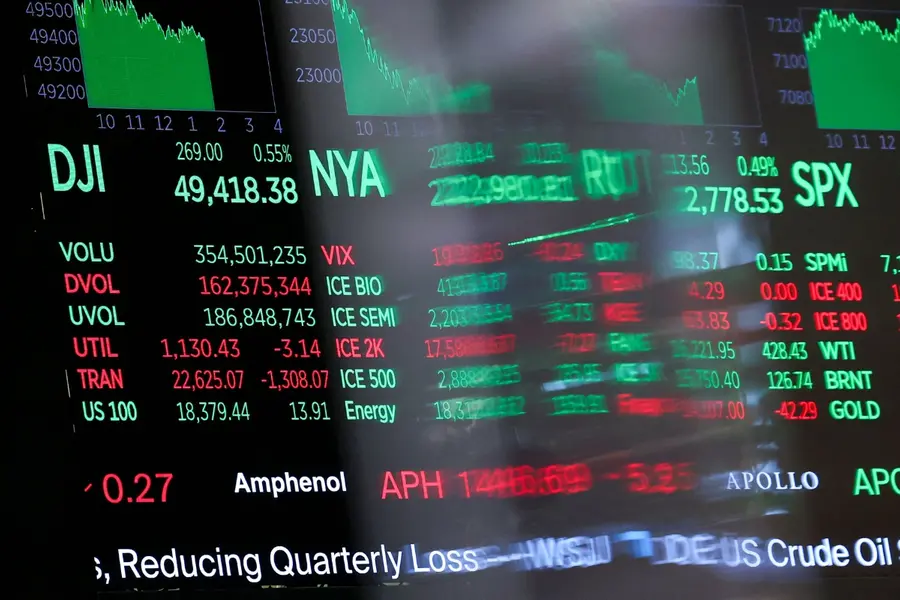
Global equity markets showed signs of weakness on Thursday, with shares declining across Asia and Europe after a brief rally. The pullback came even as Wall Street indices, including the S&P 500 and Nasdaq Composite, hit record highs a day earlier on the back of strong corporate earnings.
In Asia, Japan’s Nikkei 225 briefly crossed the historic 60,000 mark before retreating, signalling profit booking after the surge. South Korea’s Kospi touched fresh highs, supported by strong export data, particularly in technology and AI-related sectors.
Also Read

However, broader sentiment weakened, with Hong Kong’s Hang Seng Index and China’s Shanghai Composite Index closing lower. India’s BSE Sensex also slipped by around 1 per cent amid global cues.
Oil surges above $100 as Iran tensions escalate
Oil prices climbed sharply, with Brent Crude trading above $100 per barrel. The rally has been driven by escalating tensions between the United States and Iran, along with disruptions in key shipping routes.
The Strait of Hormuz remains at the centre of the crisis. The waterway, which typically handles around one-fifth of global oil shipments, has seen significant disruption, with maritime traffic largely halted following recent attacks and seizures of vessels.
Benchmark US crude also rose, indicating a broad-based surge in global energy prices.
War uncertainty weighs on investor sentiment
Markets are reacting to growing uncertainty over the future of the Iran conflict, now entering its eighth week. While a temporary ceasefire was extended, there is no clarity on whether fresh peace talks will take place.
Recent developments, including reported attacks on ships and continued blockades, have raised concerns about prolonged supply disruptions. Analysts say the oil market is now “repricing expectations” as hopes of a quick resolution fade.
What it means for India: Fuel prices in focus
Rising global oil prices have direct implications for India, one of the largest crude importers. Higher crude costs could push up petrol price today and diesel price levels if the trend continues.
Experts estimate that if oil climbs towards $120 per barrel, fuel prices in India could rise by Rs 25–30 per litre. However, the Ministry of Petroleum and Natural Gas has stated that there is currently no plan to increase fuel prices.
Fuel rates in India depend on several factors, including global crude prices, taxes, and currency movements, meaning any sustained rise in oil could eventually feed into retail prices.
Domestic and global oil trends
Apart from Brent crude, WTI Crude has been trading near $94 per barrel. In India, crude futures on the Multi Commodity Exchange have surged close to Rs 8,900 per barrel, reflecting strong bullish momentum.
Analysts point to continued volatility, with higher resistance levels likely if geopolitical tensions persist.
The combination of rising oil prices and falling stock markets signals growing economic uncertainty. For India, higher fuel prices could:
- Increase inflation
- Raise transport and logistics costs
- Impact household expenses
- Slow economic growth momentum
Globally, markets will remain sensitive to any developments in the Iran conflict and the status of the Strait of Hormuz.
(With AP inputs)
Published: 23 Apr 2026, 03:03 pm IST
Disclaimer: Kindly avoid objectionable, derogatory, unlawful and lewd comments, while responding to reports. Such comments are punishable under cyber laws. Please keep away from personal attacks. The opinions expressed here are the personal opinions of readers and not that of Mathrubhumi.