
Q2 earnings, September inflation data and Brent crude prices above $100 per barrel are set to guide Indian stock markets this week, as investors assess global risks and the sustainability of Friday’s recovery.
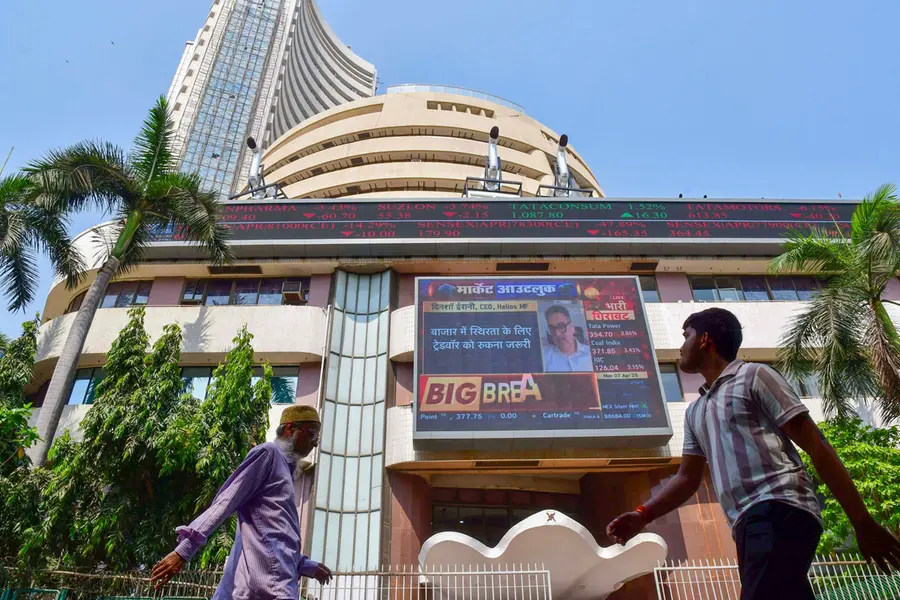
Mumbai: Indian stock markets are likely to remain sensitive to quarterly earnings, domestic inflation figures and global developments this week, with Brent crude prices above $100 per barrel and foreign investor selling continuing to weigh on sentiment. Investors will track results from major companies, including HCL Technologies, Wipro and Tech Mahindra, alongside September consumer and wholesale price inflation data.
Indian equity markets are expected to consolidate this week as investors assess the September-quarter earnings season, inflation trends, crude oil prices and global economic indicators, according to market analysts.
Results from major information technology companies, including HCL Technologies, Wipro and Tech Mahindra, will be among the key domestic triggers. Investors will also monitor inflation data from India and the US, foreign institutional investor (FII) activity, movements in the rupee and US Treasury yields, as well as geopolitical developments affecting global energy supplies.
IT stocks in focus as earnings season gathers pace
The IT sector is likely to remain in focus after shares rallied on Friday following Tata Consultancy Services (TCS) reporting better-than-expected September-quarter results.
TCS shares rose more than 4 per cent, helping lift IT stocks and supporting a broader recovery in the domestic market. Investors will now assess whether the gains continue as other major IT companies announce their results and provide guidance on demand and business prospects for the coming quarters.
HCL Technologies, Wipro and Tech Mahindra are among the IT companies scheduled to report their results this week. Other companies expected to announce earnings include BHEL, Canara Bank, HDB Financial Services, HDFC Asset Management Company and Nestle.
The sector has also been dealing with uncertainty after the US suspended eight IT firms, including TCS, Infosys, Wipro, Cognizant and Microsoft, from a programme linked to green-card applications for foreign workers. The US action was associated with concerns that the programme had excluded American workers from job opportunities.
TCS said the move was not expected to affect its workforce strategy or customer engagements. The company cited the limited number of applications it had made under the programme over the preceding two years and its focus on local hiring.
Inflation data to shape interest-rate expectations
September consumer price index (CPI) inflation data will be a major domestic indicator this week, followed by wholesale price index (WPI) figures.
According to Hariselvan Radhakrishnan, founder and chief executive of HST Wealth, a higher-than-expected CPI reading could revive concerns about further monetary tightening by the Reserve Bank of India (RBI). Such concerns could put interest-rate-sensitive sectors, including banking, automobiles and real estate, under pressure.
Higher inflation could also raise concerns about consumer demand. Conversely, a softer reading could ease worries about the eventual peak in interest rates, although any positive effect on market sentiment could be limited if crude oil prices remain elevated.
WPI data will provide further indications of how energy and logistics costs are affecting producer prices.
Investors will also monitor US inflation and retail sales data, which could influence expectations for US interest rates, Treasury yields and the dollar. European inflation figures and UK gross domestic product (GDP) data are among the other international indicators expected to draw attention.
Crude oil remains a key market risk
Brent crude trading above $100 per barrel remains a major concern for Indian equities. Higher oil prices can increase India's import bill and add to inflationary pressures, potentially affecting corporate costs, consumer spending and the rupee.
Geopolitical uncertainty involving Iran, the Strait of Hormuz and regional energy infrastructure has kept attention on the risk of supply disruptions.
Ponmudi R, chief executive of Enrich Money, said uncertainty surrounding energy supplies remained a significant macroeconomic risk for the market.
Investors will therefore track oil price movements alongside inflation data and company earnings to assess the outlook for Indian equities.
Sensex and Nifty recover after eight weeks of declines
Indian markets recorded gains last week after eight consecutive weeks of declines in the Nifty 50.
The BSE Sensex rose 562.63 points, or 0.78 per cent, over the week, while the NSE Nifty 50 gained 98.5 points, or 0.43 per cent.
Siddhartha Khemka, head of research for wealth management at Motilal Oswal Financial Services, said domestic earnings momentum was improving, but elevated global risks and sustained foreign investor selling continued to weigh on sentiment.
The recent gains suggest some stabilisation after the extended decline, although analysts expect market performance to remain selective as investors respond to individual company results and economic data.
What investors will watch this week
Three factors are likely to shape the near-term market direction:
Corporate earnings: Results from major IT companies and other large businesses could influence sector-specific performance and indicate whether demand conditions are improving.
Inflation and interest rates: CPI and WPI readings will help investors assess price pressures and the potential implications for RBI policy expectations.
Crude oil and global risks: Oil prices above $100 per barrel could increase inflationary pressures and weigh on the rupee, while geopolitical uncertainty may add to market volatility.
US inflation data, retail sales, Treasury yields and the dollar will also influence global risk sentiment. The interaction between domestic earnings and international economic risks will be important in determining whether the recent market recovery continues.
Published: 11 Oct 2026, 03:35 pm IST
ABOUT THE AUTHOR

Related Topics
Disclaimer: Kindly avoid objectionable, derogatory, unlawful and lewd comments, while responding to reports. Such comments are punishable under cyber laws. Please keep away from personal attacks. The opinions expressed here are the personal opinions of readers and not that of Mathrubhumi.