
This is only the second Sunday trading session in India's history, allowing real-time price discovery amid heightened anticipation for fiscal deficit targets and potential policy announcements.
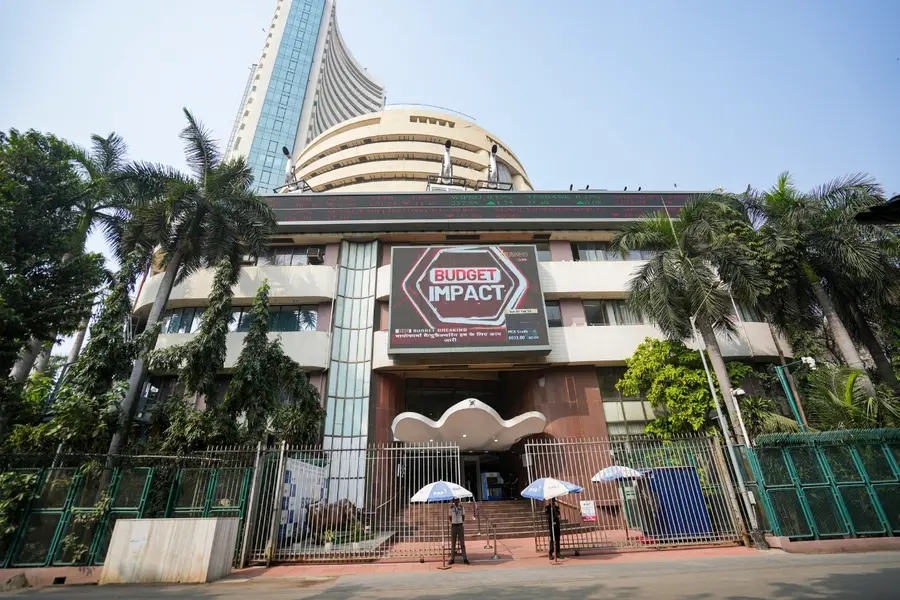
Mumbai: Indian benchmark indices experienced a dramatic sell-off on Sunday as Finance Minister Nirmala Sitharaman’s Union Budget 2026-27 triggered a wave of profit-booking and defensive trading during a rare weekend session.
The BSE Sensex closed at 80,722.94 points, down 1,843.43 points or 2.23%, while the NSE Nifty ended at 24,825.45 points, a loss of 593.45 points or 2.33%. While markets were largely stable prior to the speech, they plunged deep into the red as the session progressed, marking one of the sharpest Budget-day declines in recent years.
The Derivatives Shock
The primary catalyst for the downturn was a proposed hike in the Securities Transaction Tax (STT) on equity derivatives, a move explicitly intended to cool what the government views as excessive speculation in the futures and options (F&O) segment.
- Futures: STT increased from 0.02% to 0.05%.
- Options: STT on premiums raised from 0.1% to 0.15%, while the rate for exercised options climbed from 0.125% to 0.15%.
"Initial optimism faded quickly as higher transaction costs driven by the increase in STT... weighed on sentiment and near-term liquidity expectations," said Ponmudi R, CEO of Enrich Money. He noted that while the Budget reinforced a long-term focus on infrastructure and manufacturing, the immediate market response signalled "near-term disappointment."
Curbing Speculation
Government officials defended the hike, noting that the volume of F&O trading in India has surged to over 500 times the nation’s GDP. The administration believes the increase is justified to discourage purely speculative activity that often results in significant losses for retail participants.
Anand James, Chief Market Strategist at Geojit Investments Limited, suggested the move is technically "equity positive" as it makes speculative option trades more expensive, potentially pushing capital toward long-term equity. However, he cautioned that "the hit on the derivative segment could lead to rebalancing, and drag the equity segment in the near term."
Market Breadth and Sentiment
The selling pressure was broad-based, hitting metals, public sector (PSU) banks, and index heavyweights particularly hard. Healthcare and IT sectors remained relatively resilient, acting as defensive plays for nervous investors.
Additional factors weighing on the market included a weakening rupee and tepid participation from Foreign Institutional Investors (FIIs). Despite the immediate volatility, analysts emphasised that the tax on cash-based equity trades remains unchanged, signalling a policy preference for delivery-based investing over short-term leverage.
Published: 01 Feb 2026, 09:30 am IST
Related Topics
Disclaimer: Kindly avoid objectionable, derogatory, unlawful and lewd comments, while responding to reports. Such comments are punishable under cyber laws. Please keep away from personal attacks. The opinions expressed here are the personal opinions of readers and not that of Mathrubhumi.
