
Air travel through Singapore is set to become slightly more expensive as the city-state rolls out a Sustainable Aviation Fuel (SAF) levy from October 1. The surcharge, applied to tickets sold after April 1, will fund the adoption of cleaner aviation fuel and support Singapore’s ambitions to become a regional SAF hub.
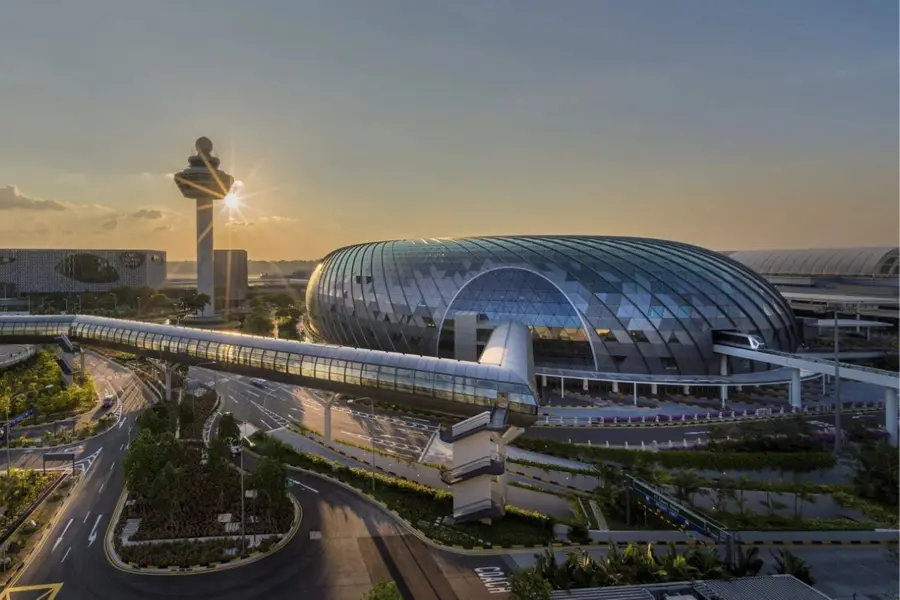
Flying in and out of Singapore will soon become slightly more expensive, as the city-state introduces a new levy to support the use of sustainable aviation fuel (SAF).
As of October 1 this year, passengers departing from Singapore Changi Airport will incur an additional charge ranging from 1 Singapore dollar (approximately 75 US cents) to 41.60 Singapore dollars (around 32 US dollars), depending on their destination and cabin class.
Also Read

The levy will apply to tickets sold after April 1 for flights departing after October 1. The move is aimed at funding Singapore’s growing use of SAF, a cleaner-burning alternative to traditional jet fuel.
SAF is typically produced from used cooking oil, agricultural waste, and other renewable feedstocks. The global aviation industry is increasingly promoting SAF as one of the most practical ways to reduce carbon emissions without changing existing aircraft technology.
How the Levy Will Work
The new surcharge will vary based on distance and travel class: • Economy class passengers flying within Southeast Asia will pay the lowest levy of 1 Singapore dollar. • Premium cabin passengers flying long-haul routes, such as to the Americas, will pay the highest levy of 41.60 Singapore dollars.
For air cargo shipments, the levy will be calculated based on distance travelled and cargo weight. To ensure transparency, the SAF levy will be clearly displayed on passenger tickets and cargo contracts. According to Daniel Ng, Chief Sustainability Officer at the Civil Aviation Authority of Singapore, the levy ensures that “all aviation users do their part to contribute to sustainability at a cost which is manageable for the air hub.”
Singapore’s Changi Airport handled a record 70 million passengers last year, making it the busiest airport in Southeast Asia. Singapore is positioning itself as a key player in global SAF production.
It already hosts the region’s largest SAF plant and is beginning construction of a next-generation facility this year.
The new plant has supply agreements with major airlines, including JetBlue and Singapore Airlines. Other Southeast Asian countries are also ramping up production, with Thailand launching a new SAF plant in Bangkok in 2025 and Malaysia and Vietnam achieving domestic SAF production milestones last year.
Indonesia recently announced plans to expand its existing production facilities. The Philippines is working to simplify regulations to attract fuel developers. Vietnam supplied domestically produced SAF blends to airlines such as VietJet Air in 2025.
Malaysia also delivered SAF to local carriers like Malaysia Airlines and to customers in Europe. Tat Chuan Goh of Aether Fuels, a Chicago-based company building Singapore’s new SAF plant, said the industry is still in its early stages, but momentum is clearly building. He noted that Southeast Asia has abundant access to raw materials such as agricultural and forest waste, giving the region strong potential to scale up production.
The Association of Southeast Asian Nations (ASEAN) estimates that the region could produce 8.5 million barrels of SAF per day by 2050 if managed responsibly. Kelvin Lee, who heads sustainability for Asia-Pacific at the International Air Transport Association, said it is natural that global attention is shifting to Southeast Asia.
However, he stressed that continued government support will be crucial to maintain momentum. Aviation accounts for about 2.5% of annual global carbon emissions, according to the International Energy Agency, and emissions from aviation are growing faster than those from any other transport sector.
To address this, the International Civil Aviation Organization has set a target of achieving net-zero carbon emissions by 2050. The agency estimates that widespread use of SAF could cut about 65% of aviation emissions.
However, there are concerns about whether SAF production can scale up quickly enough. One major uncertainty comes from policy changes in the United States under President Donald Trump, where clean energy initiatives have been rolled back.
SAF production in the US had nearly doubled last year after strong policy support under former President Joe Biden, but recent reversals have created uncertainty in the market. Global SAF production is now expected to slow for the first time since large-scale output began in 2018.
Preeti Jain, who leads net-zero research at the International Air Transport Association, told US policy changes are “definitely a topic of discussion,” but added that incentives have not completely disappeared.
She described the current situation as a period of uncertainty rather than a complete setback. As global aviation seeks ways to reduce emissions while meeting rising travel demand, Southeast Asia appears ready to play a larger role in SAF production.
With supportive policies, access to raw materials, and increasing investment, the region could emerge as a major global hub for cleaner aviation fuel, even as policy shifts elsewhere slow momentum.
Singapore’s new SAF levy is one of the first concrete steps in the region to directly fund the transition toward greener aviation.
Published: 16 Feb 2026, 04:01 pm IST
ABOUT THE AUTHOR
Related Topics
Disclaimer: Kindly avoid objectionable, derogatory, unlawful and lewd comments, while responding to reports. Such comments are punishable under cyber laws. Please keep away from personal attacks. The opinions expressed here are the personal opinions of readers and not that of Mathrubhumi.