
Polymer notes are expected to offer longer durability, lower long-term production costs and better compatibility with modern ATM and currency-handling infrastructure
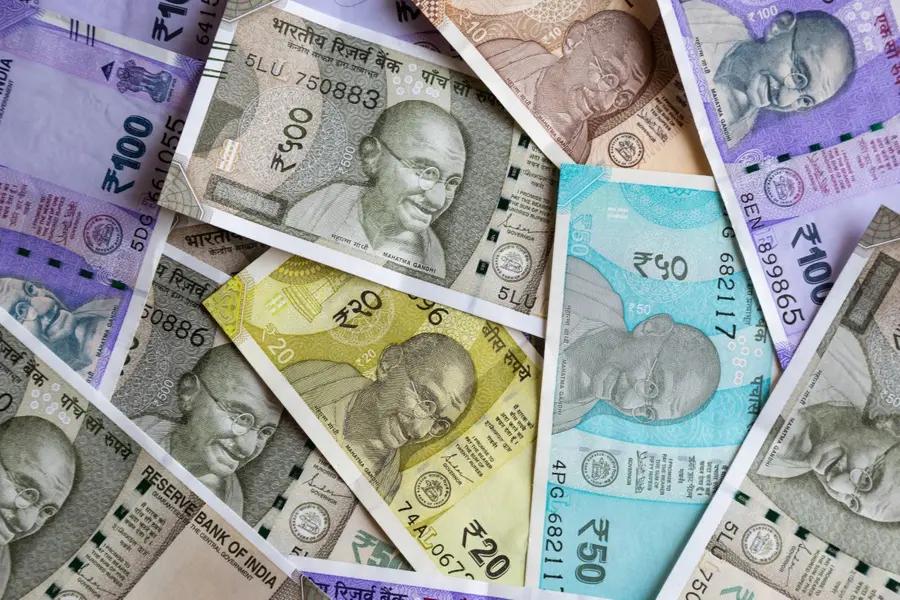
The Reserve Bank of India is once again examining the possibility of introducing polymer-based currency notes as demand for cash continues to remain strong across the country.
People familiar with the discussions said the proposal to roll out plastic banknotes came up during the RBI’s recent board meetings conducted in Patna and Mumbai. The matter has gained renewed attention as the central bank looks for ways to manage rising currency printing expenses and the growing volume of worn-out notes being withdrawn from circulation.
Officials aware of the discussions said a pilot programme for polymer notes meant for public circulation could be announced in the near future.
According to one source, polymer notes are being viewed as a practical alternative to conventional paper currency because they are expected to last longer and may eventually reduce overall production costs.
“Plastic notes have operational advantages over paper currency. ATM systems can now be adapted to handle these notes as well. The technological limitations that existed earlier are no longer a major obstacle,” the source said.
Currency printing expenses rise sharply
The RBI’s annual report for FY25 showed a significant increase in expenditure related to printing banknotes.
The central bank spent ₹6,372.8 crore on secure printing of currency during 2024-25, compared to ₹5,101.4 crore in the previous financial year. The increase was mainly linked to a larger requirement for fresh banknotes.
The issue of short currency life has also emerged as a major concern. RBI figures showed that 23.8 billion soiled banknotes were destroyed during FY25, up from 21.24 billion pieces a year earlier, reflecting an increase of 12.3 per cent.
Among the notes withdrawn from circulation, ₹500 notes formed the largest share, followed by ₹100 banknotes.
Cash demand remains strong despite digital payments growth
Even as digital transactions continue to expand rapidly in India, the circulation of physical currency has continued to climb.
Data available till May 15 showed that currency in circulation rose 11.5 per cent year-on-year to touch an all-time high of ₹42.86 trillion.
In the first one-and-a-half months of FY27 alone, the amount of cash circulating in the economy increased by ₹1.15 trillion, suggesting that dependence on physical currency remains widespread.
Sources said lower denomination notes such as ₹10 and ₹20 continue to see substantial demand in daily transactions. However, their contribution to the total value of banknotes in circulation remains relatively small.
Over the past two years, ₹10 notes accounted for only 0.7 per cent of the total value of notes in circulation, while ₹20 notes made up 0.8 per cent.
Push for coins has had limited success
The RBI had earlier attempted to encourage greater use of coins to ease pressure on lower denomination banknotes, though the initiative has reportedly not delivered the expected outcome.
The supply of coins increased from around 1.2 billion pieces in FY24 to nearly 1.5 billion pieces in FY25. Of these, ₹5 coins formed the largest chunk at about 800 million pieces, while ₹20 coins accounted for roughly 400 million.
Despite the higher supply, demand for small denomination notes has continued to remain strong.
Earlier trial project was abandoned
India had first explored polymer banknotes more than a decade ago.
In 2012, the government had approved a field trial involving one billion ₹10 notes printed on polymer substrate across five cities.
At the time, the United Progressive Alliance government had clarified that the main purpose behind plastic notes was to improve the life span of currency rather than address counterfeiting concerns.
However, the proposal was eventually put on hold because of technological and operational difficulties.
Sources now say the situation has changed considerably, with advancements in currency-handling technology helping overcome earlier problems, including ATM compatibility.
Polymer notes already used in many countries
Several countries across the world already use polymer currency.
Australia became the first country to introduce plastic banknotes after launching a ten-dollar polymer note in 1988. Nations such as Singapore, Indonesia, Thailand and Malaysia later adopted similar currency systems.
Romania introduced polymer banknotes in 1998, becoming the first European country to do so. Canada followed much later in 2011.
The United States continues to use notes made from a specialised cotton and linen blend instead of polymer material.
Published: 29 May 2026, 06:42 pm IST
Related Topics
Disclaimer: Kindly avoid objectionable, derogatory, unlawful and lewd comments, while responding to reports. Such comments are punishable under cyber laws. Please keep away from personal attacks. The opinions expressed here are the personal opinions of readers and not that of Mathrubhumi.
