
Certain operational changes carry potential trade-offs for consumers and industry players.
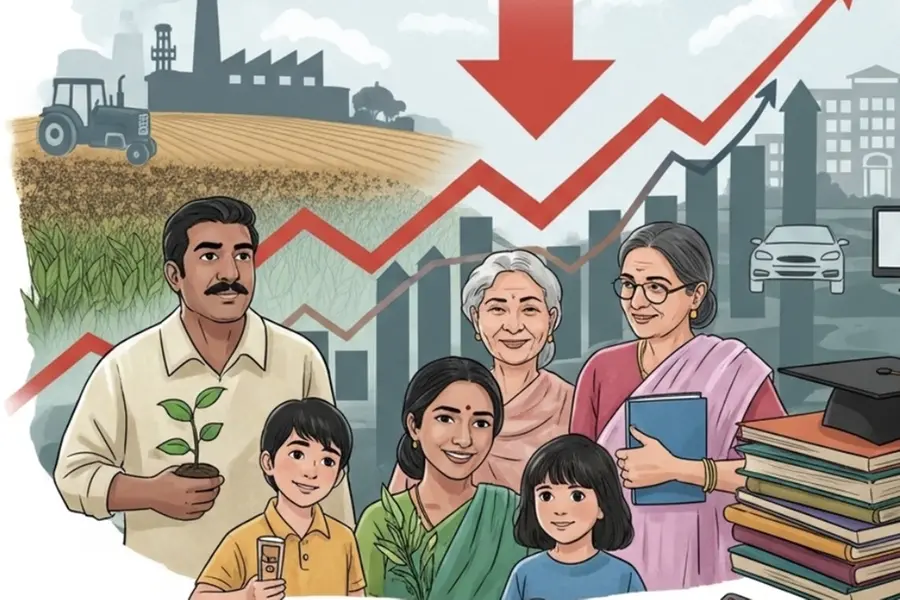
India's Goods and Services Tax (GST) Council convened for its 57th meeting in New Delhi on Thursday, 8 October 2026, under the chairpersonship of Union Finance Minister Nirmala Sitharaman, alongside state chief ministers and finance ministers. Departing from previous sessions that focussed primarily on altering tax rates, this landmark meeting introduced sweeping administrative and process reforms designed to remove bureaucratic hurdles and establish a trust-based tax environment across the country.
How everyday items and services will change
Household budgets and everyday purchases across India stand to benefit from targeted tax exemptions and clarifications. Psyllium seeds, commonly known as Isabgol, now attract a nil GST rate regardless of whether they are sold fresh, chilled, frozen, or dried. Parents purchasing toys receive greater clarity as tax notifications explicitly cover all toy categories—including dolls and puzzles—under tariff heading 9503, ensuring benefits are not restricted merely to tricycles or pedal cars.
Commuters opting for greener transport can choose a 5% GST option with restricted tax credits on electric vehicle hires and passenger transport where battery charging costs are included in the overall fare. Air travel to remote regions becomes cheaper, as passenger helicopter transport on a seat-sharing basis to and from helipads in North-Eastern states, Sikkim, and Bagdogra is now exempt from GST. Agricultural communities benefit from complete GST exemptions on seed storage warehousing meant for sowing, as well as coffee curing support services provided to cultivators. Armed forces personnel and veterans also gain from retrospective tax exemptions on compensation cess for vehicles and aerated drinks sold through Canteen Stores Department canteens.
Key tax terms explained
To fully understand how these reforms work, three common tax concepts need explaining. Input Tax Credit, or ITC, is a mechanism allowing businesses to deduct the tax they have already paid on raw materials and services from the tax owed on final sales, preventing double taxation across supply chains. Reverse Charge Mechanism, or RCM, shifts the burden of paying tax directly to the tax department onto the buyer rather than the seller. Electronic Commerce Operators, or ECOs, refer to online marketplaces, delivery apps, and digital platforms through which goods and services are ordered.
Major relief for small traders and e-commerce sellers
Small online sellers wanting to trade across state borders no longer need to set up physical offices in every state. Under a simplified registration rule, small vendors supplying through e-commerce platforms who pass on monthly input tax credits under 2.5 lakh rupees can register automatically using an e-commerce operator’s local warehouse as their principal place of business.
Small businesses with an annual turnover up to 5 crore rupees receive a full waiver of late fees for delayed monthly return filings, provided the return is submitted before the end of the month in which it was due. Furthermore, small consumer-facing businesses with annual sales up to 5 crore rupees can opt for a simplified Annual Return Quarterly Payment scheme, dramatically cutting routine paperwork.
Scrapping arrest powers and easing tax disputes
In a significant legal shift towards decriminalising tax administration, the council recommended the total repeal of Section 69, completely removing arrest powers under GST. The financial threshold required to trigger criminal prosecution has been raised fivefold from 1 crore rupees to 5 crore rupees, protecting business owners from harsh legal measures over routine accounting errors.
Tax officers will no longer issue show cause notices for tax demands below 10,000 rupees, eliminating petty legal disputes. Honest taxpayers facing non-fraudulent notices get reduced penalties of just 5% if the tax and interest are settled within 30 to 60 days of an adjudication order, while general penalties under Section 125 have been reduced from 25,000 rupees to 10,000 rupees. To keep legal appeals accessible when disputes involve only penalties, the maximum pre-deposit needed to file an appeal has been capped at 40 crore rupees across central and state taxes combined.
Faster refunds and smoother transport across state borders
Businesses facing tied-up working capital will experience automated refund processing. Full refund claims for excess balances in electronic cash ledgers will be sanctioned automatically by the online portal without officer intervention, while processing times for deficiency memos have been cut from 15 days to 10 days. Exporters and businesses operating under inverted duty structures will receive provisional 90% refunds automatically based on system-driven risk evaluations.
Interstate goods transport will also move far more freely as highway interceptions are strictly limited. Trucks and transport vehicles can only be stopped based on specific intelligence with written authorisation from a Joint Commissioner, and inspections can only take place in states where the buyer or seller is registered, putting an end to random highway checks in transit states.
Broader relief for input tax credits and service exports
The council removed long-standing restrictions on input tax credits for essential operational costs, including employee health and life insurance, outdoor catering, telecommunication towers, and goods destroyed upon expiry. Service providers can claim refunds on accumulated input tax credits for input services from 1 November 2026, while refunds on capital goods credits will be spread over 60 months starting 1 April 2027.
Indian service exporters, particularly IT and consultancy firms supplying services through foreign branches, will find it easier to claim export benefits following the removal of distinct person restrictions. Transfer of intellectual property rights titles will be treated uniformly as a service, simplifying cross-border technology licensing. Meanwhile, scrap sales of plastic, electronics, tyres, and used cooking oil supplied by unregistered sellers will fall under the reverse charge mechanism, accompanied by a 2% tax deduction at source on business-to-business transactions.
What the reforms promise and potential drawbacks
Overall, the council’s recommendations promise a simpler, faster, and far less punitive tax system that encourages business growth and eases everyday living. Automated refunds, the removal of arrest provisions, and streamlined e-commerce registrations promise to unlock vital cash flow for small enterprises while fostering inter-state trade.
However, certain operational changes carry potential trade-offs for consumers and industry players. Bringing food and parcel delivery services supplied through e-commerce platforms under a 5% GST rate without input tax credits may lead to slight increases in customer delivery fees as platforms absorb uncredited tax expenses. Furthermore, spreading input tax credit refunds for capital goods over 60 months means large manufacturing firms must wait five years to fully recover taxes paid on heavy machinery, creating a temporary liquidity wait. Recycling businesses handling plastic or electronic scrap will also need to adapt to stricter filing mandates under reverse charge rules.
Published: 08 Oct 2026, 09:13 pm IST
Disclaimer: Kindly avoid objectionable, derogatory, unlawful and lewd comments, while responding to reports. Such comments are punishable under cyber laws. Please keep away from personal attacks. The opinions expressed here are the personal opinions of readers and not that of Mathrubhumi.
