
The rise in registrations is seen as a direct indicator of growing rural poverty
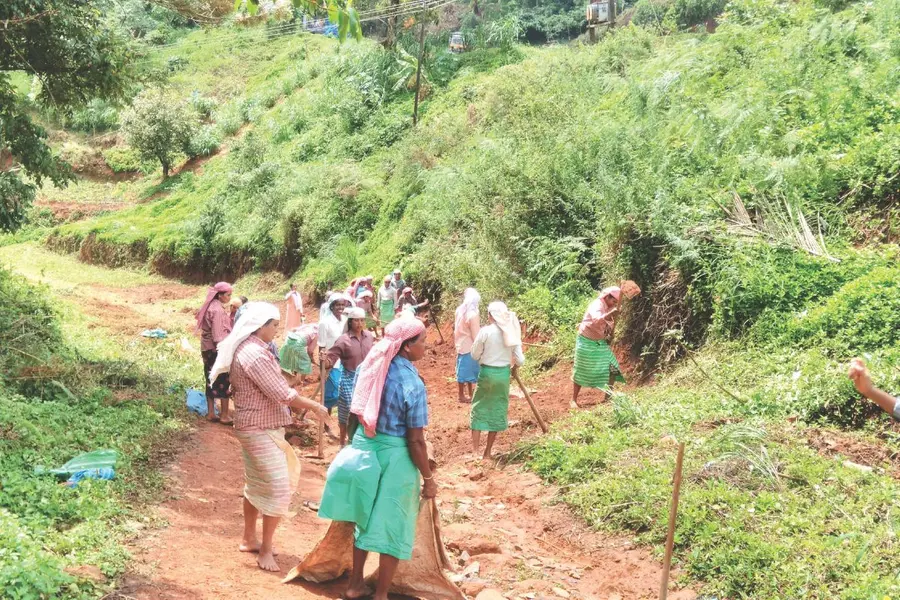
New Delhi: Despite an increase in the number of registered workers under the Mahatma Gandhi National Rural Employment Guarantee Scheme (MGNREGS), there is a growing shortfall in available work. According to a recent study by independent research agency LibTech India, this gap is primarily due to reduced budget allocations and mounting wage arrears, which have hindered the government’s ability to generate sufficient workdays under the scheme.
The rise in registrations is seen as a direct indicator of growing rural poverty. However, the number of individuals actually receiving employment under the scheme has declined. The study points to a troubling mismatch between demand and availability, highlighting the increasing desperation among rural populations for employment opportunities.
Budget cuts and delayed wages
In Kerala, the number of individual workdays fell by 8.7 per cent. This trend mirrors a wider national pattern that experts say is tied to inadequate budgetary support. Although recommendations were made to the Central Government to allocate ₹2.64 lakh crore for the scheme in the 2022–23 financial year, only ₹86,000 crore was allocated in the most recent Union Budget.
Furthermore, while MGNREGS mandates that wages be paid within 15 days, the study found that in most states, wage payments have been delayed by three months or more. This has not only eroded worker trust in the scheme but has also affected household incomes in some of the country’s poorest regions.
Rise in worker registrations, decline in actual work
In 2024–25, the number of workers registered under MGNREGS increased by 8.6 per cent, rising from 13.8 crore in 2023–24 to 14.98 crore. This increase has been largely attributed to a lack of alternative employment options. However, despite this surge, the number of people who actually received work declined from 5.51 crore to 5.35 crore—a drop of 2.9 per cent.
The number of individuals securing the full 100 days of guaranteed work under the scheme has also seen a decline. Only seven per cent of registered workers managed to reach this benchmark in 2024–25, compared to 7.6 per cent in the previous year. In real terms, this means only 37 lakh people were assured of 100 days of work, down from 42 lakh in 2023–24—an 11.9 per cent reduction.
Lowest in Odisha
The sharpest decreases in individual workdays were reported in Odisha, which saw a drop of 34.8 per cent, followed by Tamil Nadu (25.1 per cent) and Rajasthan (15.9 per cent). Kerala ranked sixth in this category, reflecting a nationwide decline in employment generation under the scheme.
Attrition slows in 2024–25
Worker attrition had been a significant issue in recent years, with 5.4 crore workers exiting the scheme in 2022 and another 2.37 crore in 2023. During the same period, only 97 lakh and 95 lakh new workers were added, respectively. However, in the second half of 2024–25, authorities were able to reduce attrition rates by reinstating cancelled job cards and ensuring continuity of participation for existing workers.
Published: 21 May 2025, 09:51 am IST
Related Topics
Disclaimer: Kindly avoid objectionable, derogatory, unlawful and lewd comments, while responding to reports. Such comments are punishable under cyber laws. Please keep away from personal attacks. The opinions expressed here are the personal opinions of readers and not that of Mathrubhumi.
