
Markets are already bracing for impact, with inflation fears cooling expectations for interest rate cuts.
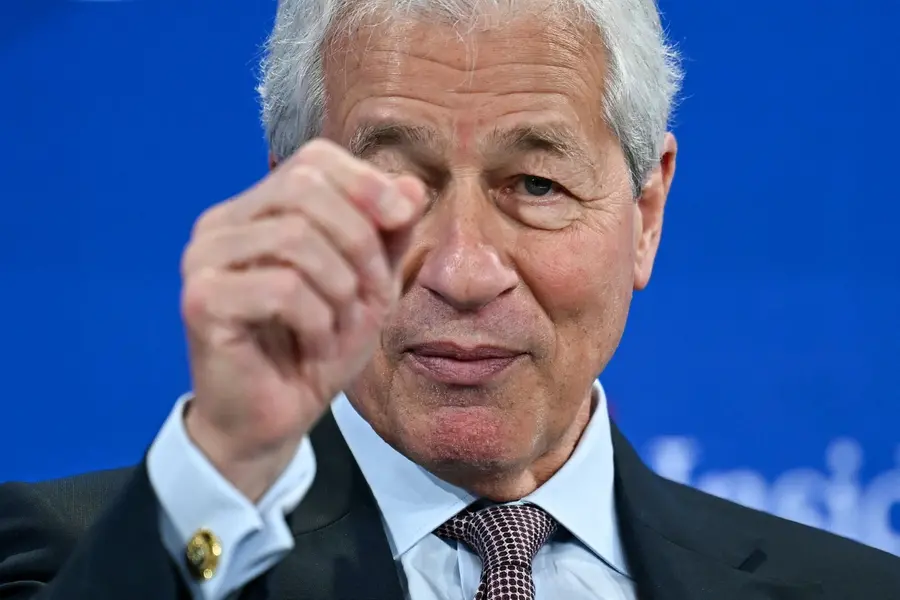
JPMorgan Chase CEO Jamie Dimon has issued a stern warning regarding the global economic outlook, suggesting that the conflict in Iran could spark volatility in oil and commodity prices. In a report by Reuters, the executive noted such shocks could sustain high inflation and drive interest rates beyond current market projections.
Dimon’s observations were detailed in his annual shareholder letter, arriving just 24 hours after U.S. President Donald Trump intensified his rhetoric against Iran, threatening strikes on critical infrastructure should the Strait of Hormuz remain obstructed.
"Now, because of the war in Iran, we additionally face the potential for significant ongoing oil and commodity price shocks, along with the reshaping of global supply chains, which may lead to stickier inflation and ultimately higher interest rates than markets currently expect," Dimon stated, according to Reuters.
The long-serving CEO, who has steered the financial giant for 20 years, also pointed to a fractured geopolitical landscape including the war in Ukraine, Middle Eastern instability, and ongoing friction with China. "The challenges we all face are significant," he noted.
Dimon expressed scepticism regarding the efficacy of the conflict in achieving American strategic goals, identifying nuclear proliferation as the preeminent threat associated with Iran.
Market Reaction and Economic Health
Financial markets have already begun adjusting to these pressures. Anticipation for interest rate reductions this year has largely dissipated as inflation fears mount. Last week, the S&P 500 saw its steepest quarterly decline since 2022, burdened by soaring energy costs and the geopolitical shadow cast since February.
Despite these headwinds, Dimon characterised the U.S. economy as resilient, citing steady consumer spending and generally robust corporate health, though he acknowledged emerging vulnerabilities. He attributed current economic momentum to heavy government deficit spending and prior stimulus measures, even as infrastructure demands escalate.
Dimon highlighted several domestic tailwinds, including fiscal stimulus under President Trump’s "Big, Beautiful Bill," aggressive deregulation, and a surge in capital investment fueled by artificial intelligence.
Financial Stability and Private Credit
Addressing concerns over the $1.8-trillion private credit sector, Dimon suggested it "probably" does not represent a systemic threat to the broader economy, despite recent investor withdrawals. However, he cautioned that a potential recession could reveal losses in leveraged lending that surpass current estimates due to eroding credit standards.
He further noted that the private credit market suffers from a lack of transparency and standardised valuation metrics, which could trigger a mass exit of investors if market conditions deteriorate.
Regulatory Criticisms
The JPMorgan chief also used his platform to attack proposed U.S. capital requirements, specifically the Basel III and GSIB surcharge standards. Dimon described portions of the regulatory framework as "nonsensical" and "very flawed."
He took particular aim at JPMorgan’s projected GSIB surcharge, which would settle at 5.0%. Dimon labelled this figure "absurd" and "un-American," arguing that the policy unfairly targets the bank’s size and successful performance.
Published: 11 May 2026, 10:29 pm IST
Related Topics
Disclaimer: Kindly avoid objectionable, derogatory, unlawful and lewd comments, while responding to reports. Such comments are punishable under cyber laws. Please keep away from personal attacks. The opinions expressed here are the personal opinions of readers and not that of Mathrubhumi.
