
Delhi airport’s international-to-international transfers surge 244%, solidifying its status as a top transit hub in Asia-Pacific. New routes and strategic location fuel growth.
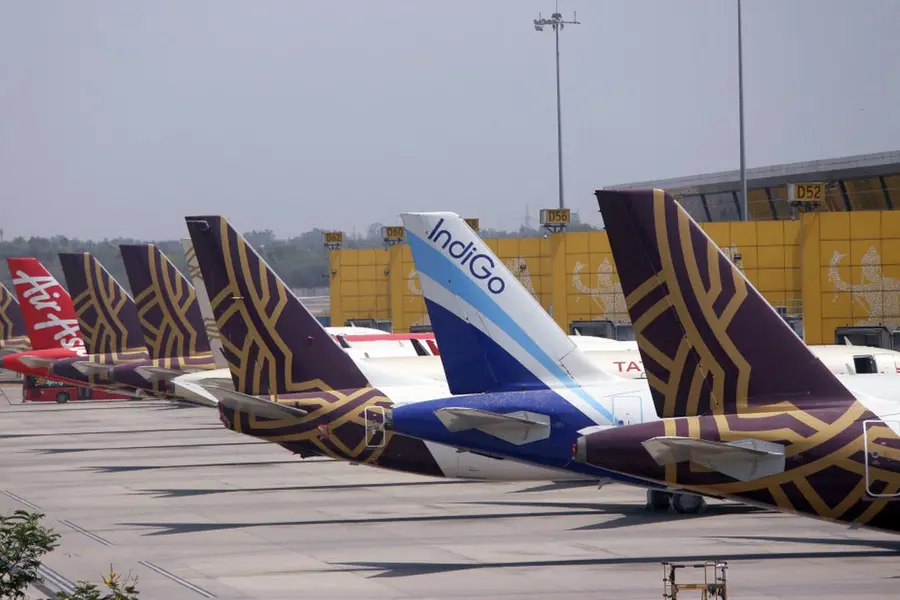
Delhi International Airport (DIAL) has recorded a remarkable growth in international transfer traffic, strengthening its position as a rising global transit hub. Over the past two years, international-to-international (I-to-I) passenger transfers have jumped by 244%, one of the sharpest increases seen in the region.
According to data from the International Air Transport Association (IATA), I-to-I transfers at Delhi airport rose from 3.88 lakh passengers in FY 2023 to 1.34 million in FY 2025.
Overall transfer traffic at the airport grew by 30.6% during the same period, from 15.6 million passengers to 20.3 million. Domestic-to-domestic transfers also saw an increase of 15.9%, reaching 10.5 million.
DIAL attributed this growth to Delhi’s strategic position on the busy East–West corridor, as well as the addition of new flight connections. For instance, IndiGo's new routes linking Bangkok and Phuket with Almaty, Tashkent, Tbilisi, and Baku alone drove a nearly 500% increase in I-to-I transfers along the Central Asia–Thailand corridor.
Highlighting the airport's growing international profile, IATA noted that Delhi is the best-connected airport to North America and Europe in South and Southeast Asia, offering wider global accessibility for passengers flying through or into India.
Commenting on the achievement, Videh Kumar Jaipuriar, CEO of DIAL, said, "The exponential growth of 244% in international-to-international transfers is a strong testament to Delhi Airport's emergence as a global transit hub."
DIAL further pointed out that Delhi is the only Indian airport ranked among the top 10 hubs in Asia-Pacific and the Middle East in the 2024 Air Connectivity Ranking by Airports Council International (ACI).
With Air India and IndiGo both planning to expand their widebody fleets, the airport expects more long-haul routes in the near future, further boosting its transit traffic.
Published: 02 Sept 2025, 05:05 pm IST
Disclaimer: Kindly avoid objectionable, derogatory, unlawful and lewd comments, while responding to reports. Such comments are punishable under cyber laws. Please keep away from personal attacks. The opinions expressed here are the personal opinions of readers and not that of Mathrubhumi.
