
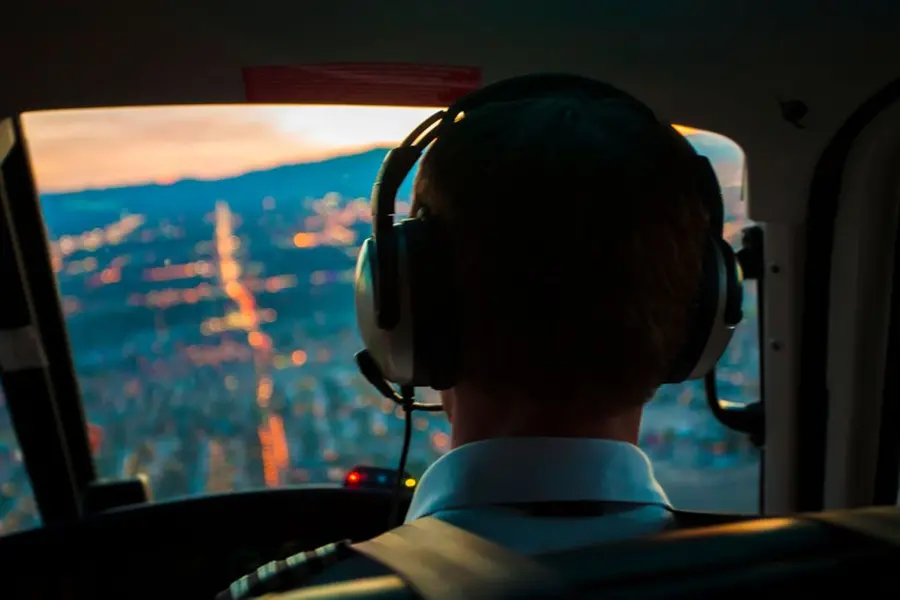
Pilot shortages have been the pain point of the aviation industry since forever, and in today’s pre-pandemic era with the ever-rising passenger traffic, airlines placing record aircraft orders, and newer airports being planned and commissioned every day – one of the most important human resources – the ‘pilot’ – remains neglected.
Global pilot shortage
Boeing, in its pilot forecast, has predicted that the world will need 674,000 new pilots over the next 20 years; another forecast by the consultancy Oliver Wyman predicts that global aviation will be short by nearly 80,000 pilots by 2032.
Now let’s look at India’s current scenario in terms of pilots. As per the ministry of civil aviation figures, IndiGo, India’s largest airline, will require more than 11,000 pilots in the next ten years, followed by Air India, which will need over 5,800 pilots in a decade.
According to the Directorate General of Civil Aviation (DGCA), SpiceJet will need 1,630 pilots; Akasa Air does not have immediate demands; Air India Express will need 2,196 pilots by financial year (FY) 2028.
Eyeing this huge demand in the near future, it’s a no-brainer that being a pilot is one of the most lucrative professions currently. However, the degrading quality and exorbitant fee charged by pilot training schools deter most kinds from pursuing this profession.
Just recently the government has received a representation from the Airlines Pilots’ Association of India (ALPA) regarding the regulation of training costs charged by airlines from aspiring trainee pilots, with the high cost of type rating charged by airlines being highlighted.
Pilot training institutes
According to the Murlidhar Mohol, minister of state for civil aviation, pilot training programmes are highly technical and super-specialised and the cost of training is determined by the high cost of fuel (AvGas 100LL) used in aircraft, the high cost of aircraft spare parts, imported flight simulators for training, and the type of aircraft and number of aircraft for training.
The minister said that most of the aircraft used in the country for training are manufactured abroad and, hence, expensive.
The question arises: why can’t this be fixed? Why can’t India manufacture a trainer aircraft for pilots?
And the question got its answer just last month when an announcement about India’s very first trainer aircraft manufacturing facility being established in Hisar, Haryana, was made. The Sakthi Group and Diamond Aircraft have come together to produce 150 DA40 NG trainer planes in India, supporting indigenous manufacturing. The deal includes 200 aircraft for Indian Flying Training Organisations, with the first deliveries expected by May 2025.
Meanwhile Indian domestic carriers have taken matters into their own hands. Anticipating the rising demand of pilots as newer and more advanced aircraft enter Indian skies, the airlines have either independently or in collaboration with an FTO started their own pilot training programmes.
IndiGo, for instance, has partnered with various FTOs like Chimes Academy, Marigold Aviation, Skyborne and CAE and Garuda Aviation Academy to train a fresh batch of pilots. Air India, on the other hand, has taken a different route; the airline determined to have every skill capability within the organisation has established one of the largest pilot training schools in Amravati, Maharashtra, with the capability of training 180 pilots every year with 31 single-engine aircraft and three twin-engine aircraft for training.
Simaero, a France-based aviation training company, is all set to establish its first flight simulator training centre in India by early 2025 in Gurugram, New Delhi. For this centre, the company plans to invest around 200 million euros in India. After the first facility in Delhi, Simaero is planning to open two more pilot training centres in the country with four flight simulators each.
Thus, all hope is not lost. Even though there is huge demand for pilots over the next 5 years, India is making steady progress to train and create fresh batches of pilots to meet the demand. Only time will tell how many more pilots India will need and whether the above training institutes will be enough to meet that demand. My guess is India will need many more such institutes to hone young talent and establish a strong base of a pilot workforce within the country to become truly self-reliant in aviation.
Pilot curriculum
The training for a pilot begins with ground classes wherein students learn the theoretical aspects of flying, followed by the exams conducted by DGCA. Post this, students have to complete about 200 flight hours, for which they take approximately another year, which is a prerequisite for becoming a commercial pilot. The fee for the complete process is INR 50 lakhs.
Experts believe India will need a long-term strategy that addresses upcoming labour challenges. Investment in early career-development programmes and outreach efforts that spark excitement among future aviators for developing a healthy aviation market.
Published: 21 Mar 2025, 02:19 pm IST
Related Topics
Disclaimer: Kindly avoid objectionable, derogatory, unlawful and lewd comments, while responding to reports. Such comments are punishable under cyber laws. Please keep away from personal attacks. The opinions expressed here are the personal opinions of readers and not that of Mathrubhumi.
