
A key highlight of the report is the 5% surge in international passenger traffic.
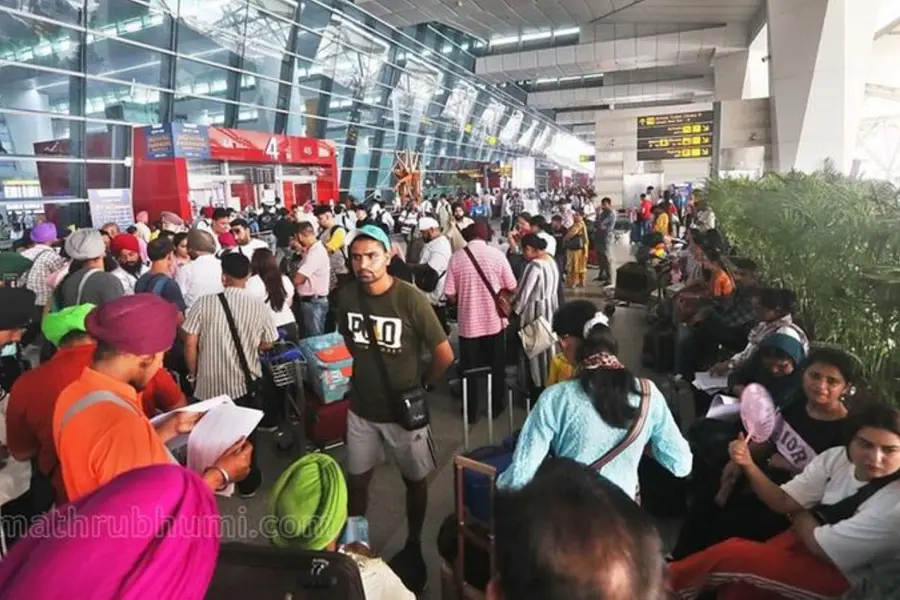
India’s aviation sector maintained its upward trajectory in May 2025, recording a 3% year-on-year growth in total passenger traffic, according to the latest data released by the Airports Authority of India (AAI). A total of 35.38 million passengers travelled through Indian airports during the month, compared to 34.34 million in May 2024.
A key highlight of the report is the 5% surge in international passenger traffic. Over 6.76 million passengers flew abroad in May 2025, up from 6.44 million a year earlier, pointing to continued momentum in outbound travel. The total number of aircraft movements comprising arrivals and departures also rose by 5.9% year-on-year, from 2.63 crore in May 2024 to 2.78 crore in May 2025.
While metro airports like Delhi, Mumbai, and Bengaluru continued to account for a significant share of international travel, it was India’s Tier-2 and Tier-3 airports that saw a dramatic spike in outbound movement.
• Goa witnessed an astonishing 300% surge in international traffic, recording 26,211 flyers in May 2025.
• Pune saw 85% growth with 34,388 international passengers.
• Coimbatore, with 28,809 travellers, registered a 48.4% year-on-year increase.
• Mangaluru (62,159 flyers) and Surat (18,790 flyers) both posted 35.1% increases.
• Kannur Airport handled 1,00,993 international passengers, up by 20.7% from last year.
• Nagpur recorded a 20.7% jump with 10,471 outbound travellers.
Among the metro airports, Bengaluru’s Kempegowda International Airport (KIA) saw a robust 25% rise in international passenger traffic, with over 6.05 lakh flyers. In contrast, Mumbai and Delhi saw more modest increases of 2.6% and 1.2% respectively, while Hyderabad registered a healthy 11.2% growth.
Domestic travel
The domestic segment also saw strong performance, particularly at regional airports. Among the standouts:
• Jharsuguda posted a 92.2% increase with 40,808 passengers.
• Jabalpur saw a 90.3% rise with 46,924 passengers.
• Gorakhpur handled over 1 lakh flyers, an 87.5% surge.
• Other notable increases include Shivamogga (80.6%), Agra (77.2%), Kanpur (58%), Tirupati (53.7%), and Rajahmundry (50.5%).
• Tiruchirappalli, Kannur, Patna, and Bhuj also showed double-digit gains.
Decentralised growth gains strength
The steady rise in traffic at smaller airports reflects growing regional connectivity and increasing affordability of air travel under schemes like UDAN. The shift also underscores the changing dynamics of India’s aviation map, where Tier-2 cities are becoming key contributors to both domestic and international air traffic.
The May 2025 data released by AAI marks a positive indicator for India’s aviation rebound and decentralised airport development strategy.
Published: 24 Jul 2025, 08:02 pm IST
Disclaimer: Kindly avoid objectionable, derogatory, unlawful and lewd comments, while responding to reports. Such comments are punishable under cyber laws. Please keep away from personal attacks. The opinions expressed here are the personal opinions of readers and not that of Mathrubhumi.
