
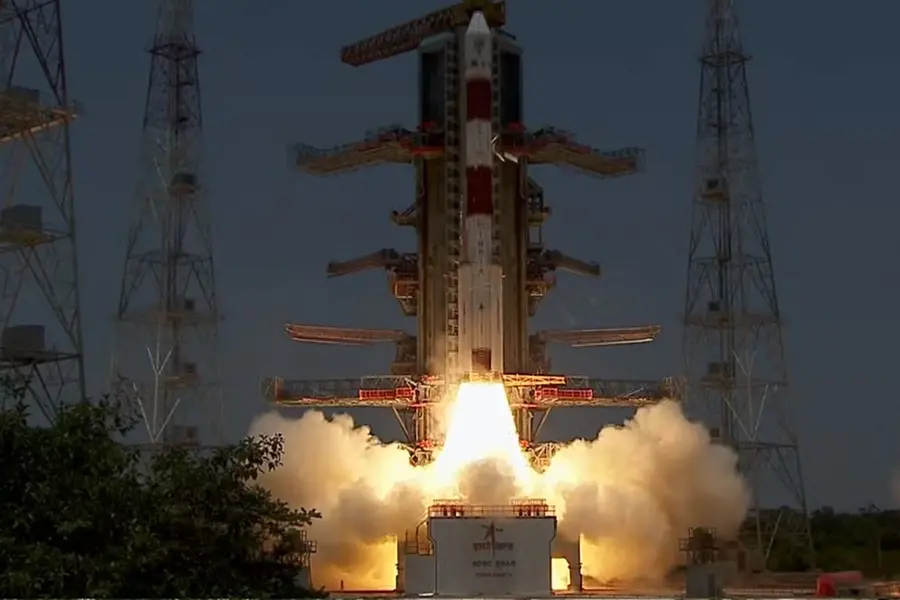
New Delhi: As the Union Budget for 2025-26 approaches, India's space sector is urging the government to allocate more funds for space-based services, slash taxes, and introduce a production-linked incentive scheme to foster the growth of space start-ups.
The Indian space economy, valued at $8.4 billion (7,27,24,26,00,000), has seen a significant rise in private sector involvement, with companies building satellites and launch systems. Industry experts are now eyeing a sharp increase in space-related activities in the coming decade.
Incentives for local manufacturing
Pixxel Space co-founder and CEO Awais Ahmed highlighted the need for a production-linked incentive scheme in the sector.
He explained, "Probably something like a production-linked incentive scheme for the space sector would be helpful from a budget standpoint. A lot of infrastructure development needs to be done for space as well. So, if it can be incentivised for companies to set local manufacturing, that would be great."
With infrastructure development remaining a critical issue, the sector hopes that the Union Budget will provide a boost to companies looking to manufacture space equipment locally.
Lower taxes and exemptions sought
The Indian Space Association (ISpA) has also put forward several demands, including tax relief and exemptions. Lt Gen A K Bhatt (retd), Director General of ISpA, called for the government to provide import exemptions, reduce the Goods and Services Tax (GST), and offer tax holidays for the industry over a specific period.
ISpA also expects the government to allocate more funds for space-based applications, with examples like the Ministry of Road Transport's plan to use satellite data for toll collection on highways. Bhatt further stated, "In general, we would be looking at a lot of money coming for science and space missions."
Defence sector’s role
The defence sector’s growing reliance on private sector contributions is another area of focus. The government has approved a 52-satellite constellation for defence, with 31 of these satellites set to be built by the private sector, offering a significant opportunity for companies to scale their operations.
Call for substantial increase in Space budget
The Satcom Industry Association (SIA-India) has called for a substantial increase in the space budget, advocating for an allocation of Rs 40,000-50,000 crore to help bridge the funding gap with leading space nations such as Japan and China.
Subbarao Pavuluri, President of SIA-India, elaborated on the key areas that should be prioritised, including advanced satellite technologies, space mining, advanced space safety technologies, and space debris management. He also mentioned the need to enhance cyber capabilities for space security, strategic space initiatives such as green propulsion systems, reusable launch technologies, and quantum satellite communication technologies.
Creation of a Space Economy Task Force
Further supporting the sector’s growth, SIA-India is pushing for the creation of a Space Economy Task Force within the Finance Ministry. This task force would help align financial strategies with the long-term growth plan for the space industry and create fiscal incentives, including tax holidays and R&D subsidies. Anil Prakash, Director General of SIA-India, stated, "The export of Indian satellites and launch services should be incentivised with strategic bilateral agreements and tax credits."
Cyber security framework for space
A key concern for the space sector is the growing threat to space security, particularly in terms of cyber risks. SIA-India has proposed the development of a comprehensive space cybersecurity framework, backed by a dedicated fund. This initiative would support real-time threat intelligence platforms and R&D funding for cyber security technologies specific to space.
Anil Prakash elaborated, "We also propose the development of a comprehensive space cyber security framework, supported by a dedicated fund, drawing inspiration from international standards. This framework would encompass the development of real-time threat intelligence platforms and funding for R&D in space cyber security technologies."
PTI
Published: 19 Jan 2025, 10:30 am IST
Related Topics
Disclaimer: Kindly avoid objectionable, derogatory, unlawful and lewd comments, while responding to reports. Such comments are punishable under cyber laws. Please keep away from personal attacks. The opinions expressed here are the personal opinions of readers and not that of Mathrubhumi.
