
Indian economy continues to grow strongly despite global uncertainty, driven by robust domestic demand, benign inflation and resilient financial institutions, RBI said.
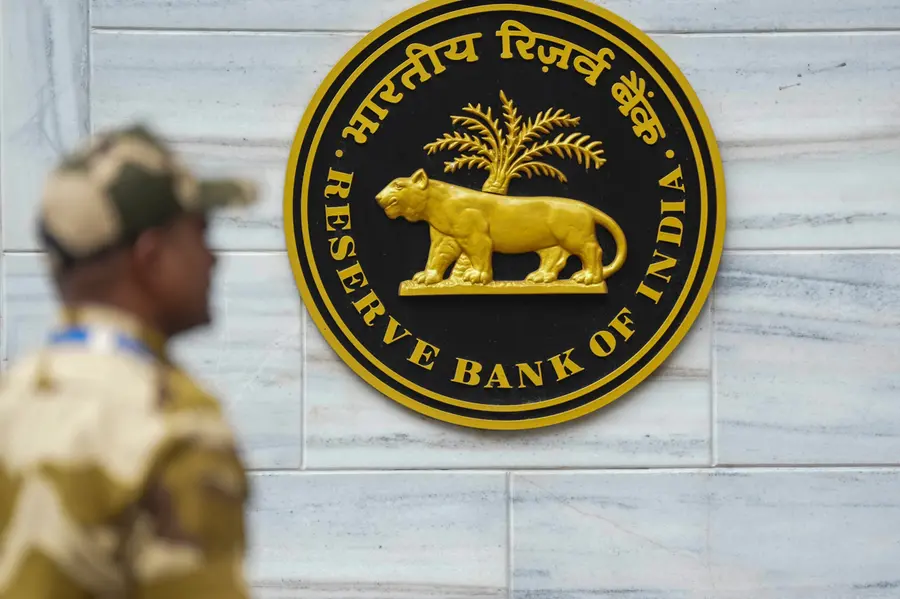
New Delhi: The Indian economy continues to post strong growth despite a volatile global environment, supported by robust domestic demand, benign inflation and prudent macroeconomic management, the Reserve Bank of India (RBI) said in its latest Financial Stability Report (FSR).
The RBI said India’s domestic financial system remains resilient, backed by strong balance sheets, accommodative financial conditions and low volatility in financial markets. However, it cautioned that near-term risks persist, stemming mainly from geopolitical tensions and global trade uncertainties.
At the global level, the report noted that the world economy has shown resilience, aided by fiscal support measures, front-loaded trade activity and increased investment linked to artificial intelligence. Nevertheless, the RBI warned that downside risks remain elevated due to high public debt levels, persistent uncertainty and the possibility of a disorderly correction in financial markets.
“Global financial markets appear strong on the surface but show growing underlying vulnerabilities. Sharp rise in equities and other risk assets, the expanding role of non-bank financial intermediaries and their deepening interconnectedness with banks, and the growth of stablecoins all heighten global financial system fragilities,” the RBI said. It pointed to sharp gains in equities and other risk assets, the expanding role of non-bank financial intermediaries, their increasing interconnectedness with banks, and the rapid growth of stablecoins as factors heightening global financial system fragilities.
The report said the health of scheduled commercial banks (SCBs) remains sound, with strong capital adequacy, comfortable liquidity buffers, improved asset quality and robust profitability. Results of macro stress tests indicate that banks are well-positioned to absorb losses even under hypothetical adverse scenarios, while maintaining capital levels well above regulatory requirements. Stress tests also confirmed the resilience of mutual funds and clearing corporations.
Non-banking financial companies (NBFCs) were also found to be in a stable position, supported by strong capital buffers, solid earnings and improving asset quality. The insurance sector continues to demonstrate balance sheet strength, with the consolidated solvency ratio remaining above the prescribed minimum threshold.
The RBI report, however, highlighted a rise in household debt, which increased to 41.3 per cent of gross domestic product (GDP) at the end of March 2025, up from the five-year average of 38.3 per cent. Consumption-related loans accounted for a large share of household borrowings.
Despite the increase, the central bank noted that India’s household debt remains lower than that of most peer emerging market economies, underscoring the country’s relative financial stability.
IANS
Published: 01 Jan 2026, 11:42 am IST
Related Topics
Disclaimer: Kindly avoid objectionable, derogatory, unlawful and lewd comments, while responding to reports. Such comments are punishable under cyber laws. Please keep away from personal attacks. The opinions expressed here are the personal opinions of readers and not that of Mathrubhumi.
