
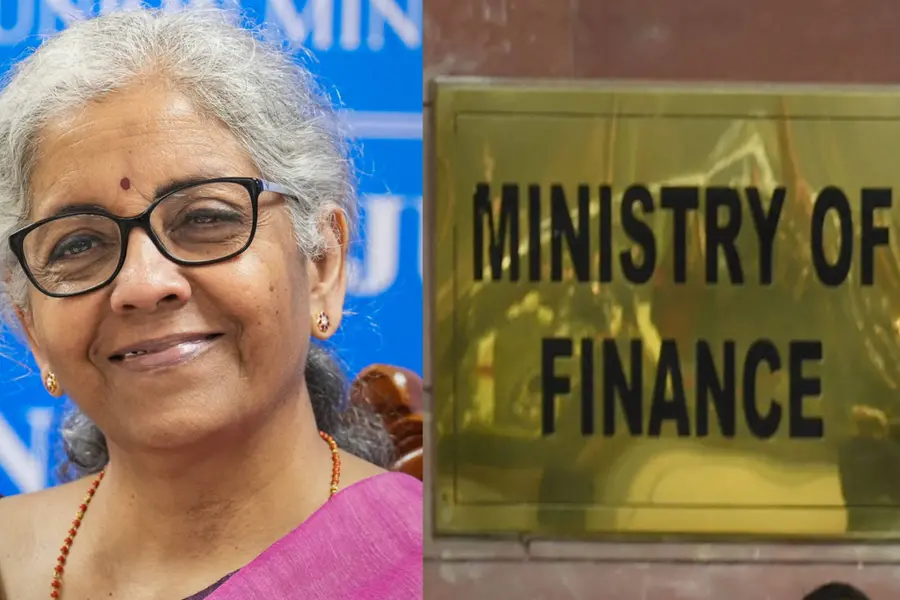
Mumbai: As the Union Budget for the next financial year is set to be presented on February 1, indications suggest possible changes in income tax slabs. Reports indicate that the government may raise the income threshold for basic tax exemptions.
Demand for higher tax slabs gathers momentum
The government is in the process of simplifying tax laws, increasing the income limit for exemptions to ₹2.5 lakh under the old regime and ₹3 lakh under the new regime. A Bill regarding this is likely to be tabled in the budget session of Parliament. However, it remains unclear to what extent such changes will be incorporated into the tax structure. The tax reliefs are primarily aimed at salaried individuals.
There has been strong criticism that rising living costs due to inflation have not been factored into tax slabs for years. In this context, there is growing anticipation that the government will introduce measures to provide relief to salaried taxpayers.
Call for tax relief in line with inflation
For the past 11 years, there have been no major revisions to tax slabs. The last revision took place in 2014. The demand for updating tax slabs in proportion to inflation and providing tax relief to taxpayers has been gaining momentum. In the previous budget, the government increased the number of slabs and modified the tax structure. Currently, 72% of individual taxpayers have opted for the new tax regime.
However, the new tax regime does not provide deductions for investments, insurance, health insurance or home loans, which were available under the old regime. As a result, the overall tax burden under both systems remains largely similar.
Grand Thornton Bharat partner Akhil Chandra stated that delays in income tax revisions impose a huge financial burden on people. He suggested that individuals with an annual income of up to ₹15 lakh should receive substantial tax relief. In addition, he emphasised that both tax regimes should offer more exemptions, and standard deductions should be calculated as a fixed percentage of salary rather than a fixed amount.
India’s high taxation compared to other countries
Former IMF executive director Surjit Bhalla has pointed out that India imposes excessive taxation on its citizens. Citing data from the World Bank Organisation for Economic Co-operation and Development (OECD), he compared India's tax structure with that of countries such as the US and South Korea. He noted that India's total tax-to-GDP ratio, including Central, state and local taxes, exceeds 19%, whereas in East Asian countries like China and Vietnam, it is only 14.5%. Despite this, China has achieved higher economic growth than India.
Industry leaders advocate for higher exemptions
The Confederation of Indian Industry (CII) president Sanjiv Puri has urged the government to provide income tax exemptions for earnings up to ₹20 lakh. He believes this would boost consumption, increase production and contribute to economic growth. Former Infosys CFO Mohandas Pai has suggested raising the exemption limit to ₹5 lakh and imposing a 10% tax rate on incomes between ₹5 lakh and ₹10 lakh and 20% on incomes between ₹10 lakh and ₹20 lakh.
As the budget announcement approaches, taxpayers and industry leaders alike are keenly awaiting potential tax relief measures that could ease financial burdens and stimulate economic activity.
Published: 30 Jan 2025, 03:04 pm IST
Related Topics
Disclaimer: Kindly avoid objectionable, derogatory, unlawful and lewd comments, while responding to reports. Such comments are punishable under cyber laws. Please keep away from personal attacks. The opinions expressed here are the personal opinions of readers and not that of Mathrubhumi.
