
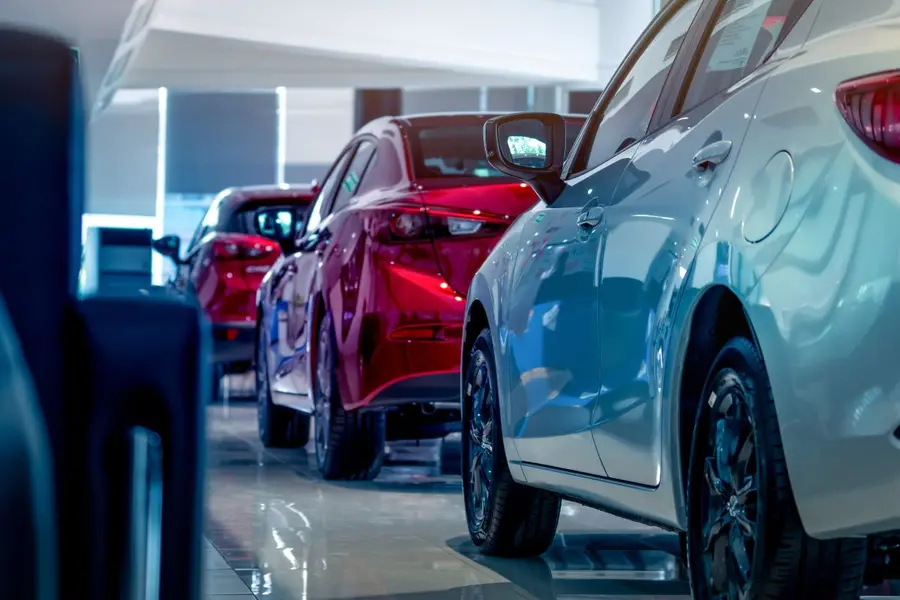
New Delhi: The Ministry of Heavy Industries (MHI) has released a detailed fact sheet titled ‘GST Reforms in Automobiles — Cheaper Cars, More Accessibility’, outlining how the government’s decision to rationalise GST rates is expected to transform India’s auto sector. The new rates, set to take effect from September 22, 2025, aim to reduce vehicle prices, boost demand, and create jobs across the automotive value chain.
The move is part of the Centre’s broader economic strategy that includes ‘Make in India’, PLI (Production Linked Incentive) schemes, and promoting cleaner mobility.
Why the GST rate cuts matter
The ministry said the lower GST rates would make vehicles more affordable and increase demand — benefitting not just car and bike manufacturers, but also ancillary industries such as tyres, batteries, steel, plastics, glass, and auto electronics.
As demand rises, it’s expected to trigger a multiplier effect across the economy:
- MSMEs in the auto components sector are likely to see a boost.
- New job opportunities could open up across sales, service, logistics, and transport.
- Informal sector workers like drivers, mechanics, and small garage owners will also benefit.
“This is about more than just cheaper cars — it’s about creating livelihoods and improving accessibility,” the ministry noted.
Two-Wheelers get cheaper: GST down from 28% to 18%
Two-wheelers, especially those with engines up to 350cc, will now attract 18% GST instead of 28%.
This move directly benefits:
- Students, gig workers, and lower-middle-class households
- Rural and semi-urban users for whom bikes are the main form of transport
- Farmers, small traders, and daily wage earners, who rely on two-wheelers for mobility and income
- Lower prices and EMIs are expected to support vehicle loan growth, financial inclusion, and credit demand in smaller towns.
Small cars: More affordable for first-time buyers
Small petrol cars (under 1200cc, up to 4m length) and diesel cars (under 1500cc, up to 4m) will also see GST drop from 28% to 18%.
According to the government:
- It will make entry-level cars more accessible to Indian families
- Encourage first-time car buyers
- Boost sales in Tier 2 and Tier 3 cities, where smaller cars dominate
- Generate employment at dealerships, financing companies, and service centres
Large cars: Flat 40% GST, no more cess
Larger cars will now be taxed at a flat 40% GST — replacing the earlier range of 35–50% which included a compensation cess.
The removal of cess brings:
- Simplified and predictable taxation
- Slightly lower effective taxes even at 40%
- Full input tax credit (ITC) for manufacturers — which was previously limited to only the base GST portion
The government says this will improve transparency and support high-end vehicle production domestically.
Tractors and tractor parts: GST cut to support farming and exports
India’s position as a global tractor hub is likely to get stronger with major GST reductions:
- Small tractors (<1800cc): 12% ➝ 5%
- Road tractors for trailers (>1800cc): 28% ➝ 18%
- Tractor parts (gears, tyres, pumps): 18% ➝ 5%
These cuts are expected to:
- Make tractors more affordable for farmers
- Push mechanisation in agriculture
- Support MSMEs that make components
- Strengthen exports of Indian-made tractors
Commercial vehicles
Trucks and delivery vans — the backbone of India’s supply chain — will now be taxed at 18% instead of 28%.
Expected benefits include:
- Cheaper trucks for fleet operators and MSMEs
- Lower freight rates, especially for goods like food, steel, cement, and FMCG
- Reduced logistics costs, boosting export competitiveness
- A reduction in inflationary pressures via cheaper goods movement
The Centre has also reduced GST on third-party goods vehicle insurance from 12% to 5% (with ITC), making transport operations more cost-efficient.
Buses: Lower GST to encourage public transport
For buses with seating capacity above 10 persons, GST has been reduced from 28% to 18%.
This aims to:
- Make fleet expansion and modernisation more viable for private and public transport operators
- Lower ticket prices for passengers, especially in rural and semi-urban routes
- Promote shared mobility, reduce traffic congestion and air pollution
Long-term economic impact
According to MHI, the GST reforms will:
- Improve policy certainty, encouraging domestic and foreign investment
- Align India’s tax policy with global best practices
- Promote replacement of older vehicles with fuel-efficient, cleaner alternatives
The auto industry currently supports over 3.5 crore direct and indirect jobs.
Published: 12 Sept 2025, 08:33 am IST
Related Topics
Disclaimer: Kindly avoid objectionable, derogatory, unlawful and lewd comments, while responding to reports. Such comments are punishable under cyber laws. Please keep away from personal attacks. The opinions expressed here are the personal opinions of readers and not that of Mathrubhumi.
