
Delhi quotes the highest gold rates among the listed cities, while silver is priced at ₹1,750 per 10 grams.
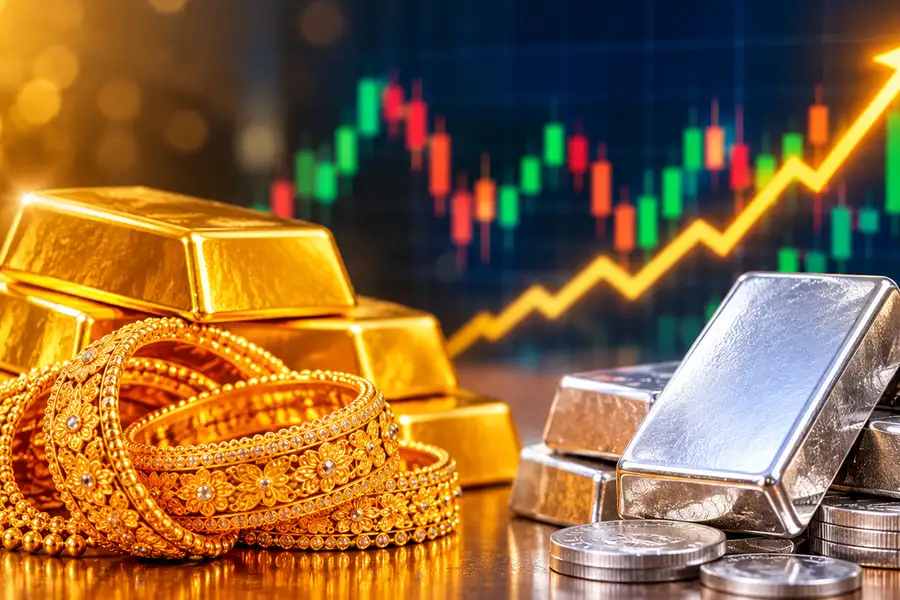
Gold prices witnessed a sharp increase across all purity levels in India on November 24 compared to the previous day. The price of 24K gold rose by ₹124 per gram, from ₹12,656 to ₹12,780, while 22K gold increased by ₹115 to ₹11,715 per gram. Similarly, 18K gold became costlier by ₹94, with the rate climbing from ₹9,491 to ₹9,585 per gram.
| Purity | Price (Per Gram) |
| 24K Gold (99.9% purity) | ₹12,780 |
| 22K Gold (91.6% purity) | ₹11,715 |
| 18K Gold (75% purity) | ₹9,585 |
City-wise gold rate (1 gram)
| Cities | 24 Carat | 22 Carat | 18 Carat |
|---|---|---|---|
| Chennai | ₹12,780 | ₹11,715 | ₹9,585 |
| Mumbai | ₹12,780 | ₹11,715 | ₹9,585 |
| Delhi | ₹12,790 | ₹11,730 | ₹9,600 |
| Kolkata | ₹12,780 | ₹11,715 | ₹9,585 |
| Bangalore | ₹12,780 | ₹11,715 | ₹9,585 |
| Hyderabad | ₹12,780 | ₹11,715 | ₹9,585 |
| Thiruvananthapuram | ₹12,780 | ₹11,715 | ₹9,585 |
City-wise silver rate
| City | (10 grams) | (100 grams) | (1 kg) |
| Chennai | ₹1,750 | ₹17,500 | ₹1,75,000 |
| Mumbai | ₹1,750 | ₹17,500 | ₹1,75,000 |
| Delhi | ₹1,750 | ₹17,500 | ₹1,75,000 |
| Kolkata | ₹1,750 | ₹17,500 | ₹1,75,000 |
| Bangalore | ₹1,750 | ₹17,500 | ₹1,75,000 |
| Hyderabad | ₹1,750 | ₹17,500 | ₹1,75,000 |
| Kerala | ₹1,750 | ₹17,500 | ₹1,75,900 |
Gold as a safe-haven investment
Gold has long been regarded as a reliable investment option, particularly during periods of economic uncertainty and market volatility. Its appeal extends beyond its traditional role as an ornamental metal, with individual and institutional investors increasingly viewing it as a means of preserving wealth and managing financial risks.
Over the years, gold has established itself as a valuable asset for long-term investment and portfolio diversification. It often acts as a hedge against inflation and currency depreciation, while helping investors offset potential losses during downturns in equity and debt markets. Its liquidity also makes it an attractive option during financial turbulence, when investors seek relatively stable stores of value.
India, one of the world's largest gold-consuming countries, has a deep-rooted affinity for the precious metal. Gold holds a unique position in the country, serving both as an investment avenue and a symbol of wealth, tradition and luxury. Its enduring value and safe-haven appeal continue to make it an important part of investment portfolios.
Why is silver cheaper than gold in India?
Silver has traditionally been much cheaper than gold, largely due to differences in their availability, demand and market applications. While gold is primarily valued as a precious metal and investment asset, silver has extensive industrial applications, including its use in electronics, electrical components and other manufacturing processes.
The difference in their relative scarcity also plays a significant role in determining their prices. Gold is rarer and has a stronger position as a store of value, attracting considerable demand from investors, central banks and jewellery buyers. Silver, meanwhile, derives a substantial part of its demand from industrial consumption, making its price more closely linked to manufacturing activity and economic conditions.
Supply and demand are among the key factors influencing silver prices in India. Changes in industrial consumption, investment interest, mining output and imports can affect its market value. Although silver is also considered a precious metal and an investment option, its relatively abundant supply and different demand profile have historically kept its price below that of gold.
Published: 24 Nov 2026, 10:31 am IST


Related Topics
Disclaimer: Kindly avoid objectionable, derogatory, unlawful and lewd comments, while responding to reports. Such comments are punishable under cyber laws. Please keep away from personal attacks. The opinions expressed here are the personal opinions of readers and not that of Mathrubhumi.
